Elite Science Education Programs: Cultivating Brilliant Minds Through Innovation and Opportunity
Introduction
In a world rapidly advancing toward a technologically-driven future, the importance of a comprehensive science education cannot be overstated. For parents of means, investing in their child’s academic prowess—particularly in STEM (Science, Technology, Engineering, and Mathematics)—offers not just a competitive edge, but a strategic path to cultivating future innovators, leaders, and visionaries. Within this aspirational framework, elite science education programs have emerged as transformative environments that foster early curiosity, intellectual rigor, and real-world application.
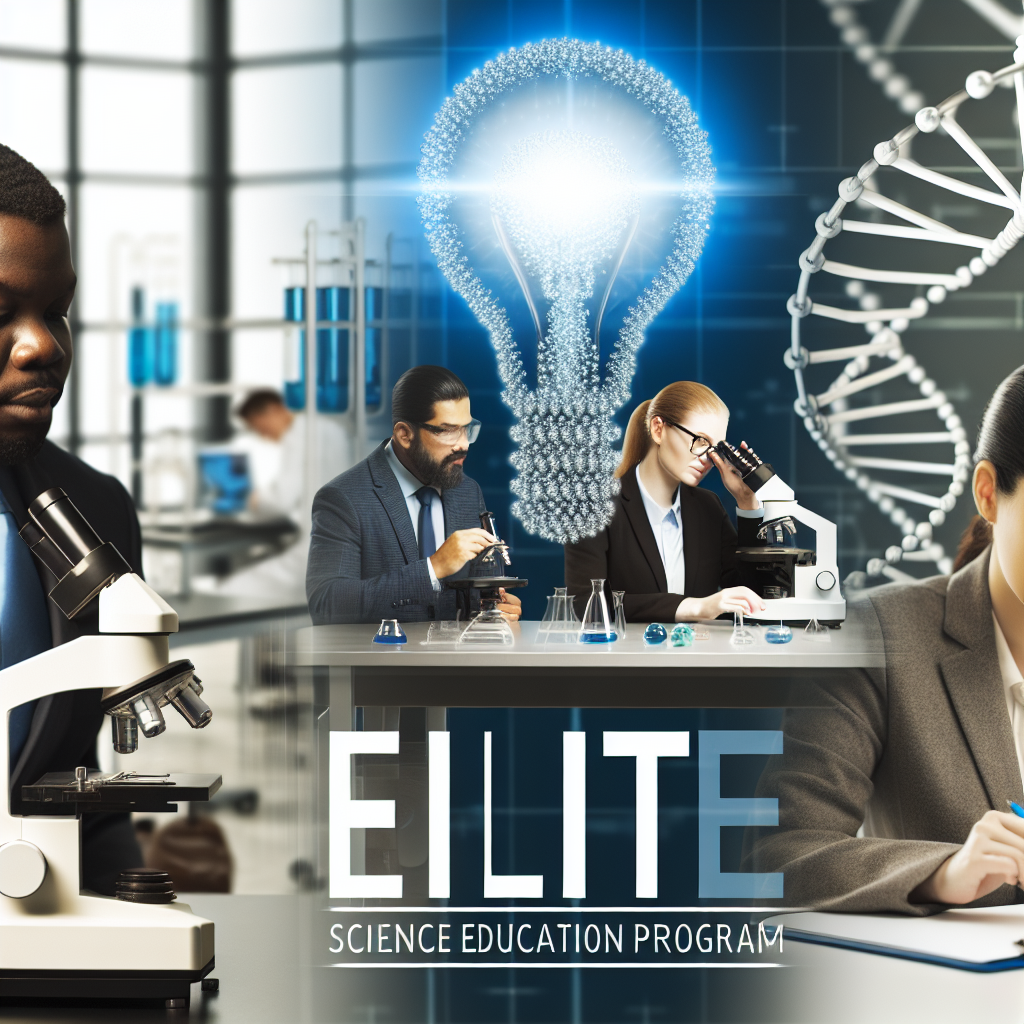
Elite science education programs are far more than just supplemental learning or advanced tutoring; they are immersive ecosystems designed to nurture a child’s innate scientific interest with unparalleled access to physical resources, intellectual mentorship, and global exposure. These programs are typically hosted by prestigious universities, research institutions, or private STEM academies, incorporating cutting-edge technology, experimental labs, and interdisciplinary learning methodologies.
Students enrolled in these elite experiences often take part in rigorous curricula that involve computational modeling, artificial intelligence design, sustainability-focused experimentation, and even space exploration simulations. These lessons extend beyond textbooks, encouraging students to apply complex scientific principles in real-time environments—reinforcing not only what to think, but how to think.
Such programs are also becoming pivotal pathways to Ivy League admissions, highly competitive STEM scholarships, and exclusive internships at globally recognized institutions. With direct mentorship from leading academics, including doctoral candidates and post-doctoral researchers, students are given a rare early access to the world of real scientific research and innovation.
Moreover, these programs embrace a community-centric model of excellence, where like-minded peers encourage collaborative creativity and healthy competition. As education continues to be one of the most crucial investments for affluent families, the rise and evolution of elite science initiatives signal a future where academic distinction meets global impact.
Features & Supporting Studies
What sets elite science education programs apart is their deep integration with findings from cognitive science, education research, and developmental psychology. Numerous studies confirm that early engagement in STEM stimulates brain development and enhances a range of cognitive abilities, from abstract reasoning to pattern recognition.
According to a longitudinal study published by the National Institutes of Health, children who participated in inquiry-oriented science education from age 7 to 14 demonstrated a 14% higher problem-solving efficiency. These students were also significantly more inclined to pursue STEM degrees—suggesting early STEM exposure directly correlates to long-term academic and professional outcomes.
Elite science programs capitalize on these insights. Programs like the Johns Hopkins Center for Talented Youth (CTY) offer advanced courses built around curriculum compacting and differentiated instruction, both of which are shown to maximize learning retention and engagement among gifted learners.
Another cornerstone of elite STEM education is experiential learning. A landmark study by the University of Chicago found that students who engaged bodily in scientific activities—like building circuits or manipulating chemical compounds—internalized concepts faster and retained them longer than those engaging through theory alone. Programs such as the MIT THINK Scholars Program and Stanford’s Pre-Collegiate Summer Institutes embody this experiential model with hands-on projects in subfields like molecular biology, aerospace engineering, and nanotechnology.
Elite programs also take a holistic approach to student development. A growing body of research, including findings from the Journal of Adolescence, confirms that including emotional wellness components—such as mindfulness training, coaching on emotional intelligence, and peer mentorship—enhances student performance and reduces burnout rates. At an age when academic stress can run high, elite programs provide support systems often lacking in traditional science education models.
On an international scale, leading educational exchanges such as the EU’s “Young Talents in Innovation” or the highly respected Intel International Science and Engineering Fair (ISEF) offer cross-cultural collaboration and multilingual scientific dialogue. According to the OECD Global Competency Framework, such multicultural participation fosters cognitive agility, global perspective, and scientific diplomacy—critical skills for tomorrow’s leaders in an interconnected world.
In sum, elite programs are meticulously designed to harness a young learner’s scientific enthusiasm and channel it into meaningful thought, discovery, and invention.
Conclusion
For parents seeking to shape a future defined by knowledge, leadership, and impact, investing in elite science education ranks among the most powerful decisions they can make. These programs go far beyond mastering equations and labs—they offer a platform where youth become problem-solvers, visionaries, and changemakers.
The uniquely curated experiences combine academic research, socially responsible innovation, and personal development—resulting in young minds who not only master science but redefine it. With benefits ranging from Ivy League admissions to a profound sense of capability and direction, these programs stand as beacons of what modern education ought to be.
As science increasingly becomes the universal medium of progress, equipping the next generation with elite, immersive STEM education is not just preparation—it is legacy-building. The scientists, climate activists, biomedical engineers, and space explorers of tomorrow are being shaped today—inside these labs, field stations, and classrooms of excellence, where potential becomes purpose.
References
– National Institutes of Health – Science Education and Youth Achievement
– University of Chicago – Hands-on Learning in Science Education
– Center for Talented Youth (CTY), Johns Hopkins University
– OECD – Global Competency for an Inclusive World
– Stanford Pre-Collegiate Institutes
– MIT THINK Scholars Program
– Journal of Adolescence – Academic Stress in High-Achieving Adolescents
– Tomlinson, Carol Ann – How to Differentiate Instruction in Academically Diverse Classrooms
– International Science and Engineering Fair (ISEF), Society for Science

Dominic E. is a passionate filmmaker navigating the exciting intersection of art and science. By day, he delves into the complexities of the human body as a full-time medical writer, meticulously translating intricate medical concepts into accessible and engaging narratives. By night, he explores the boundless realm of cinematic storytelling, crafting narratives that evoke emotion and challenge perspectives. Film Student and Full-time Medical Writer for ContentVendor.com