Customized STEM Lab Kits for Home Learning
Topic Introduction
As education evolves and adapts to a future shaped by innovation, technology, and personalized learning, today’s parents of means want more than just traditional academic experiences for their children. They seek holistic, high-impact learning environments that spark genuine curiosity and relentlessly cultivate intelligence. At the nexus of this emerging trend sits a dynamic and luxurious learning experience: customized STEM lab kits for home learning.
A customized STEM (Science, Technology, Engineering, and Mathematics) lab kit is no longer just a basic chemistry set or a stack of coding cards. Modern STEM kits are curated learning ecosystems that integrate cutting-edge tools—ranging from artificial intelligence modules and robotics codebases to DNA sequencing kits and augmented reality labs. These immersive kits are tailored to each child’s interests, skill level, and long-term learning goals, while aligning with the latest advancements in science and education.
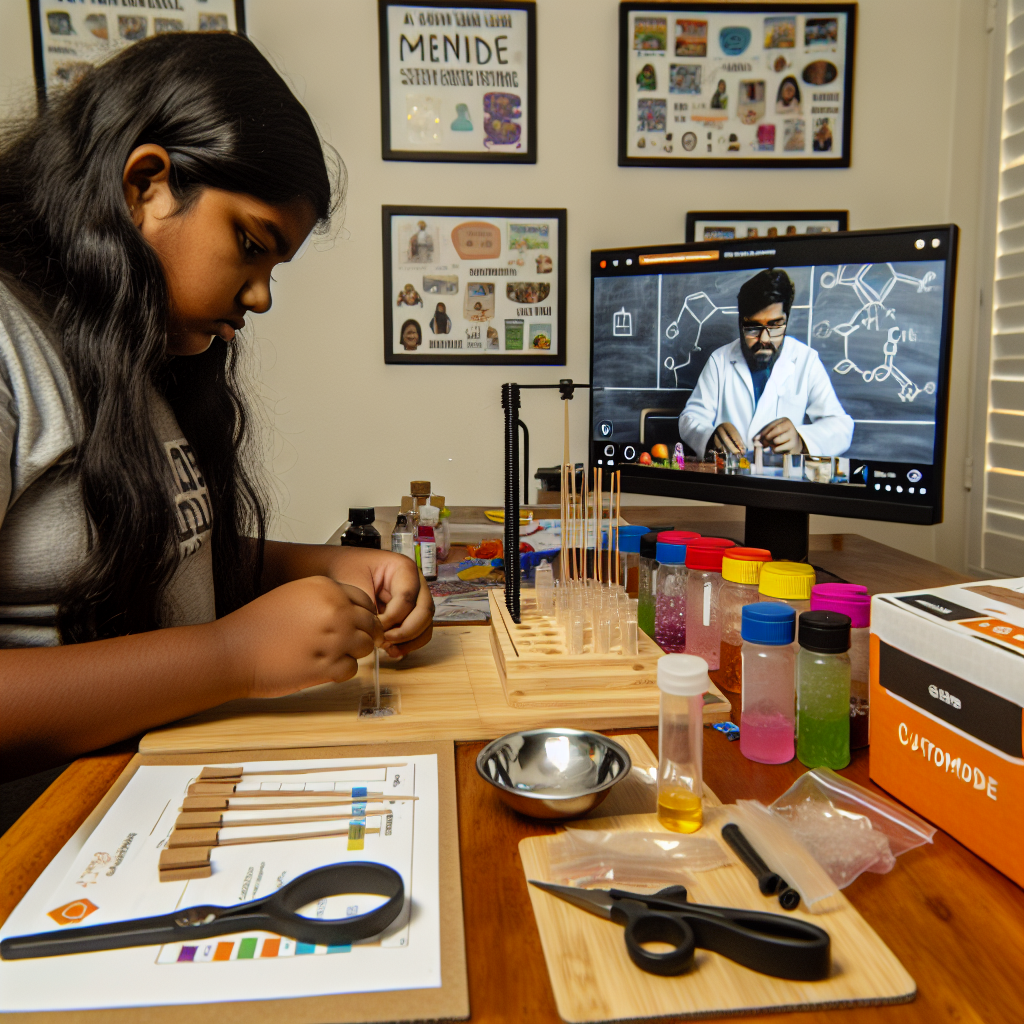
Personalization is key. Whether your child shows an early interest in biomechanical engineering or aspires to design eco-friendly architecture, these kits offer modular components, guided lessons by top educators, and even virtual mentorship opportunities with industry professionals. Imagine your child working through physics principles using a customized drone kit or deepening their understanding of medicine through a home biosensor lab—all vetted by STEM professionals and designed for at-home luxury learning.
For parents who have invested heavily in bespoke services—custom wardrobes, elite tutors, or private wellness retreats—this next frontier of home education adds another rich layer to the child’s developmental journey. It empowers inquisitive minds while keeping pace with individual learning speed, style, and ambition.
In a post-pandemic world that has normalized remote learning and hybrid education models, many high-net-worth families have already installed dedicated learning spaces at home. Customized STEM lab kits integrate seamlessly into such environments—below chandeliers, beside grand pianos, and surrounded by 3D-printed furniture. It’s not an either-or between luxury and intellectual rigor anymore; it’s about creating a fusion that cultivates both.
Cutting-Edge Features and Supportive Research
Research continues to demonstrate the crucial role of early STEM education in empowering children with critical thinking, creativity, and problem-solving skills necessary for 21st-century success. According to a study published in the Journal of STEM Education, students exposed to high-quality, hands-on STEM learning experiences significantly outperform their peers in analytical reasoning, spatial learning, and long-term academic engagement.
Customized STEM kits take advantage of this pedagogical foundation by integrating project-based learning (PBL), a method shown to improve memory retention and cognitive engagement. As detailed in a 2019 report by Lucas Education Research, PBL encourages children to build their own experiments and learn by doing—using real-world challenges that spark deeper investment and understanding.
Top-tier customized STEM kits are often backed by advisory boards composed of educational psychologists, engineers from top universities, and curriculum designers certified by STEM.org. These experts ensure that kits evolve alongside your child’s abilities and that their effectiveness is data-driven. For example, a student demonstrating strength in foundational robotics may receive advanced AI modules and exclusive tutorial videos recorded by graduate students from leading tech institutions.
Adding to the credibility, neuroscience shows that STEM engagement uniquely benefits child development. A study from Frontiers in Psychology emphasized that coding and mathematical problem-solving promote neuroplasticity—enhancing regions of the brain associated with executive function, working memory, and cognitive flexibility. A customized kit enables these neurodevelopmental benefits to flourish through meaningful, distraction-free engagement.
Beyond scientific rigor, many premium platforms offer STEM subscription boxes similar to art collections—with rotating kits delivered monthly, quarterly, or according to a tailored schedule. Children can also join immersive virtual labs that simulate university-grade environments—complete with haptic-feedback instruments, real-time peer collaboration, and virtual mentorship rooms.
Brands like KiwiCo’s Eureka Crate and MEL Science already push boundaries with sophisticated learning experiences, but new boutique enterprises are raising the bar. Certain companies now pair kits with one-on-one Zoom sessions led by MIT-trained instructors or retired NASA scientists. The kits themselves are also visually curated to complement elegant spaces—employing biodegradable materials, artisan packaging, and designer-grade shelving solutions.
For families accustomed to curated travel and personal chefs, these kits represent the next level of everyday enrichment. Educational indulgence meets cerebral luxury, ensuring that intellectual rigor keeps pace with lifestyle refinement.
Conclusion
Customized STEM lab kits are redefining what it means to learn from home—transforming private spaces into high-tech innovation studios. For affluent families seeking not just education but growth, curiosity, and intellectual elegance, these kits provide a systematic, sophisticated, and highly personalized approach to nurturing the next generation of thinkers, builders, and innovators.
With increasing emphasis on future-ready education and experiences that matter, this fusion of personalized learning and refined living represents the ultimate expression of modern luxury—tailored not just to taste, but to talent.
References
– Lucas Education Research. (2019). Project-Based Learning Research Review.
– STEM.org Accreditation Best Practices.

Dominic E. is a passionate filmmaker navigating the exciting intersection of art and science. By day, he delves into the complexities of the human body as a full-time medical writer, meticulously translating intricate medical concepts into accessible and engaging narratives. By night, he explores the boundless realm of cinematic storytelling, crafting narratives that evoke emotion and challenge perspectives. Film Student and Full-time Medical Writer for ContentVendor.com