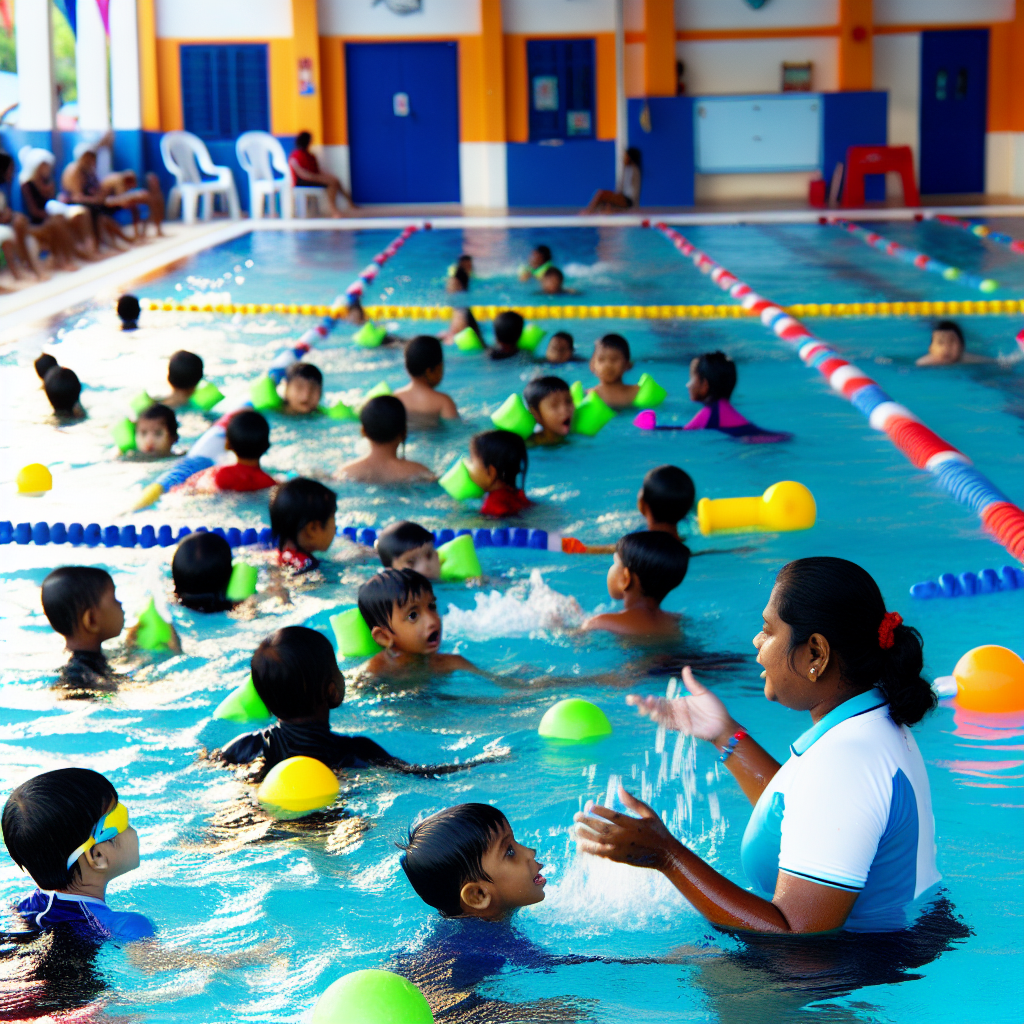
Elite Swimming Lessons for Young Children
Introduction
For discerning parents seeking to offer their children only the finest educational and wellness opportunities, elite swimming lessons represent a perfect confluence of luxury, safety, and holistic child development. In today’s high-paced and increasingly wellness-conscious world, swimming is no longer viewed solely as a basic life-saving skill or summer leisure activity. It has evolved into a crucial component of a child’s early physical, mental, and emotional development—with elite programs pushing these boundaries to deliver exponential benefits.
Across the globe, upscale swim academies and private coaching firms now offer bespoke aquatic training for young children, starting as early as three months of age. These specialized programs go beyond traditional lessons, combining the latest innovations in sports science with a high-end, personalized experience that focuses on whole-child growth.
Structured in low-ratio sessions or private one-on-one formats, elite swimming programs prioritize precise technique, sensory integration, and neurological development. Children are taught in warm hydrotherapy pools equipped with the latest in aquatic technology, under the close supervision of certified swim professionals—many of whom hold advanced degrees in child development or kinesiology. These carefully controlled environments ensure that children feel secure and confident, building positive relationships with water from their very first splash.
Moreover, for globally mobile families or those with demanding schedules, flexibility is paramount. Many premium swim providers offer in-home, bespoke swim instruction—delivered with the same standard of excellence as distinguished academies, but from the comfort and convenience of a private villa, estate pool, or penthouse amenities. Some families even incorporate swim instruction into global travel plans, flying in top coaches to provide exclusive instruction during luxury vacations or international trips.
Why should parents of means consider investing in high-end swimming education? Beyond the vital safety aspect—drowning remains one of the leading causes of accidental death in children under age 5—there is mounting evidence that suggests children who participate in early, structured swim programs enjoy significant advantages in cognitive function, physical coordination, social skills, and academic readiness.
When training is scaffolded by expert instruction and refined, science-backed technique, these benefits are amplified. Swimming becomes more than a skill—it becomes a powerful, multidimensional experience that fosters confidence, resilience, and joy. These traits, cultivated early in childhood, are the building blocks of a thriving life.
Features and Scientific Backing
The field of developmental science increasingly supports the physical, intellectual, and emotional advantages of early swim instruction, especially when administered through elite programs. A landmark 2013 study by researchers at Griffith University in Australia examined more than 7,000 children and found those who took regular swimming lessons reached critical developmental milestones earlier than non-swimming peers. They demonstrated stronger abilities in language development, literacy, numeracy, and fine motor skills—indicating swimming enhances both cognitive and physical capacities.
Elite swim programs leverage this foundational research by integrating practices from hydrokinetic therapy, early childhood education theory, and sports biomechanics. These methods encourage natural movement patterns and water comfort in infants as young as 3–6 months, using gentle immersion techniques and sensory integration strategies. Programs often align with frameworks such as the Halliwick Concept and the Swim America model, which emphasize adaptive, developmentally appropriate water safety alongside motor learning.
From a physical health perspective, swimming provides unique and powerful advantages. According to the American Academy of Pediatrics (AAP), aquatic activities improve lung capacity, cardiovascular health, and muscle endurance—all while being low-impact on bones and joints, which is especially important for growing children. The thermal properties of warm water facilitate enhanced sensorimotor development, supporting the growth of neural pathways during crucial windows of early development.
On a psychological level, swimming reinforces self-esteem, autonomy, and emotional resilience. Studies have shown that children who engage in structured aquatic activities show greater degrees of self-discipline, patience, and social responsiveness. These benefits stem from the collaborative relationships built with instructors, who are often trained not just in swimming, but in communication, emotional intelligence, and child psychology.
Further distinguishing elite programs is the use of advanced performance analytics. Just as professional athletes use biometrics and motion tracking, these academies apply similar tools—measuring progress, setting goals, and adapting instruction based on data. This encourages mastery while giving children a tangible sense of achievement. They learn to associate swimming not just with fun, but with capability and effort.
Additionally, swimming lays the groundwork for a lifetime of richer experiences—whether through water sports, international swim competitions, global school enrollment, or simply the confidence to enjoy worldwide travel and aquatic environments. These foundational skills expand children’s opportunities, aligning well with the aspirations of families pursuing elite educational and lifestyle pathways.
Conclusion
For parents who prioritize excellence from the very beginning, elite swimming lessons represent an investment in safety, intellect, and personal growth. More than a precaution, swimming becomes a pathway to total child development—supporting physical wellness, brain development, social intelligence, and emotional regulation.
In beautifully maintained, nurturing settings—whether at an international aquatic academy or the edge of a private pool overlooking the ocean—children receive more than instruction. They engage in a formative, confidence-building experience that encourages lifelong skills, habits, and values. In the age of curated childhood experiences and long-term developmental planning, premium swim training is a vital and elegant asset in your child’s early enrichment portfolio.
References
Griffith Institute for Educational Research – Swimming and Child Development
American Academy of Pediatrics – Water Safety and Developmental Benefits
Swim America Program – Techniques and Foundations
Halliwick Concept – Therapy-Based Aquatic Movement for Children

Dominic E. is a passionate filmmaker navigating the exciting intersection of art and science. By day, he delves into the complexities of the human body as a full-time medical writer, meticulously translating intricate medical concepts into accessible and engaging narratives. By night, he explores the boundless realm of cinematic storytelling, crafting narratives that evoke emotion and challenge perspectives. Film Student and Full-time Medical Writer for ContentVendor.com