“`html
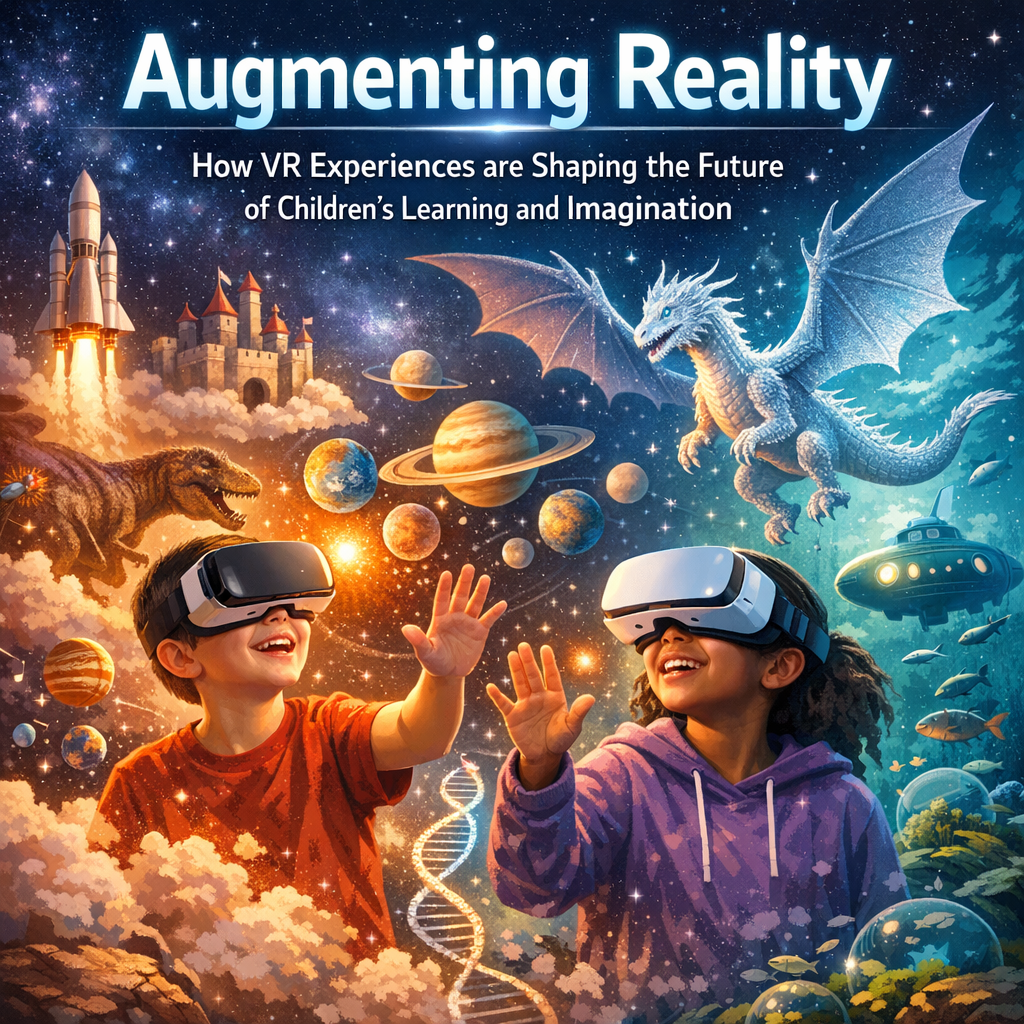
Augmenting Reality: How VR Experiences are Shaping the Future of Children’s Learning and Imagination
Introduction
In the realm of childhood learning and imagination, technology is no stranger to the spotlight. As digital mediums have evolved, so too have the ways in which our children engage with content, nurturing both their minds and creativity. One of the most exciting advancements in recent years is Virtual Reality (VR), a transformative technology that immerses users in digitally created worlds. For parents keen on offering their children an enriched learning experience, VR presents an unparalleled opportunity to expand the boundaries of education and imaginative play.
In today’s fast-paced digital age, the prospect of augmenting reality through VR offers a dual advantage: it captivates young users with interactive fun while simultaneously imparting invaluable educational benefits. Imagine a classroom without walls, where children can explore ancient civilizations, journey through the human body, or even trace the path of the stars—all from the comfort of their home. This isn’t just about engagement; it’s about shaping a new form of experiential learning that stimulates curiosity and understanding beyond traditional means.
By integrating VR experiences into a child’s routine, educators and parents can cater to a multitude of learning styles. Visual and kinesthetic learners, in particular, can benefit from the immersive and interactive elements of VR. These experiences can be customized according to a child’s specific needs and interests, making learning a personal journey rather than a one-size-fits-all approach. Furthermore, VR can foster empathy by allowing kids to ‘walk a mile in someone else’s shoes.’ Whether it’s understanding global cultures or experiencing historical events firsthand, VR blurs the line between learning and experiencing, embedding knowledge in a lasting and impactful way.
While some may argue that VR experiences might lead to over-reliance on virtual environments, the strategic use of this technology encourages cognitive and social development. As the tools for VR become more accessible, the potential to enhance the formative years of our children is staggering. This article will explore the latest professional and medical studies that highlight the transformative role of VR in children’s education and imagination, reaffirming its position as more than just a futuristic novelty, but a current-day necessity.
Features
Delving into recent studies, the benefits of VR in fostering children’s learning and imagination become increasingly evident. A pivotal study conducted by the [University of Maryland](https://www.umd.edu) found that VR-based learning significantly enhances the retention of information compared to traditional methods. The study observed that participants were more likely to remember details from lessons experienced in VR settings, emphasizing the profound impact that immersive environments can have on learning.
Moreover, research from the [Stanford Graduate School of Education](https://ed.stanford.edu) underscores VR’s ability to boost engagement and motivation. By leveraging VR, educators were able to create scenarios that allowed students to explore concepts hands-on, leading to a significant increase in class participation and interest. This aligns with findings from the [International Society for Technology in Education](https://www.iste.org), which documented increased cognitive and emotional engagement when VR was integrated into classroom activities.
From a psychological perspective, VR experiences have the potential to greatly influence the development of imagination and creativity in children. A study from the [University of Southern California’s Institute for Creative Technologies](https://ict.usc.edu) illustrated that children who regularly engaged with VR content demonstrated enhanced creative thinking and problem-solving skills. The immersion provided by VR could facilitate out-of-the-box thinking by presenting scenarios that require quick, imaginative responses.
On the health and safety front, studies suggest that VR, when used judiciously, poses no more risk than traditional screen time, provided that play sessions are limited and supervised. The [American Pediatric Association](https://www.aap.org) recommends that screen time, including VR, be balanced with physical and outdoor activities to promote holistic development.
Further exploration into VR’s role in education comes from the medical field. Pediatric neurologists have highlighted that VR can be effectively used in therapeutic settings, helping children with learning disabilities or attention-related concerns by creating engaging, distraction-free environments for learning. These studies clearly demarcate VR’s dual role in both educational enhancement and therapeutic intervention.
In essence, the multifaceted abilities of VR technology are reshaping our approach to childhood education and imagination, blurring the distinctions between play, learning, and empathy development. VR is not merely a glimpse into the future of education; it’s a present-day reality that enhances and augments traditional methods, making learning more inclusive and impactful.
Conclusion
As VR technology continues to evolve, its potential to revolutionize children’s learning and imagination becomes more apparent. With multiple studies underlining its benefits, from enhanced information retention to fostering creativity, VR is proving to be a vital tool in modern education. For parents seeking immersive, enriching experiences for their children, VR opens up a world of possibility, transforming how young minds learn and imagine, and setting a new standard for what it means to truly engage with the world around them.
References
– [University of Maryland VR Study](https://www.umd.edu)
– [Stanford Graduate School of Education VR Research](https://ed.stanford.edu)
– [International Society for Technology in Education](https://www.iste.org)
– [University of Southern California Institute for Creative Technologies](https://ict.usc.edu)
– [American Pediatric Association Recommendations on Screen Time](https://www.aap.org)
“`

Dominic E. is a passionate filmmaker navigating the exciting intersection of art and science. By day, he delves into the complexities of the human body as a full-time medical writer, meticulously translating intricate medical concepts into accessible and engaging narratives. By night, he explores the boundless realm of cinematic storytelling, crafting narratives that evoke emotion and challenge perspectives. Film Student and Full-time Medical Writer for ContentVendor.com