AI-Driven Parenting Strategies from Silicon Valley’s Elite: What Tech Titans Teach Their Kids
Introduction
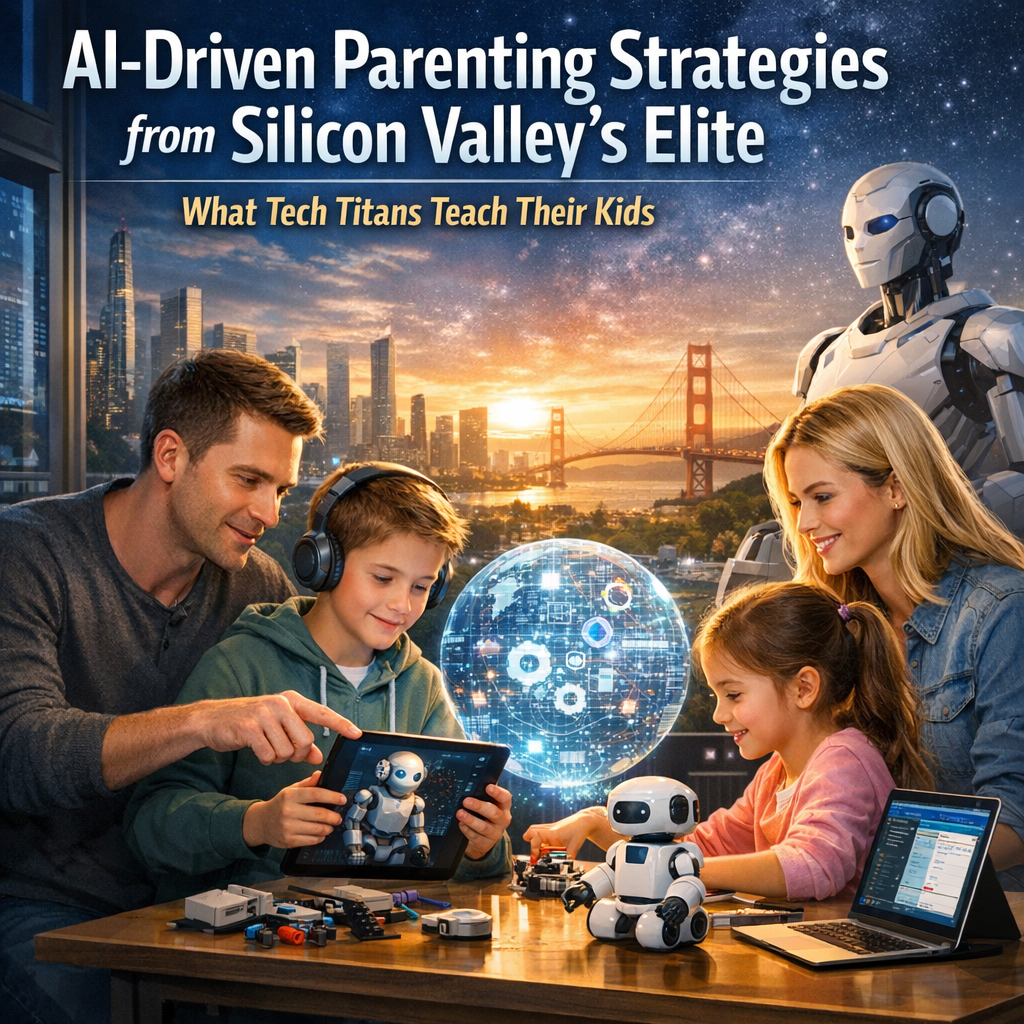
As the digital age continues to evolve at an unprecedented pace, parenting strategies are adapting just as swiftly, particularly among the tech-savvy elite of Silicon Valley. This region, known for its innovation and home to tech giants like Apple, Google, and Facebook, is setting the stage for a new breed of parenting techniques driven by artificial intelligence (AI). For parents of means who want to equip their children for a future shaped by technology, understanding how these tech titans are using AI to optimize their parenting strategies offers a wealth of inspiration and potential.
Silicon Valley’s elite are not just creating the technology that shapes our lives; they’re also integrating it into their family environments in unexpectedly beneficial ways. For these parents, AI isn’t just about having advanced smart home systems—it’s about using technology to provide tailored educational experiences, enhance children’s cognitive abilities, and even refine emotional intelligence. Imagine a scenario where AI algorithms help determine the best learning rhythm for your child, optimizing their study schedules to align with when their minds are most receptive. It’s a reality that these tech innovators are already exploring, offering their children personalized learning experiences that mainstream education systems are only beginning to consider.
Moreover, artificial intelligence aids in preserving the delicate balance between screen time and physical activity. Through smart devices and applications, parents leverage AI to monitor and regulate their children’s media consumption, ensuring they stay engaged in diverse activities that promote holistic development. Meanwhile, the incorporation of AI in health apps helps in keeping tabs on exercise, nutrition, and sleep patterns, fostering a lifestyle that emphasizes well-being from a young age.
These strategies aren’t merely for futuristic settings; they hold real-world implications today, providing children with the skills and balance necessary for the digital landscapes they will inherit. The following features section will delve into the professional and academic studies that shed light on these AI-driven strategies, offering insights into their effectiveness and potential future applications.
Features
Recent studies and professional reports highlight the transformative impact of AI on education and child development, aligning closely with the strategies employed by Silicon Valley families. One notable paper by the [Brookings Institution](https://www.brookings.edu/research/artificial-intelligence-and-the-future-of-learning-attainment/) discusses how AI-powered educational tools can personalize learning experiences by adjusting to the unique needs and learning speeds of students. These adaptive learning systems prove beneficial in enhancing educational outcomes, as they allow students to learn at their own pace, reducing stress and improving comprehension.
In addition to educational applications, research from the [American Academy of Pediatrics](https://pediatrics.aappublications.org/content/138/5/e20162593) emphasizes the importance of balanced media use for children. The introduction of AI in apps that monitor and manage screen time provides invaluable support to parents striving to establish healthy digital habits within their families. Such tools offer insights into children’s digital activities, enabling parents to fine-tune exposure and ensure children engage in a mix of technology-free and screen-based activities.
AI is also making its mark in health and wellness for children. A study published in the [Journal of Medical Internet Research](https://www.jmir.org/2020/4/e14678/) highlights the success of AI-driven apps in monitoring physical activity and encouraging healthier lifestyle choices. By gamifying physical exercise and nutritional goals, these applications motivate greater participation and adherence among children, contributing positively to their physical health and overall well-being.
Navigating emotional intelligence is another area where AI is proving beneficial. Research indicates that AI technologies like natural language processing can analyze children’s verbal and non-verbal cues, offering insights into emotional states. This capability aids parents in understanding and addressing their children’s emotional needs more effectively, leading to stronger familial bonds and healthier emotional development. This is further explored in resources like [Emotional AI Insights](https://www.frontiersin.org/articles/10.3389/fpsyg.2021.730414/full).
Conclusion
Artificial intelligence, while often viewed as a tool of the future, is already revolutionizing parenting approaches among Silicon Valley’s elite, providing valuable insights and tools for holistic child development. As these cutting-edge methods gain traction, parents worldwide stand to benefit from AI’s potential to create a balanced, nurturing environment that equips their children with the skills necessary for the digital age. By embracing these innovations, parents of means can offer their children a blend of traditional wisdom and modern technology, fostering a generation ready to navigate and lead in an ever-evolving world.

Dominic E. is a passionate filmmaker navigating the exciting intersection of art and science. By day, he delves into the complexities of the human body as a full-time medical writer, meticulously translating intricate medical concepts into accessible and engaging narratives. By night, he explores the boundless realm of cinematic storytelling, crafting narratives that evoke emotion and challenge perspectives. Film Student and Full-time Medical Writer for ContentVendor.com