Future-Proofing Kids with AI-Enhanced Socio-Emotional Learning Tools
Introduction:
In an ever-evolving world that’s increasingly driven by technology, preparing our children for the future means more than just acquainting them with the latest gadgets or ensuring they master coding at a young age. The future is not just digital; it’s about the integration of technology with essential human skills. Parents, particularly those who wish to nurture their children’s development with the most advanced tools available, recognize the irreplaceable value of socio-emotional learning (SEL) to succeed in tomorrow’s landscape.
Socio-emotional learning involves the development of skills necessary for emotional intelligence, such as empathy, self-awareness, and effective communication. Each is as crucial to a child’s future success as any academic knowledge. Recent educational methodologies emphasize SEL because it enhances children’s ability to understand and manage emotions, set positive goals, maintain empathy for others, sustain positive relationships, and make responsible decisions.
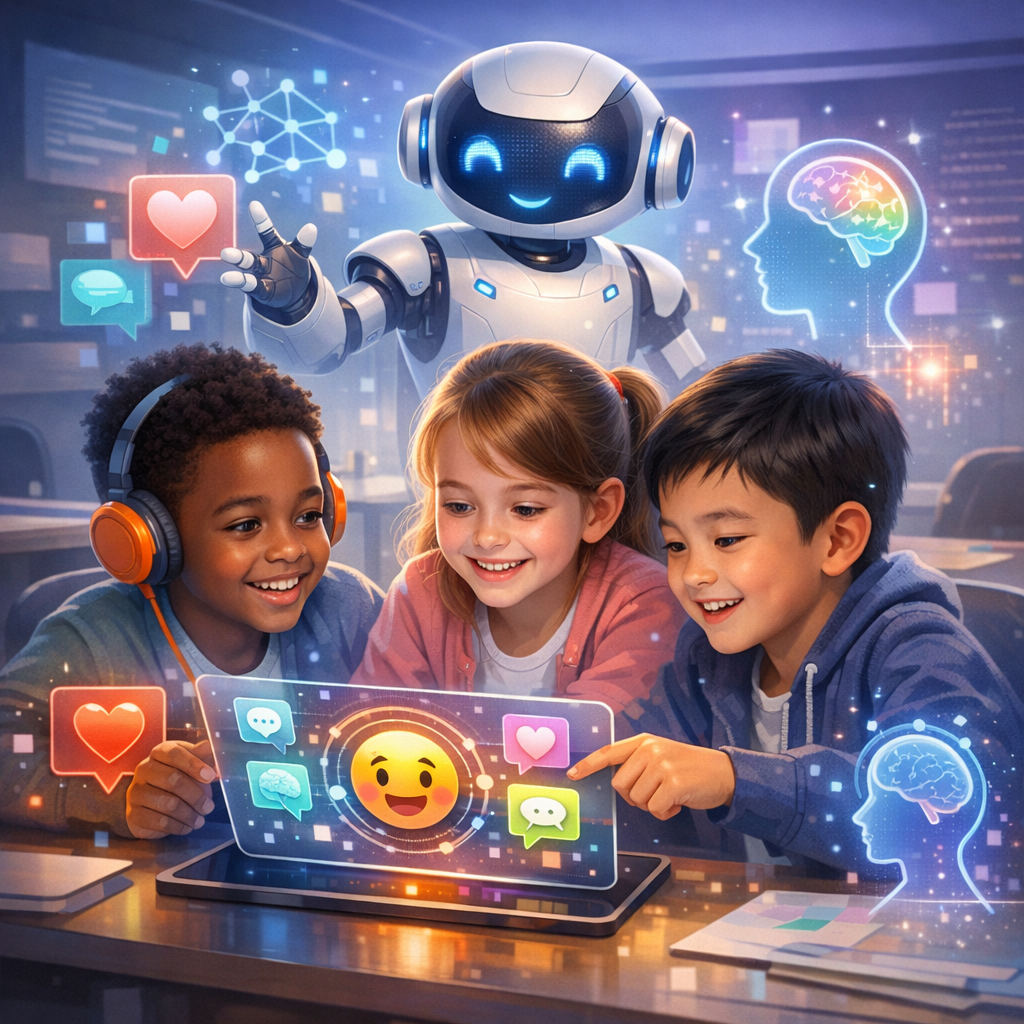
However, as the complexities of today’s digital world grow, new tools are necessary to meet the needs and habits of digital-native children. Artificial Intelligence (AI) offers revolutionary potential in this domain by personalizing learning experiences and identifying the socio-emotional strengths and weaknesses of each child. These AI-enhanced tools engage children interactively, allowing for a dynamic and tailored learning experience that builds on traditional SEL techniques.
With children accessing more technology than ever before, machine learning algorithms analyze interactions and provide timely and personalized suggestions or interventions. This assistance can encourage children to practice empathy, recognize their emotions, and respond to social cues more precisely than conventional methods.
Forward-thinking parents have the opportunity to adopt these AI-enhanced SEL tools, ensuring their children not only adapt to technological advancements but excel in the human skills that computers cannot replicate. By integrating these tools with traditional parenting and education strategies, we are effectively future-proofing our kids—arming them with the versatility to navigate and thrive in an unpredictable future.
Features:
Recent studies have been instrumental in highlighting the benefits of AI-enhanced SEL tools and their impact on children’s development. A report from the [World Economic Forum](https://www.weforum.org/) emphasizes the importance of socio-emotional skills in the workforce of the future, predicting that emotional intelligence will be one of the top ten skills required for the future jobs by 2025. AI tools are already showing promise in helping nurture these skills in educational settings.
For instance, research published in the *International Journal of Artificial Intelligence in Education* demonstrates that AI can enhance SEL by providing personalized feedback and adapting learning experiences to the emotional states and learning paces of individual students. AI-driven platforms like [Mindspark](https://www.mindspark.in/) have shown remarkable success in improving not only academic outcomes but also in fostering resilience and self-regulation in children.
Furthermore, a study conducted by [Stanford University](https://ed.stanford.edu/) explored machine learning algorithms’ ability to identify and analyze students’ socio-emotional cues via their interactions and feedback patterns. This approach allows for real-time emotional support and personalized learning pathways that could be more effective than traditional one-size-fits-all approaches.
In addition, AI’s adaptability is key for children with unique learning needs. SEL tools powered by AI can adjust to accommodate different learning styles and preferences, providing an inclusive and equitable educational opportunity for all learners, as noted by research in the journal *Educational Technology Research and Development*.
The use of AI in SEL also extends to cognitive-behavioral interventions where children can practice empathy or conflict resolution through AI-driven simulations and role-playing activities. These tools allow young learners to engage with real-life social scenarios in a controlled environment, enabling them to practice and refine their responses to complex emotional situations.
Conclusion:
As we look toward a future enriched with technology, parents have a vital role to play in equipping their children with the life skills required to succeed beyond digital competency. By leveraging AI-enhanced socio-emotional learning tools, parents can prepare their children to excel in environments that prioritize human interaction, empathy, and emotional intelligence—skills that remain irreplaceable even in an AI-driven future. These revolutionary tools represent a promising supplement to traditional learning, setting the stage for a new generation of well-rounded, emotionally intelligent leaders.

Dominic E. is a passionate filmmaker navigating the exciting intersection of art and science. By day, he delves into the complexities of the human body as a full-time medical writer, meticulously translating intricate medical concepts into accessible and engaging narratives. By night, he explores the boundless realm of cinematic storytelling, crafting narratives that evoke emotion and challenge perspectives. Film Student and Full-time Medical Writer for ContentVendor.com