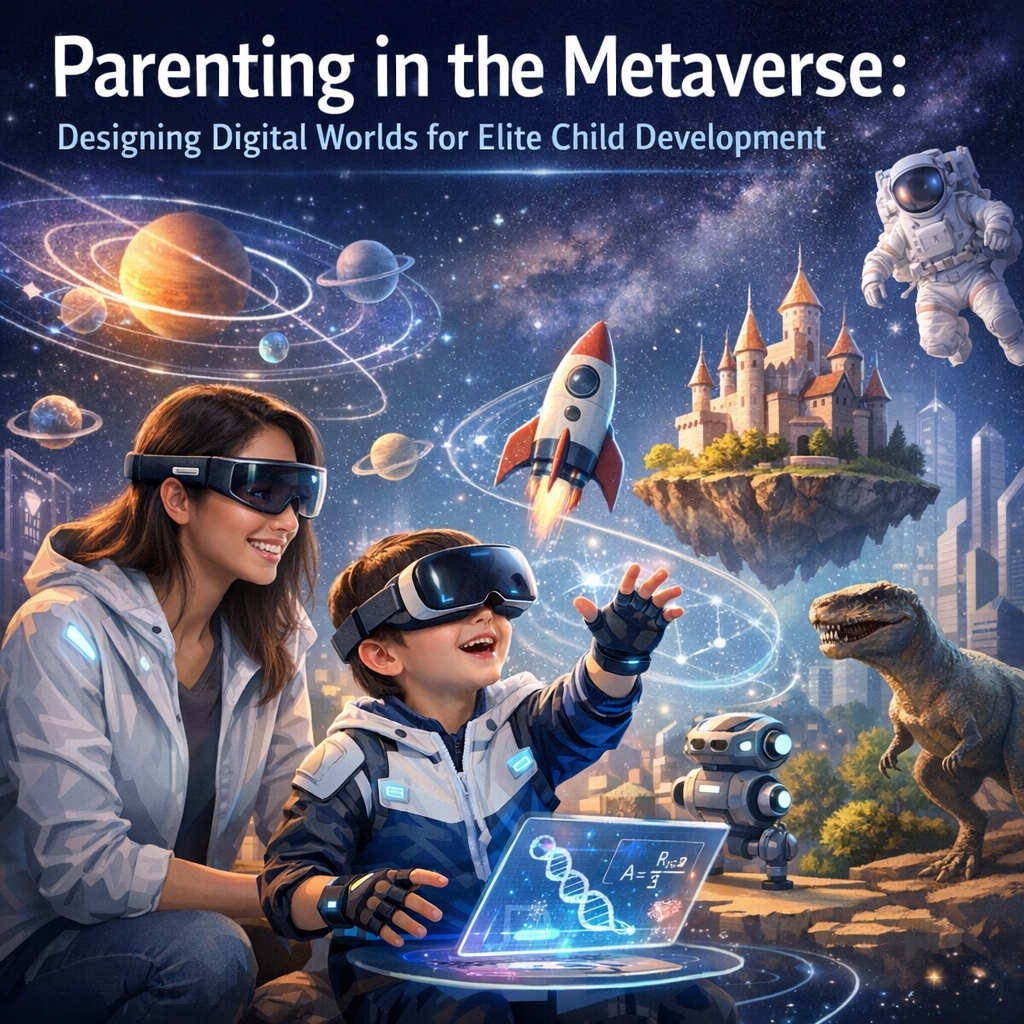
Parenting in the Metaverse: Designing Digital Worlds for Elite Child Development
Introduction
In an era where technology is reshaping almost every aspect of our lives, the metaverse emerges as a frontier rich with possibilities, particularly in the realm of child development. For parents with the resources to access this digital expanse, the metaverse offers unique opportunities to sculpt environments that promote learning, creativity, and elite development. The convergence of virtual reality, augmented reality, and digital gaming environments presents a platform where children can engage in enriched experiences that transcend traditional learning modes.
As the digital landscape evolves, so do the paradigms of parenting. Parents of means have the unique opportunity to integrate these cutting-edge technologies into their child’s developmental narrative, ensuring that they are not only adept in navigating the complexities of the digital age but also in harnessing its potential for educational enrichment. The metaverse offers tailored environments where luxury doesn’t just manifest in tangible affluence but in the enrichment of content that can be customized to suit the specific developmental needs and interests of each child.
Immersive educational experiences, such as virtual museums and curated learning spaces, allow children to explore diverse cultures and historical epochs firsthand. Elite families can leverage these platforms to provide their children with advanced learning modules that are not only interactive but also engaging, providing a more profound understanding proportionate to their developmental stage. This seamless integration of elite education with high technology ensures that the experience isn’t just passive, but active and participatory.
Moreover, this digital frontier allows parents to inculcate values of creativity, environmental consciousness, and global citizenship in their children from a young age. Through carefully curated digital spaces, children of means are introduced to high-quality content that aligns with their parent’s values, creating a unique ecosystem of learning and development tailored to cultivating well-rounded individuals prepared to thrive in an increasingly interconnected world.
Features
Several professional studies highlight the potential benefits and cautionary aspects of integrating virtual and augmented realities into child development. For instance, a study published in the journal Nature emphasizes the cognitive benefits virtual reality offers in enhancing spatial awareness and problem-solving skills in children ([Nature, 2021](https://www.nature.com)). This aligns with the finding that immersive environments stimulate brain regions responsible for higher-order thinking and creativity.
Moreover, research conducted at Stanford University’s Virtual Human Interaction Lab found that virtual reality can be an effective tool in developing empathy and social skills in children. By placing children in scenarios where they can experience different perspectives, VR environments can promote understanding and emotional intelligence, which are critical components of elite child development ([Stanford University, 2020](https://vhil.stanford.edu)).
However, alongside potential benefits, it is crucial to recognize the concerns around excessive exposure to digital environments. The American Academy of Pediatrics stresses the need for balance, highlighting that while virtual worlds offer substantial benefits, real-world interaction is irreplaceable for developing fundamental social skills and emotional resilience ([AAP, 2019](https://www.aap.org)).
To effectively design digital worlds for child development, parents must consider integrating educational content with personalized learning paths. This approach ensures that digital consumption translates into productive growth rather than passive content engagement. By collaborating with educators and child development specialists, parents can curate experiences that optimize learning and provide the luxury of bespoke educational journeys.
Parents should also be mindful of digital literacy and privacy. Equipping children with the knowledge to navigate these digital spaces safely and responsibly is imperative. Here, luxury extends beyond access and into education, preparing children not just to consume content but to create and innovate within these realms.
Conclusion
The metaverse offers a unique canvas for parents to craft personalized, elite developmental experiences for their children. While the promise of this digital frontier is vast, it requires a deliberate approach to ensure that experiences are enriching and balanced. By embracing the opportunities within virtual worlds and maintaining a cautious eye on potential pitfalls, parents can play a pivotal role in preparing their children to excel in the multidimensional, interconnected landscapes of the future.
References
1. [Nature](https://www.nature.com). (2021). Cognitive benefits of virtual reality in spatial awareness and problem-solving.
2. [Stanford University](https://vhil.stanford.edu). (2020). Virtual reality’s impact on developing empathy and social skills.
3. [American Academy of Pediatrics](https://www.aap.org). (2019). Digital media exposure in children.

Dominic E. is a passionate filmmaker navigating the exciting intersection of art and science. By day, he delves into the complexities of the human body as a full-time medical writer, meticulously translating intricate medical concepts into accessible and engaging narratives. By night, he explores the boundless realm of cinematic storytelling, crafting narratives that evoke emotion and challenge perspectives. Film Student and Full-time Medical Writer for ContentVendor.com