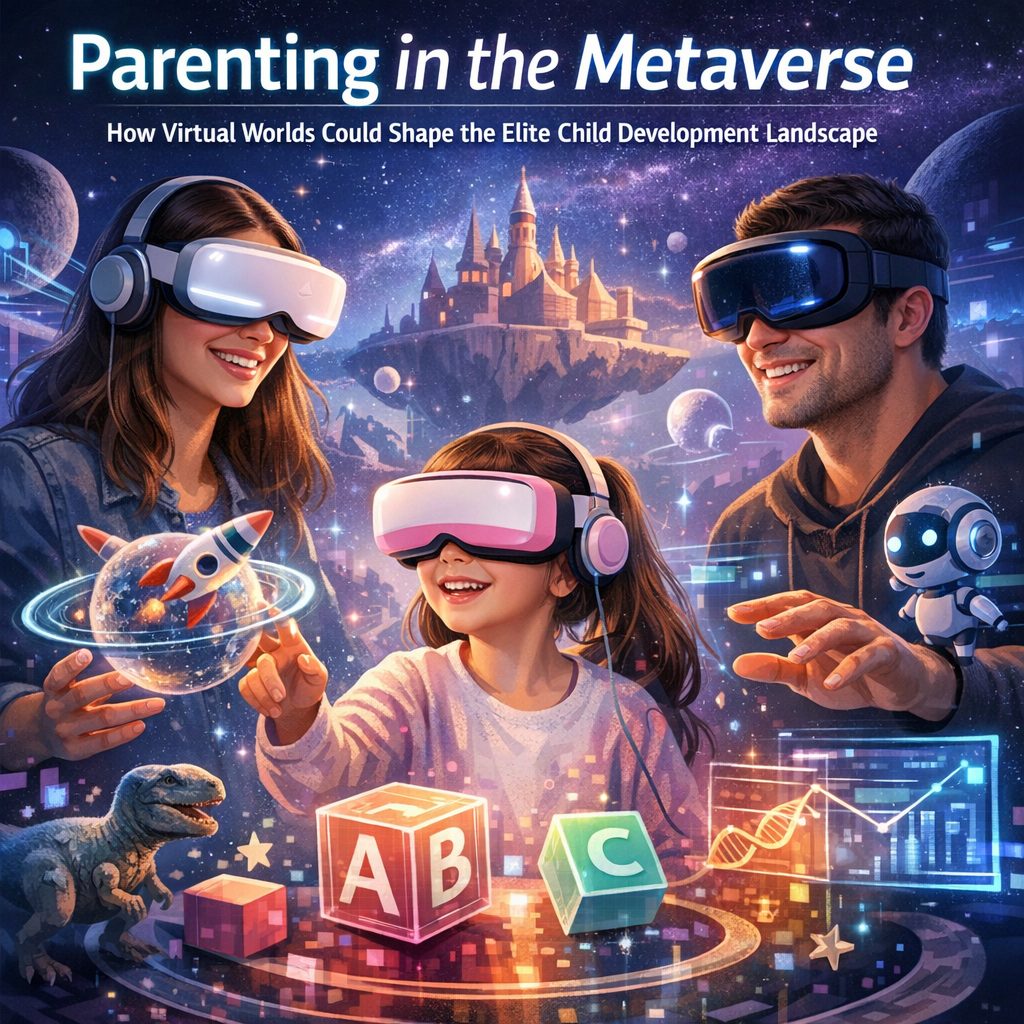
Parenting in the Metaverse: How Virtual Worlds Could Shape the Elite Child Development Landscape
Introduction
In the age of technology, where every aspect of our lives is intertwined with digital innovations, the concept of parenting is experiencing a transformative shift. Enter the Metaverse—a burgeoning virtual space that blends augmented reality (AR), virtual reality (VR), and the internet into a seamless digital ecosystem. For parents of means, the Metaverse presents an intriguing frontier that holds immense potential for enhancing elite child development. This virtual universe allows individuals to create, explore, and connect within immersive 3D environments, offering a unique platform for education, creativity, and social interaction.
The Metaverse promises to redefine how children learn, grow, and interact with the world around them. Imagine tailored educational experiences that adapt to a child’s learning pace, interactive history lessons that transport young minds to ancient civilizations, or sophisticated simulations that nurture problem-solving skills and creativity. For parents who seek to provide their children with the best, this technological evolution aligns perfectly with their aspirations for a holistic development approach.
Digital playgrounds within the Metaverse offer safe spaces for children to socialize, collaborate, and build. These platforms facilitate interactions with a diverse range of peers globally, transcending geographical limitations and exposing young minds to multicultural perspectives. A child in New York can engage in a virtual science fair project with a peer from Tokyo, fostering cross-cultural communication and collaboration at an early age.
However, with great power comes great responsibility. The concept of screen time gains a new dimension as the Metaverse blurs the lines between the virtual and real world. It’s crucial for parents to strike a delicate balance, ensuring that digital interactions complement real-life experiences. Furthermore, concerns about data privacy, online safety, and digital well-being must be addressed to harness the full potential of this virtual realm.
Features
Recent studies reveal the Metaverse’s potential benefits for child development. Research conducted by the [Joan Ganz Cooney Center](https://joanganzcooneycenter.org/) at Sesame Workshop highlights the impact of immersive digital experiences on learning. Their study emphasizes how VR and AR can accelerate learning by providing deeper engagement and retention compared to traditional methods. Children interacting with virtual simulations reportedly exhibit improved cognitive skills and enhanced creativity. This reinforces the notion that the Metaverse could become a powerful tool in enriching educational experiences.
A study from [Stanford University’s Virtual Human Interaction Lab](https://vhil.stanford.edu/) further explores the positive impacts of virtual experiences on empathy development. By placing children in scenarios where they assume different perspectives, the study suggests that VR can cultivate empathy and emotional intelligence. This aspect of virtual worlds holds particular relevance for elite parents who understand the value of emotional development alongside academic achievement.
Additionally, the [University of Melbourne’s](https://education.unimelb.edu.au/) research on “Educational Benefits of 3D Game-Based Learning” indicates that virtual environments promote critical thinking and problem-solving abilities in children. These digital landscapes encourage exploration and experimentation, fostering a proactive approach to learning that is essential in a rapidly changing world.
While the Metaverse offers remarkable opportunities, moderation and mindful integration into daily routines remain key. According to a report by [Common Sense Media](https://www.commonsensemedia.org/), the proper balance between screen time and real-world interactions is crucial for healthy development. Resources such as the [American Academy of Pediatrics](https://www.aap.org/) provide guidelines for digital consumption, advocating for tailored approaches based on individual child needs.
Conclusion
The Metaverse presents a new frontier for elite child development, offering unparalleled opportunities for learning, creativity, and social interaction. By embracing these virtual worlds, parents can prepare their children for future challenges while fostering critical skills in a dynamic environment. However, a balanced approach is essential to ensure that the digital realm enhances rather than eclipses real-world experiences. As technology continues to evolve, the Metaverse stands poised to reshape how we nurture and educate our children.

Dominic E. is a passionate filmmaker navigating the exciting intersection of art and science. By day, he delves into the complexities of the human body as a full-time medical writer, meticulously translating intricate medical concepts into accessible and engaging narratives. By night, he explores the boundless realm of cinematic storytelling, crafting narratives that evoke emotion and challenge perspectives. Film Student and Full-time Medical Writer for ContentVendor.com