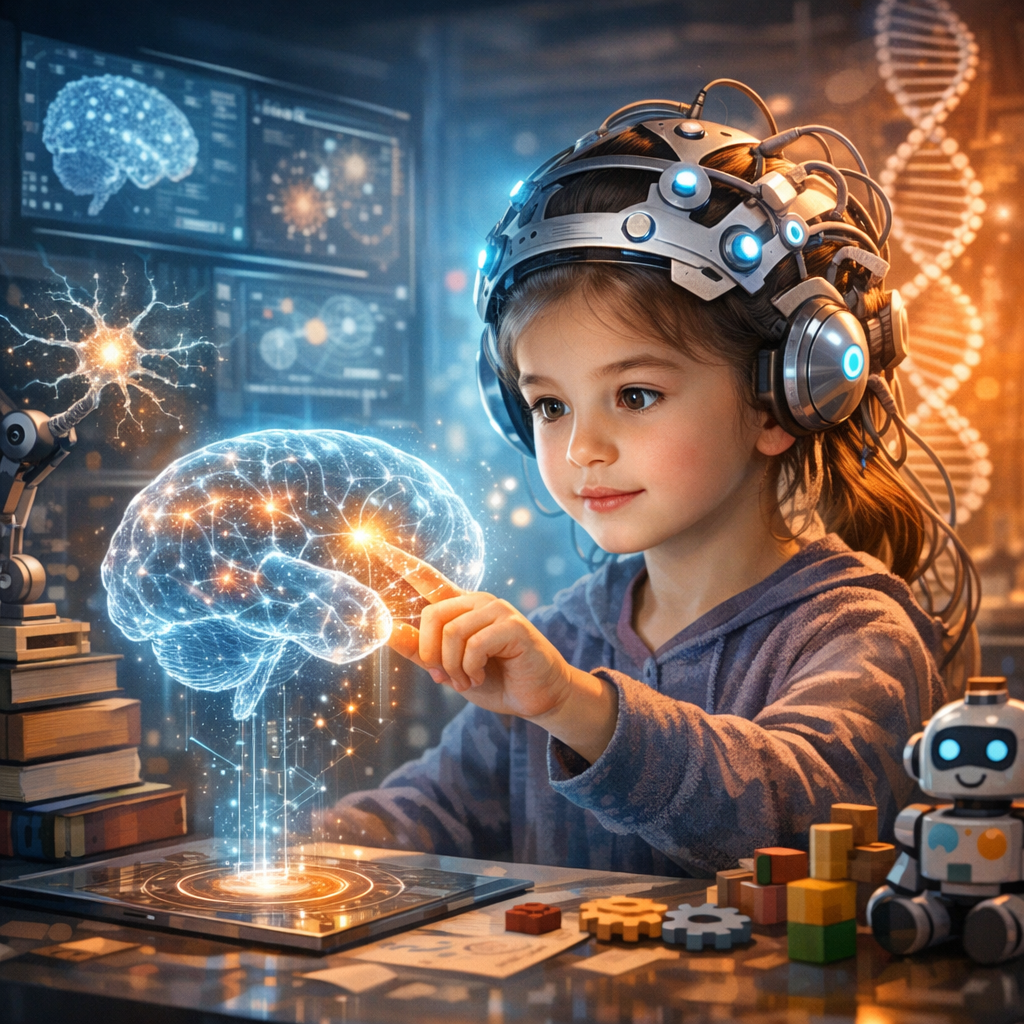
Transforming Childhood with Neuroscience: The Next Frontier of Cognitive Craftsmanship
Introduction
In a world where the boundaries of human potential are continuously pushed, the fusion of neuroscience and childhood development stands at the forefront of this evolution. Parents today are not just providers; they are architects of the future, eager to harness cutting-edge science to unlock the full potential of their children. Welcome to the era of cognitive craftsmanship, where the wonders of neuroscience are no longer confined to academic laboratories but are reshaping the paradigms of childhood education and development.
For parents of means, investing in their child’s future extends beyond traditional education. It involves tapping into scientific advancements to foster environments where young minds can thrive intellectually and emotionally, ultimately crafting individuals capable of navigating an increasingly complex world. As we delve into this revolutionary frontier, we will explore how neuroscientific discoveries can transform childhood experiences, enabling parents to empower their children in unprecedented ways.
The role of neuroscience in child development is profound. Groundbreaking studies have revealed the neural plasticity of young brains, highlighting their capacity to absorb and adapt to new information. This knowledge has led to the development of innovative educational strategies that prioritize personalized learning experiences to cater to each child’s unique neurological makeup. Emerging tools and technologies informed by neuroscience are paving the way for interactive and immersive environments that stimulate cognitive growth, emotional intelligence, and creativity.
But what does this mean for the modern parent? By embracing neuroscience-based approaches, parents can cultivate environments that enhance cognitive and emotional development through tailored educational practices. This involves becoming attuned to their child’s specific brain development stages, understanding how to introduce stimuli in a manner that promotes neural growth, and creating spaces where curiosity and imagination flourish. From designing sensory-rich play areas to engaging in activities that support brain health, the opportunities are limitless.
Features
Recent studies have illuminated the profound impact of neuroscience in crafting enriched childhood experiences. Research from institutions like [Harvard University](https://developingchild.harvard.edu) and [Carnegie Mellon University](https://www.cmu.edu) has shown that early childhood stimulation can significantly affect brain development and cognitive functioning. One pivotal study demonstrated that children exposed to environments rich in language and cognitive challenges developed more robust neural pathways, enhancing their problem-solving skills and adaptability in later years.
Moreover, the science of brain plasticity underscores the incredible capacity for young minds to reorganize and adapt. According to a study published in “[Nature Reviews Neuroscience](https://www.nature.com/nrn/),” neuroplasticity is particularly pronounced during childhood, providing a window of opportunity for parents to influence development positively. This groundbreaking work emphasizes that the quality of early experiences can actively shape the architecture of the developing brain.
The practical applications of these findings have given rise to innovative educational frameworks. Approaches such as the Reggio Emilia philosophy and Montessori education incorporate elements of self-directed, experiential learning that align with neuroscientific principles. These methodologies prioritize creating environments where children can learn through play, exploration, and social interaction, fostering both cognitive and emotional growth.
Additionally, digital platforms and applications designed with neuroscientific insights are becoming an integral part of child development strategies. Leveraging artificial intelligence and data analytics, these tools provide personalized learning experiences that adapt to each child’s pace and style of learning, supporting neural development through engaging and interactive content. Apps like “[Khan Academy Kids](https://learn.khanacademy.org/khan-academy-kids)” and “[Endless Alphabet](https://www.originatorkids.com/?puzzle=alphabet)” offer immersive, tailored experiences that capitalize on neurodevelopmental insights to nurture a lifelong love of learning.
Conclusion
As parents armed with such transformative knowledge, the challenge lies in integrating these scientific insights into everyday life. By embracing the potential of neuroscience, families can create nurturing environments that not only cater to the intellectual and emotional growth of their children but also prepare them for the uncertainties of tomorrow’s world. This cognitive craftsmanship heralds a future where childhood is seen not merely as a stage of life but as a meticulously crafted journey toward realizing human potential in its fullest form.

Dominic E. is a passionate filmmaker navigating the exciting intersection of art and science. By day, he delves into the complexities of the human body as a full-time medical writer, meticulously translating intricate medical concepts into accessible and engaging narratives. By night, he explores the boundless realm of cinematic storytelling, crafting narratives that evoke emotion and challenge perspectives. Film Student and Full-time Medical Writer for ContentVendor.com