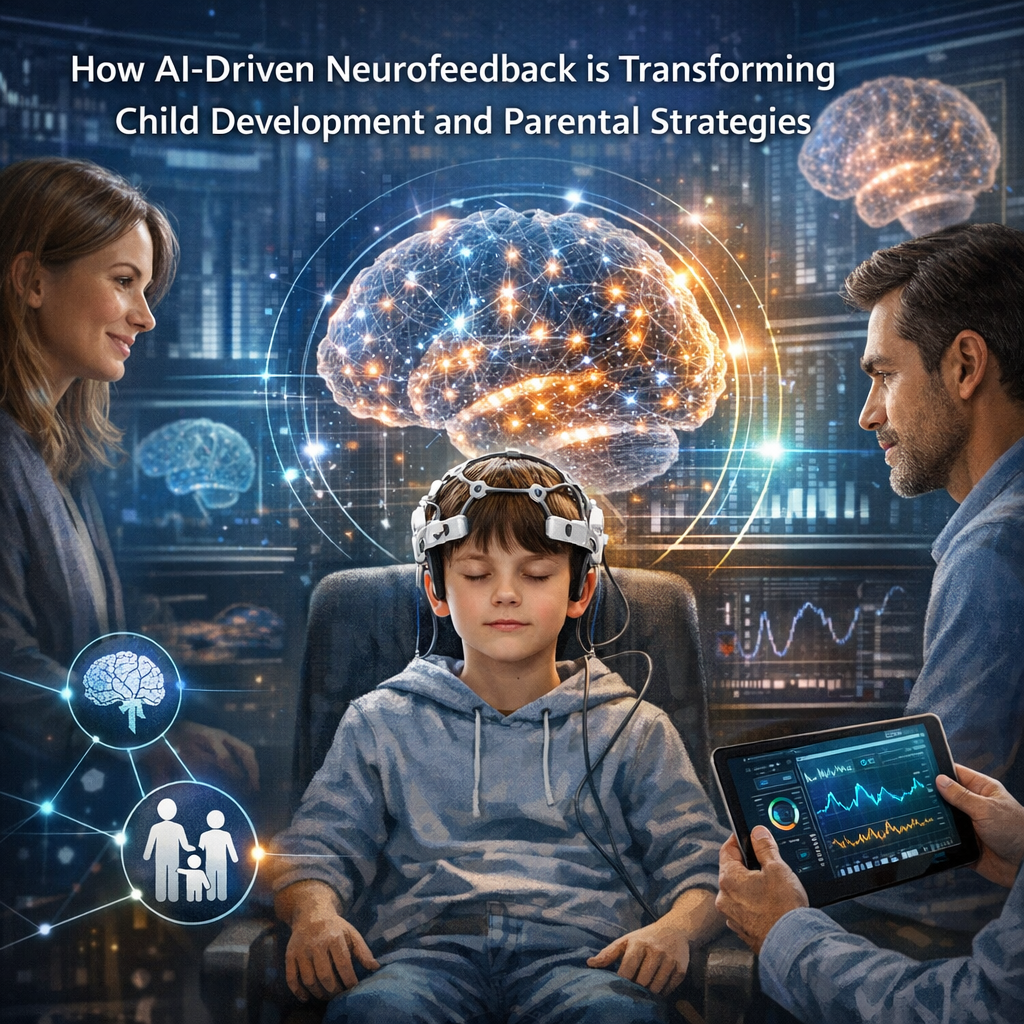
How AI-Driven Neurofeedback is Transforming Child Development and Parental Strategies
In today’s fast-paced world, parents are often on the hunt for innovative ways to nurture their children’s growth, leveraging the latest technology and psychological research to unlock their true potential. Enter AI-driven neurofeedback—a cutting-edge advancement that promises to revolutionize traditional methods of child development and parental strategies. But what exactly is it, and how can it redefine the way we understand and support our children’s growth?
AI-driven neurofeedback combines the sophistication of artificial intelligence with neurofeedback, a therapeutic intervention that uses real-time displays of brain activity to teach self-regulation of brain function. By monitoring a child’s brainwaves through EEG (electroencephalogram) sensors, AI algorithms process this data, providing feedback to the child in real-time and enabling them to modulate their brain activity consciously. Imagine a child playing a video game controlled entirely by their brainwaves, where advancing through levels requires them to achieve specific mental states—this is just one application of neurofeedback.
The potential applications are staggering. From enhancing cognitive functions like attention and memory to managing emotional states and boosting creativity, AI-driven neurofeedback offers a realm of possibilities for children. This technology promises to cater to the individual needs of children, creating a tailored developmental experience that highlights and strengthens innate abilities.
Moreover, for parents of means, this personalized approach enables a deeper understanding of their child’s unique neural landscape. It empowers them to apply strategic approaches, informed by neurofeedback data, to fascinate their children with unique, enriching experiences that align with their neurodevelopmental strengths and weaknesses. This doesn’t just pave the way for academic success; it can fundamentally transform a child’s social interactions and emotional well-being.
While the concept might seem futuristic, recent leaps in AI and neuroscience have brought this transformative technology to the forefront, particularly for families willing to invest in their children’s comprehensive development. But the magic doesn’t stop there; as we delve deeper, we find ground-breaking studies shedding light on the immense potential of AI-driven neurofeedback.
Features
Medicinal and psychological research provides increasing evidence of the efficacy of neurofeedback in enhancing various aspects of cognitive and emotional development in children. Studies indicate that neurofeedback can bring about significant improvements in attention deficit hyperactivity disorder (ADHD), anxiety, and other cognitive impairments. According to a [study published in Nature](https://www.nature.com/articles/s41598-017-16849-x), neurofeedback training has been linked with positive modulation of brain areas responsible for attention and executive control.
In a clinical trial conducted by Marzbani, Rezaei, and Norozi, [published in Neuropsychobiology](https://www.karger.com/Article/FullText/337608), it was demonstrated that neurofeedback could induce long-lasting changes in the brain’s cortical networks. After just a few sessions, children reportedly achieved heightened concentration levels, with improved task performance. The key to this efficacy lies in the real-time feedback mechanism facilitated by AI, which adapts the training to the child’s progress, thereby personalizing the experience.
Moreover, a study highlighted in [the Journal of Child Psychology and Psychiatry](https://acamh.onlinelibrary.wiley.com/doi/10.1111/jcpp.13320) showcased the potential of AI-driven neurofeedback in managing anxiety and stress levels in children. By nurturing self-regulation and enhancing emotional control, AI neurofeedback can be pivotal in helping children navigate the challenges of growing up in complex social environments.
The beauty of AI-driven neurofeedback lies in its non-invasive nature. Children remain in control, learning through play and curiosity, which fosters motivation and long-term engagement—crucial factors for sustained development and success. As research continues to unravel the intricacies of neuroplasticity and cognitive flexibility, it is clear that AI-driven neurofeedback is not just a transient trend but a transformative tool with long-lasting benefits for child development and parental strategies.
Conclusion
In conclusion, AI-driven neurofeedback stands at the frontier of child development, offering unparalleled insight and strategies for nurturing young minds. As parents of means explore this innovative domain, the opportunity to tailor developmental experiences to their children’s unique neurodevelopmental profiles can lead to smarter, healthier, and emotionally balanced individuals. This bespoke approach to child-rearing isn’t merely about leveraging technology; it embodies a commitment to understanding and fostering the inherent genius in every child, paving the path for a brighter, more resilient future.

Dominic E. is a passionate filmmaker navigating the exciting intersection of art and science. By day, he delves into the complexities of the human body as a full-time medical writer, meticulously translating intricate medical concepts into accessible and engaging narratives. By night, he explores the boundless realm of cinematic storytelling, crafting narratives that evoke emotion and challenge perspectives. Film Student and Full-time Medical Writer for ContentVendor.com