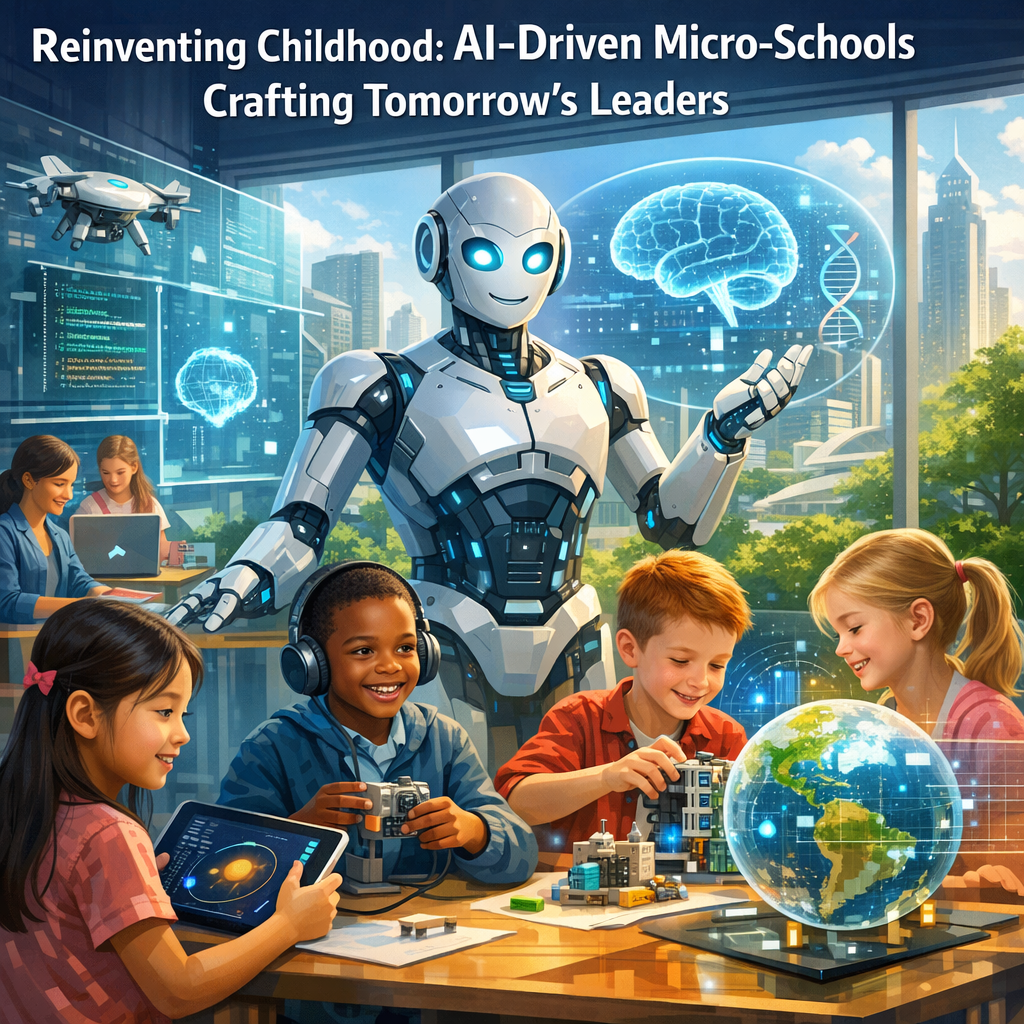
Reinventing Childhood: AI-Driven Micro-Schools Crafting Tomorrow’s Leaders
In the rapidly changing landscape of education, the fusion of advanced technology with traditional teaching methodologies is taking shape in groundbreaking ways. At the forefront of this educational evolution are AI-driven micro-schools, which have emerged as a beacon of personalized learning and innovative curricula designed for nurturing leadership skills in children. For parents with the means, investing in this avant-garde method promises an unparalleled educational experience for their children, arming them with the tools to lead in a technology-driven world.
As artificial intelligence permeates various aspects of our lives, its role in education is increasingly significant. AI-driven micro-schools leverage cutting-edge algorithms to tailor educational content to each child’s unique learning style and pace. These small, personalized learning environments cater to the individual needs of students, offering a bespoke educational experience that fosters creativity, critical thinking, and emotional intelligence—skills imperative for future leaders.
Micro-schools, by design, comprise small class sizes which allow for greater interaction between teachers and students. Coupling this intimate setting with AI’s ability to analyze and adapt to student performances in real-time provides educators with unprecedented insight into each child’s learning journey. This approach goes beyond traditional report cards, enabling more nuanced adjustments to teaching strategies and content emphasis to maximize learning outcomes.
Furthermore, the integration of AI in the classroom equips students with vital digital literacy skills, preparing them for an increasingly tech-centric world. The curriculum within these micro-schools is designed not just to meet the standard educational requirements but to elevate lessons with real-world applications. Lessons are interactive, leveraging virtual reality, gamification, and coding exercises to keep students engaged and intellectually stimulated. Adding to this, parents are reassured of a method that not only equips their children with knowledge but also prepares them for future technological landscapes.
By investing in AI-driven micro-schools, parents are providing their children with a pioneering education designed to empower them as future leaders. These institutions emphasize the development of ethical reasoning and responsible use of technology—key aspects of leadership in an era where digital considerations impact every decision.
Features
Numerous studies underscore the transformative potential of AI-driven educational settings. A report from [McKinsey & Company](https://www.mckinsey.com/industries/education/our-insights/how-artificial-intelligence-will-impact-k-12-teachers) highlights how AI in education can not only personalize learning experiences but also optimize administrative tasks, allowing teachers to focus more on direct student engagement. AI tools have shown to significantly increase efficiency, with up to 50% of routine administrative load potentially shifted to AI, freeing up educators to enhance the learning environment.
Moreover, research conducted by the [Education Endowment Foundation](https://educationendowmentfoundation.org.uk/public/files/Publications/digitalTech_EEF_LitReview.pdf) reveals that digital technology in classrooms, when effectively integrated, can lead to improved student outcomes. The study points out that the interactive nature of technology can enhance student motivation and engagement, essential ingredients in effective learning processes.
Furthermore, studies like those from the [World Economic Forum](https://www.weforum.org/agenda/2020/01/future-of-jobs-report-2020-ai-and-automation-impact/) have emphasized the necessity of equipping students with 21st-century skills, highlighting critical thinking, problem-solving, and adaptability as top priorities. AI-driven micro-schools are uniquely positioned to cultivate these skills through curricula that prioritize experiential learning and problem-based scenarios.
Safety and security concerns, often top-of-mind for parents, are also addressed in AI-driven micro-schools. According to research by [Cybersecurity Ventures](https://cybersecurityventures.com/cybersecurity-almanac-2020/), the integration of AI can bolster cybersecurity measures, ensuring that digital learning platforms maintain robust protection against data breaches, thus safeguarding student information.
The growing body of evidence points toward AI’s role in redefining educational environments to meet the demands of future economies. By crafting individualized learning experiences that cater to and evolve with each child’s needs, AI-driven micro-schools represent a profound shift in nurturing tomorrow’s leaders today.
Conclusion
The advent of AI-driven micro-schools heralds a new era in childhood education, one that aligns perfectly with the needs of the digital age. These schools offer an unparalleled blend of personalized learning, advanced digital literacy, and leadership cultivation. For parents seeking the very best for their children in an uncertain future, investing in this cutting-edge educational approach ensures their children not only adapt but thrive as tomorrow’s leaders. Through innovation and personal attention, AI micro-schools stand at the vanguard of reinventing childhood education.

Dominic E. is a passionate filmmaker navigating the exciting intersection of art and science. By day, he delves into the complexities of the human body as a full-time medical writer, meticulously translating intricate medical concepts into accessible and engaging narratives. By night, he explores the boundless realm of cinematic storytelling, crafting narratives that evoke emotion and challenge perspectives. Film Student and Full-time Medical Writer for ContentVendor.com