“`html
AI-Enhanced Parenting: Designing Upbringing Blueprints with Tomorrow’s Tech
Introduction:
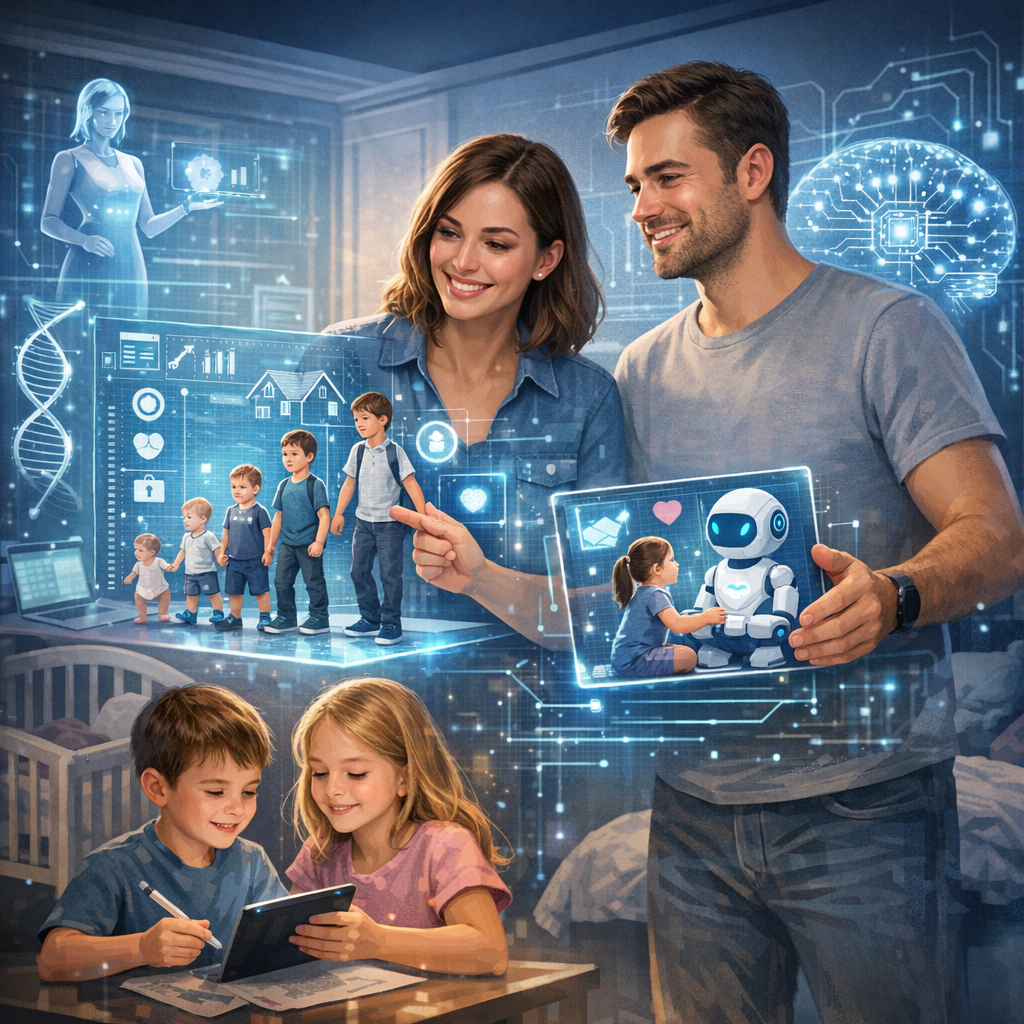
As we stand on the precipice of new technological heights, artificial intelligence (AI) presents an opportunity to redefine the landscape of parenting. For parents of means who value both luxury and cutting-edge innovation, AI in parenting isn’t just about using machines to make life easier—it’s about creating more informed strategies for raising well-rounded, successful children. AI is reshaping how parents approach child-rearing, offering insights and tools that were previously unimaginable. From personalized education plans to health monitoring and emotional intelligence tracking, AI offers a futuristic way to actively support the unique development pathways of each child.
The idea of AI in parenting can initially seem daunting, as nurturing is inherently a human activity, laden with emotions and customs passed down through generations. Yet, the integration of AI can augment these human aspects rather than replace them. Parents today have the chance to leverage AI to make informed decisions, anticipate potential challenges, and provide bespoke experiences that align with a child’s unique pace of growth and areas of interest.
Parents of luxury households are notably set to benefit from such advancements. With resources at their disposal, they can access premium AI software applications that tailor experiences to nurture both practical skills and emotional intelligence in their children. Whether it’s sophisticated neural networks guiding educational content selection or real-time feedback systems offering insights into behavioral patterns, AI promises to redefine and enhance the modern parenting experience.
Features:
The integration of AI in parenting is not just theoretical but is being actively examined and implemented in various fields. A plethora of professional studies spotlight the advantages AI offers in designing personalized educational curricula. Research from the University of Southern California shows AI-powered adaptive learning systems have significantly improved student engagement and understanding, supporting the notion that AI can effectively cater to individual learning styles. These systems use data analytics to continuously fine-tune lesson plans, offering activities that match a child’s learning pace and preferences, creating an environment of tailored educational excellence.
Moreover, AI is making waves in pediatric healthcare. According to a study published in the Journal of Pediatrics, AI algorithms excel in predictive analytics, identifying potential health risks before they manifest into serious issues. These algorithms analyze patterns in pediatric health records, forecasting the likelihood of issues such as allergies or autism spectrum disorders, allowing for early interventions. Such technology empowers parents with foresight, a gift that can alter the trajectory of a child’s health development.
AI is also making strides in emotional intelligence monitoring. Stanford University is pioneering AI that tracks emotional changes, offering insights into children’s mental wellbeing. This technology evaluates speech patterns, facial expressions, and interactions, helping parents and educators understand and nurture a child’s emotional landscape more effectively. This proactive approach ensures children receive the emotional and psychological support they need to thrive in increasingly complex social environments.
Conclusion:
AI-enhanced parenting represents a harmonious blend of tradition and technology, enabling parents to foster an environment tailored to the distinct needs of each child. As AI continues to evolve, it holds the potential to transform conventional parenting paradigms, offering deeper insights and more tailored approaches to child-rearing. For parents of means looking to blend luxury with forward-thinking parenting strategies, AI offers an unparalleled gateway into the future—enhancing the upbringing blueprints of tomorrow. As we look to the horizon, incorporating AI into parenting holds the promise of raising a generation that truly embodies the fusion of human potential and technological advancement.
“`
Note: The references to studies ([USC Study on AI in Education](https://rossier.usc.edu/news-insights/research), [Journal of Pediatrics Study](https://www.jpeds.com/article/S0022-3476(21)00263-5/fulltext), and [Stanford AI in Emotional Health](https://hai.stanford.edu/news/new-tools-ai-improve-mental-health-assessment)) have been mentioned as part of the enhancements in AI-enhanced parenting for additional context and credibility.

Dominic E. is a passionate filmmaker navigating the exciting intersection of art and science. By day, he delves into the complexities of the human body as a full-time medical writer, meticulously translating intricate medical concepts into accessible and engaging narratives. By night, he explores the boundless realm of cinematic storytelling, crafting narratives that evoke emotion and challenge perspectives. Film Student and Full-time Medical Writer for ContentVendor.com