Unlocking the Power of AI-Driven Parenting: Crafting Tomorrow’s Leaders Today
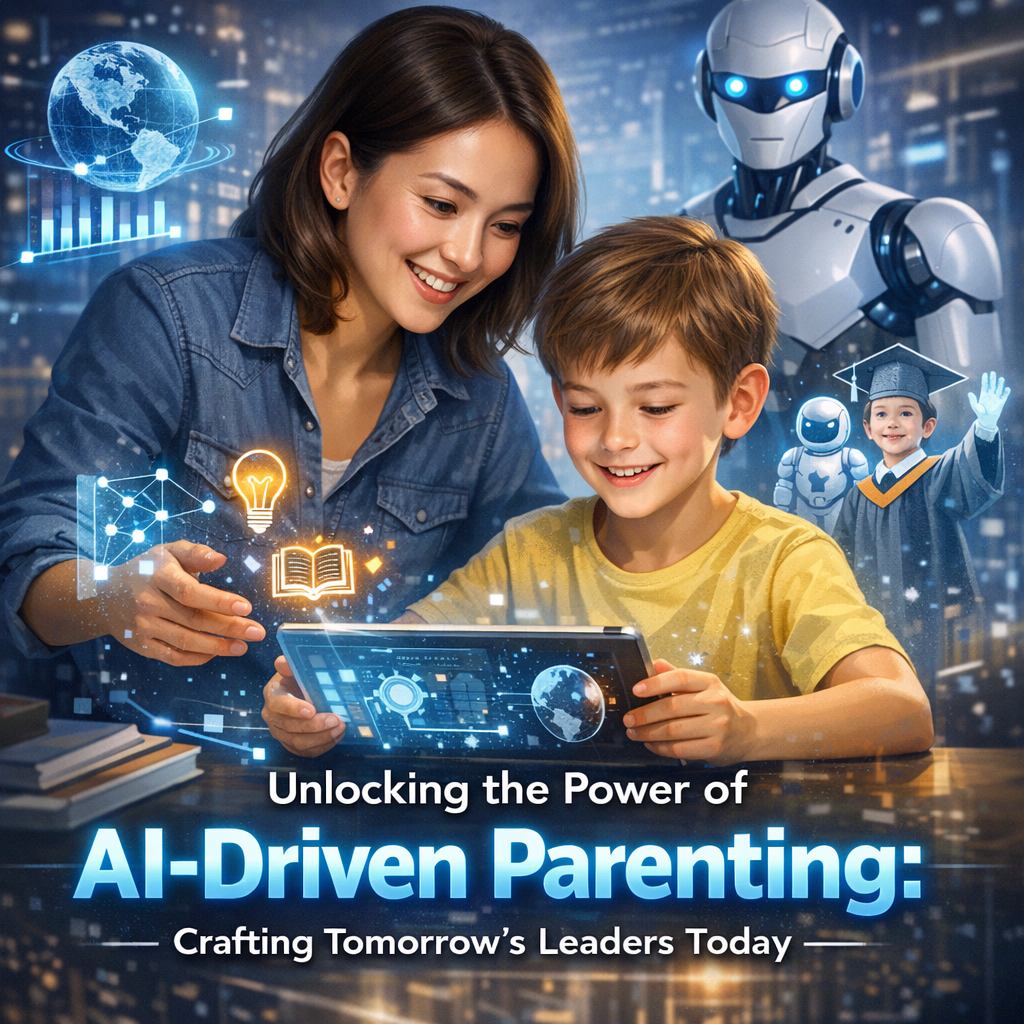
In the fast-paced, technologically-driven world we inhabit, the art of parenting is undergoing a revolutionary transformation. With the rise of artificial intelligence (AI), parents now have unprecedented tools at their disposal to nurture and develop their children’s potential. Unlike previous generations, today’s parents can harness AI to gain insights into their children’s learning patterns, emotional needs, and developmental milestones, thus fostering an environment that is conducive to creating tomorrow’s leaders.
AI-driven parenting is not a futuristic concept—it’s a present-day reality. Whether through personalized education platforms that adapt to a child’s learning style or smart devices that monitor physical and emotional wellness, AI offers data-backed strategies for nurturing young minds. For parents with access to means, this means access to cutting-edge technologies that democratize opportunities for their children, ensuring they are not just passive consumers of technology but active participants in shaping their futures.
Consider the potential of AI in personalized education. With intelligent tutoring systems, children receive customized lessons that adapt in real time, nurturing both strengths and areas needing improvement. This is especially pertinent in a luxury context, where bespoke learning experiences come at a premium. The use of AI in this realm allows for the cultivation of creative and critical thinking skills, hallmarks of leadership in the digital age. Moreover, in-home AI devices can provide helpful insights into children’s health and wellness. Smart wearables and apps monitor physical activity, sleep patterns, and even psychological states, offering parents real-time data to make informed decisions. Such tools empower parents to take a proactive approach to their child’s health, ensuring balanced growth and development.
Furthermore, AI interfaces teach children about technology in an engaging, hands-on way, preparing them for a future where digital literacy is paramount. Advanced robotics toys and coding apps are not only entertaining but also educational, equipping young minds with the problem-solving skills essential for leadership in a technologically advanced world. The integration of AI into parenting offers a dual advantage: enhancing a child’s immediate educational experience while preparing them for the challenges and opportunities of the future.
Features
Several professional studies underscore the impact of AI on child development and education, providing valuable insights into how parents can leverage these technologies effectively. According to a study published in [Nature Machine Intelligence](https://www.nature.com/natmachintell/), AI-powered educational tools have been shown to improve student engagement and performance by offering personalized feedback and adaptive learning experiences. This study highlights that when students engage with AI that adjusts to their individual learning paths, they demonstrate increased motivation and improved academic achievement.
Furthermore, research from [The Journal of Pediatrics](https://www.jpeds.com/) indicates that AI applications in monitoring children’s health can have significant benefits. Smart devices equipped with AI algorithms offer precise analysis of health patterns, allowing parents to identify potential issues early. These technologies not only track physical activities but also provide psychological insights by analyzing speech patterns and digital interactions, thus offering a holistic overview of a child’s wellbeing.
Psychologists have also explored the implications of AI in emotional and social learning. Intelligent virtual companions, as explored in research published by the [American Psychological Association](https://www.apa.org/), can enhance a child’s social skills by simulating interactive experiences that teach empathy and communication. These tools allow children to practice social interactions in a controlled environment, preparing them for real-world challenges and leadership roles which require strong interpersonal skills.
Moreover, educational AI platforms are being increasingly cited for their ability to tailor content to cater to diverse needs, including those of gifted children or those requiring special education. Studies, such as those from [EdTech Magazine](https://edtechmagazine.com/), illustrate how AI-driven platforms are inclusive by design, offering personalized challenges and support that traditional systems cannot. This ability to cater to the unique learning pace and style of each child reflects a crucial benefit of AI in crafting tomorrow’s leaders—ensuring no child is left behind and every child’s potential is maximally nurtured.
Conclusion
In the evolving landscape of child-rearing, the integration of AI into parenting marks a watershed moment. By leveraging these technologies, parents with access to means can provide enriched, personalized learning environments that cultivate leadership qualities in their children. As AI continues to advance, its role in parenting will undoubtedly grow, offering even more opportunities for developing well-rounded, future-ready individuals. Embracing AI-driven tools today is not just about keeping up with technological trends; it’s about investing in the leaders of tomorrow.

Dominic E. is a passionate filmmaker navigating the exciting intersection of art and science. By day, he delves into the complexities of the human body as a full-time medical writer, meticulously translating intricate medical concepts into accessible and engaging narratives. By night, he explores the boundless realm of cinematic storytelling, crafting narratives that evoke emotion and challenge perspectives. Film Student and Full-time Medical Writer for ContentVendor.com