Introduction to Self-Directed Learning
Self-directed learning (SDL) is a crucial skill that enables individuals to take charge of their educational experiences. It empowers learners to pursue knowledge at their own pace, develop problem-solving skills and become lifelong learners. As society progresses into an era where adaptability, independent thinking, and continuous learning are paramount, understanding how to foster self-directed learning skills across different age groups has become more important than ever.
Understanding Individual Learning Approaches
Self-directed learning is not a one-size-fits-all approach; rather, it requires an understanding of the cognitive, emotional, and social development of learners at different stages. What works for a preschooler will not be suitable for a teenager or an adult. As children grow, their capacity for self-regulation, critical thinking, and motivation increases, allowing educators and caregivers to introduce more sophisticated tools and methods to encourage independence. Through the careful implementation of age-appropriate learning strategies, educators can foster a generation of learners who are confident, capable, and equipped to handle the challenges of a rapidly changing world.
Impact on Personal Development
Research has shown that self-directed learning not only boosts academic achievement but also has a profound impact on mental health and overall life satisfaction. Learners who possess self-directed learning skills report higher levels of self-esteem, resilience, and intrinsic motivation (Tough, 1979). This article explores the different ways in which self-directed learning can be nurtured at various stages of life, based on the latest research and educational practices.
Early Childhood Development (Ages 3-8)
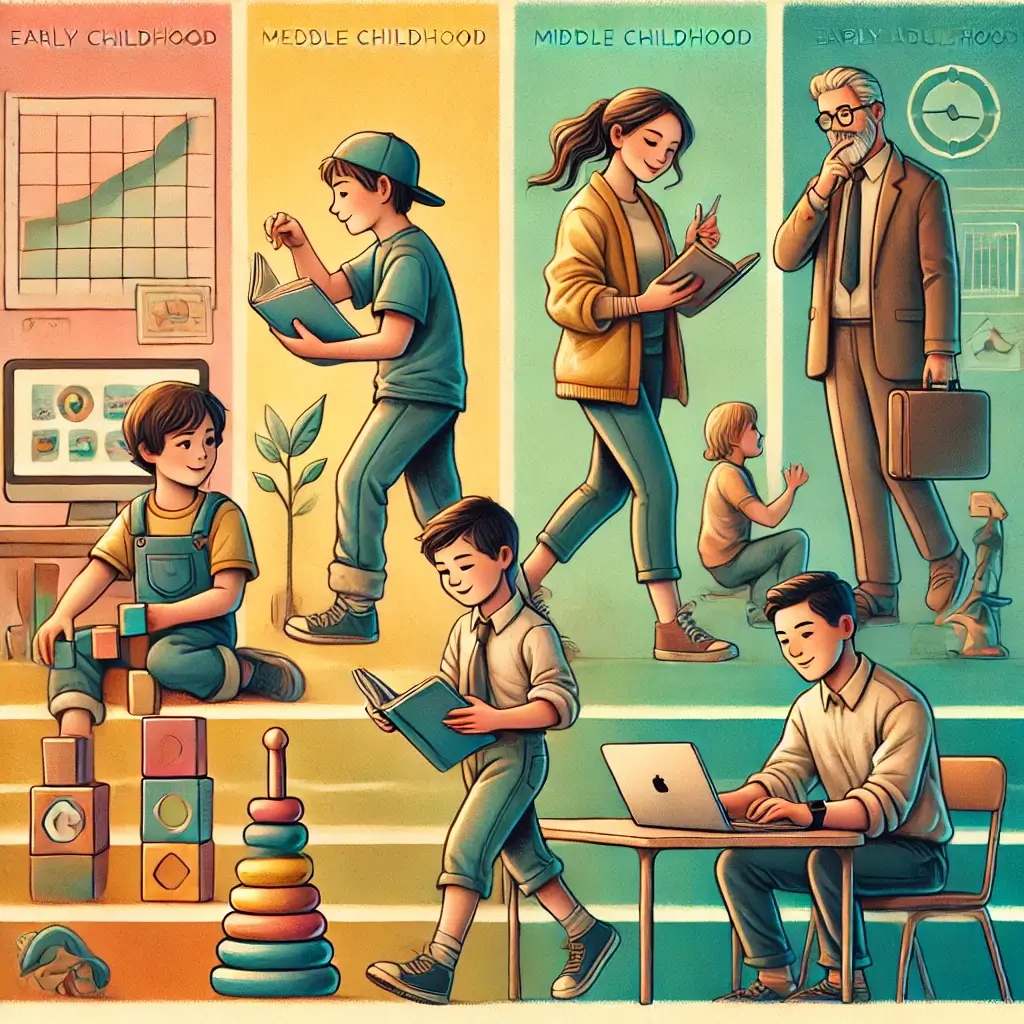
In early childhood, self-directed learning begins with the development of foundational skills such as curiosity, self-awareness, and emotional regulation. At this stage, children are still learning about the world and their place in it, making it essential to provide them with opportunities for independent exploration and decision-making. According to the Journal of Early Childhood Education (2020), the introduction of structured play and inquiry-based activities helps children develop problem-solving skills and fosters a love of learning.
Practical Implementation in Early Years
For example, caregivers can encourage young children to choose their own books, engage in hands-on activities like building with blocks, or solve simple puzzles. These types of activities promote autonomy while providing children with the chance to reflect on their choices and learn from trial and error. At this age, setting clear expectations and providing a safe, supportive environment are crucial for encouraging self-directed learning. Children also benefit from routines that include dedicated time for independent play and reflection, helping them build essential self-regulation skills.
Middle Childhood Learning Development (Ages 9-12)
As children enter middle childhood, their cognitive abilities become more advanced, allowing for more complex learning experiences. Research in Cognitive Development (2021) highlights that children in this age group are increasingly capable of abstract thinking, which opens up new opportunities for self-directed learning. Middle childhood is the ideal time to introduce activities that require critical thinking, independent research, and collaboration.
Project-Based Learning Approaches
For example, students can be tasked with researching a topic of interest, creating presentations, or engaging in project-based learning. Teachers can provide resources but allow students to direct their own learning processes, fostering a sense of responsibility and ownership over their work. At this stage, students can also begin setting personal learning goals and reflecting on their progress. Providing opportunities for self-assessment, such as having students track their own academic achievements or evaluate their work, can help them develop self-monitoring skills that are critical for lifelong learning.
Collaborative Learning Strategies
Additionally, social learning and collaboration with peers become increasingly important. Group projects and team-based activities help students develop interpersonal skills and learn how to share ideas and solve problems together. By encouraging group problem-solving tasks and collaborative learning environments, educators can enhance self-directed learning and promote teamwork.
Adolescent and Young Adult Development (Ages 13+)
In adolescence, self-directed learning takes on a more sophisticated form. Teenagers and young adults are capable of managing more complex projects, setting long-term goals, and integrating feedback into their learning process. A study in the Journal of Educational Psychology (2022) emphasizes that self-regulation becomes a key component of self-directed learning during this stage. Adolescents who can plan, execute, and reflect on their work are better equipped for academic and professional success.
The Role of Mentorship
One of the most effective ways to foster self-directed learning in this age group is through mentorship. Studies have shown that adolescents benefit from guidance that allows them to explore their interests in a structured way while still maintaining a sense of autonomy (Zimmerman, 2002). Mentors can help students navigate challenges and provide constructive feedback and offer support as they work on independent projects, whether academic or personal.
Digital Learning Tools and Platforms
Digital tools and online learning platforms have also become indispensable for fostering self-directed learning in young adults. Platforms such as Coursera, Khan Academy, and edX allow individuals to pursue courses outside traditional classroom settings, offering a flexible and personalized approach to education. By using these tools, adolescents and young adults can explore subjects that interest them and acquire new skills at their own pace, providing them with the autonomy to control their learning experiences.
Evolving Nature of Self-Directed Learning
Self-directed learning is a dynamic process that evolves over time, shaped by the developmental needs of individuals. From nurturing curiosity and independence in early childhood to developing complex problem-solving and self-regulation skills in adolescence, self-directed learning has a profound impact on academic achievement and personal growth. By tailoring strategies to meet the needs of learners at different stages of life, educators can cultivate a generation of confident, capable individuals who are prepared to navigate the challenges of the modern world.
Future Implications
By recognizing and fostering self-directed learning from an early age, society can help individuals develop the tools and mindset necessary to thrive in a rapidly changing, knowledge-driven world. As research continues to shed light on the benefits of self-directed learning, it is clear that this approach is not just about academics—it’s about preparing individuals for lifelong success and well-being.
References
Tough, A. (1979). The Adult’s Learning Projects: A Fresh Approach to Theory and Practice in Adult Learning. Toronto: Ontario Institute for Studies in Education.
Journal of Early Childhood Education (2020). “Inquiry-Based Learning and Its Impact on Early Childhood Development.”
Cognitive Development (2021). “Critical Thinking and Problem-Solving Skills in Middle Childhood.”
Journal of Educational Psychology (2022). “The Role of Self-Regulation in Adolescent Self-Directed Learning.”
Zimmerman, B. J. (2002). “Becoming a Self-Regulated Learner: An Overview.” Theory into Practice, 41(2), 64-70.