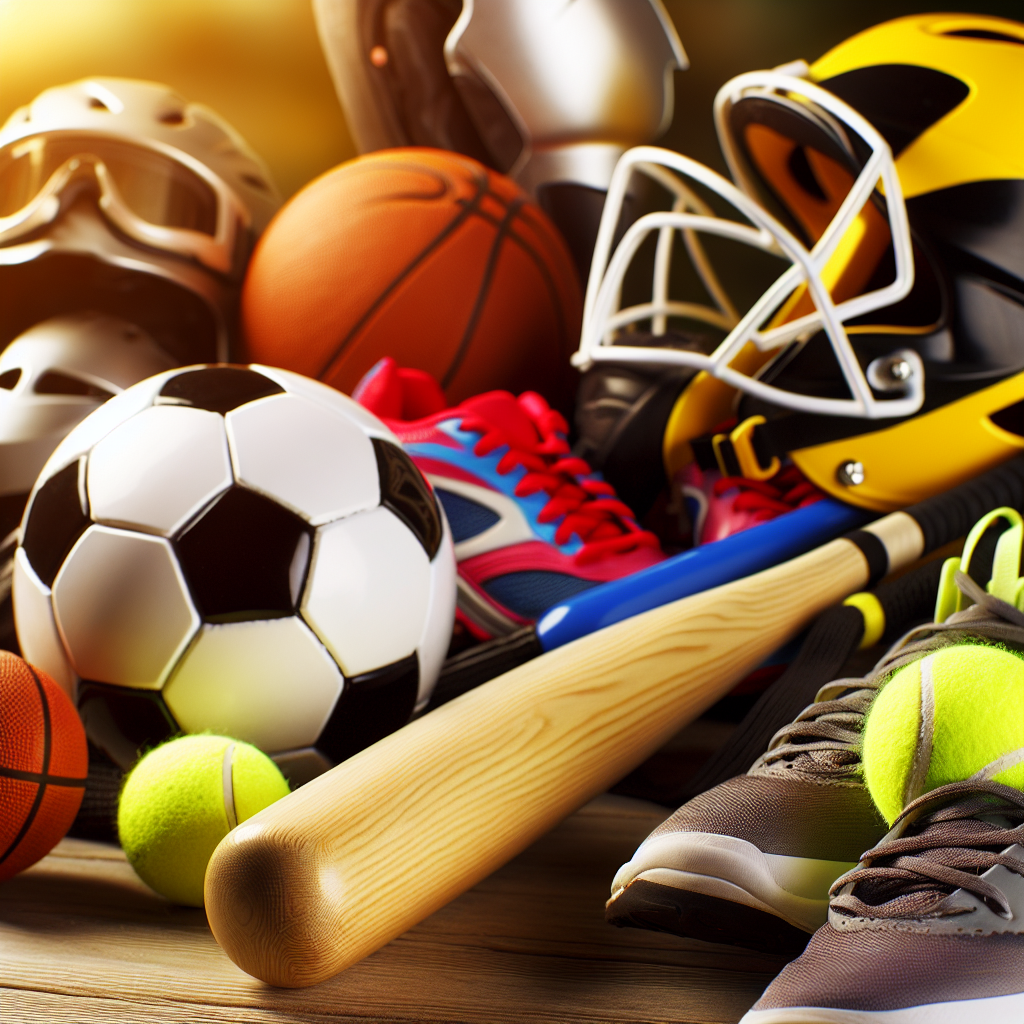
Premium Sports Equipment for Young Athletes
Introduction
In today’s increasingly competitive youth sports landscape, **elite parents** are more invested than ever in providing their children with every advantage to **thrive**, **excel**, and reach their full athletic potential. This includes top-tier coaching, specialized training programs, and perhaps most fundamentally, **premium sports equipment**. While **talent** and **dedication** play crucial roles in athletic development, the **quality of a young athlete’s gear** can significantly influence **performance**, prevent **injuries**, and build long-term **confidence**—especially during those key formative years.
For **parents of means** aiming to nurture both the performance and wellness of their children, investing in **high-performance athletic gear** is not indulgence; it’s a strategic decision. From **sport-specific footwear** engineered with advanced biomechanics to **custom-fit protective gear** crafted from aerospace-grade materials, today’s high-end sports equipment merges **science** with **sportsmanship**. But beyond luxury, what differentiates premium equipment from standard offerings is its integration of **technology**, **ergonomics**, and **personalization**. These elements align with children’s **anatomical** and **developmental needs** in ways that generic gear simply cannot.
Children’s bodies are in a dynamic state of **growth and transformation**. Bones are developing, muscles are lengthening, and coordination is rapidly evolving. Inferior or **ill-fitting equipment** can cause more than just a frustrating game—it can lead to **long-term injury** or **developmental setbacks**. Parents investing in elite gear are not merely buying comfort or prestige—they are directly **reducing risk** and enhancing the long-term **athletic journey** of their children.
Moreover, competition at the youth level has intensified. **High-stakes scholarships**, elite **sports academies**, and **junior national teams** are all now tracking talent at younger age thresholds. Given this environment, outfitting a young athlete with premium equipment is not just a matter of convenience but a form of **early-stage career investment**. At the top levels, every detail counts—from the **angle of a tennis racquet’s balance** to the **custom-fitted mouthguard** worn during a contact sport.
In this post, we explore the **science behind premium youth sports gear**, highlight the advantages substantiated by recent studies, and help you make informed, purposeful choices to support the aspirations of your young athlete.
Features
Premium sports gear is more than just a matter of luxury branding—it’s grounded in credible, scientific data on **performance improvement**, **safety**, **ergonomics**, and **psychological development**. Several professional and medical studies support the value of **high-end equipment** in optimizing young athletes’ experiences and **minimizing injury risks**.
One of the principal areas of concern in youth sports is **injury prevention**. Research from the American Academy of Pediatrics underscores the need for sport-specific, age-appropriate, and properly sized equipment in safeguarding growing bodies. **Improperly fit** or **low-quality gear** can significantly increase the risk of **overuse injuries**, especially in **high-impact sports** like football, hockey, or soccer. A 2020 review in the Journal of Pediatric Orthopaedics showed that injury prevention is most effective when youth-specific gear is used to accommodate the **biomechanical demands** of children’s growing bodies.
Footwear is a clear example where premium offers a real advantage. Brands that invest heavily in **biomechanical research**—such as **Nike** with its **ZoomX footplate technology**, or **Adidas’s Boost soles** that provide enhanced **energy return**—offer shoes that better protect **joints**, correct **gait**, and **absorb impact** far more effectively than mid- or low-tier options. For adolescents experiencing rapid growth or anatomical challenges like **flat feet**, **custom-molded cleats** or **orthotic inserts** seen in premium lines like **Under Armour’s Elite Youth Program** can offer essential support, helping to prevent fatigue and injury during training and game time.
The importance of **custom-fitted head and face protection** continues to grow across youth sports. Studies from the Virginia Tech Helmet Lab show that helmets equipped with high-end protective materials and enhanced fit technology can reduce **concussion risks by over 25%** compared to standard models. Brands such as **Riddell** now offer helmets with **lab-scanned, 3D-printed padding** to perfectly conform to a child’s head shape, significantly reducing **impact-related injuries** during collisions.
Beyond protection, **customization** plays a crucial role in sports where **equipment mechanics** affect skill development and control. In **tennis**, **baseball**, and **golf**, the weight, length, and grip of a piece of equipment can greatly influence a child’s technique and consistency. Leading brands like **Babolat** and **Wilson** now offer **junior tennis rackets** with customizable frame sizes and string tensions, helping tailor performance to a child’s strength, height, and hand development. A 2019 study from the Sports Health Journal confirmed that incorrect racket size and density were linked to a significant rise in shoulder and wrist injuries in players aged 8–14, highlighting the importance of size-specific gear.
There is also a powerful **psychological component** to consider. According to a 2021 study in Frontiers in Psychology, youth athletes who used gear they perceived to be “professional” demonstrated notably higher **self-confidence**, **focus**, and **engagement levels**. This psychological advantage can foster long-term passion, resilience, and even greater performance, especially when it’s paired with physical health and comfort. Young athletes often emulate the pros, so when they wear gear similar to what top athletes use, it can have a measurable impact on their mindset, accountability, and competitive drive.
Conclusion
Investing in **premium sports equipment** for your young athlete is much more than a statement of excellence—it’s a profound commitment to their **safety**, **performance**, and **personal growth**. The science overwhelmingly supports the positive impact that **well-designed, personalized equipment** can have on the developmental journey of youth sports.
As a parent with resources, outfitting your child with elite gear is not about vanity—it’s about **leadership**, about nurturing potential with **intentionality**, and ensuring that each piece of equipment contributes to both **immediate success** and **long-term well-being**. When every swing, stride, and save matters, your investment could mean the difference between fleeting participation and a lifetime love for sport.
Equipping your child with the best is an act of both **protection** and **inspiration**. It ensures they step onto the field or court prepared to give their best—physically, mentally, and emotionally.
References
– American Academy of Pediatrics – Policy Statement on Sports Protective Equipment for Children
– Journal of Pediatric Orthopaedics – Injury Prevention Strategies in the Growing Athlete
– Virginia Tech Helmet Lab – STAR Ratings for Youth Helmets
– Frontiers in Psychology – The Role of Sports Equipment in Youth Athlete Confidence and Performance
– Sports Health Journal – Biomechanics and Racket Design in Youth Tennis

Dominic E. is a passionate filmmaker navigating the exciting intersection of art and science. By day, he delves into the complexities of the human body as a full-time medical writer, meticulously translating intricate medical concepts into accessible and engaging narratives. By night, he explores the boundless realm of cinematic storytelling, crafting narratives that evoke emotion and challenge perspectives. Film Student and Full-time Medical Writer for ContentVendor.com