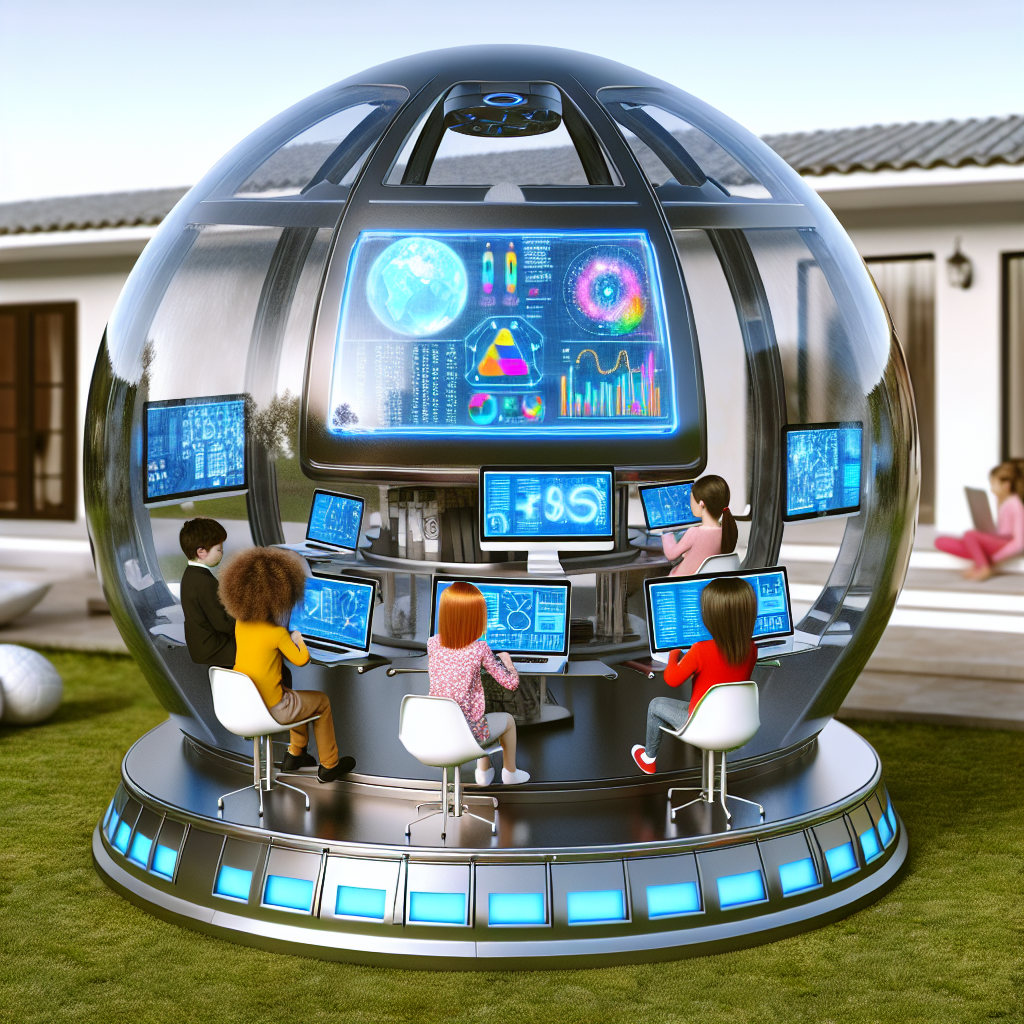
Why Billionaire Parents Are Ditching Montessori for AI-Powered Hyperlearning Pods
In recent years, the landscape of early education has witnessed a seismic shift as a new trend emerges among **high-net-worth households**. Historically, **elite families** have inclined towards the **Montessori approach**, lauded for its focus on **child-led learning** and development of **soft skills** through hands-on activities. However, an increasing number of **billionaire parents** are now transitioning towards **AI-powered hyperlearning pods**, a cutting-edge educational model that promises to revolutionize the way children learn.
This shift is influenced by several factors that underscore the limitations parents see in traditional Montessori schooling. While Montessori classrooms provide invaluable skills in fostering **creativity**, **independence**, and **critical thinking**, they often lack the **technological integration** needed to prepare children for an increasingly digital world. As technology becomes ingrained in every aspect of our lives, many parents with means recognize the importance of equipping their children with the **technological fluency** that AI-powered learning offers.
AI-powered hyperlearning pods consist of small groups of students working with teachers and **artificial intelligence systems**. These pods are intelligently designed to cater to a child’s unique learning speed and style. They focus on personalized education strategies using cutting-edge technology that aligns with a child’s natural pace and interests. The **real-time feedback** provided by AI systems allows for adaptive learning experiences that can evolve with the child, unlike the relatively static environment of traditional classrooms. Moreover, these pods frequently include an **interdisciplinary approach**, merging subjects such as math, coding, humanities, and the arts, often in **project-based formats**.
This educational innovation also addresses many logistical challenges faced by affluent families. With AI technology, children are exposed to **globally sourced knowledge** and cultural experiences from the comfort of their homes or private learning centers. This remote capability means that high-profile families can maintain hectic travel schedules without sacrificing consistent education for their children. The ability of AI tools to function 24/7 also supports learning that works around family schedules, offering immense flexibility.
Furthermore, AI tools often come equipped with features that monitor cognitive development and offer personalized support. This tailored learning experience ensures children are continually challenged and engaged, stimulating their intellectual growth in a way that standardized curriculums cannot. Additionally, these systems can assist in identifying potential learning disabilities or accelerated capabilities, providing parents with more accurate insights into their child’s educational needs.
Features
Educational and psychological research strongly supports the integration of technology in learning environments. A study published in the [*Journal of Educational Psychology*](https://psycnet.apa.org) highlighted that personalized learning technologies can significantly improve academic performance by tailoring educational content to meet individual learning needs. This ability to customize learning potentially accelerates the educational process by focusing on each child’s strengths and addressing their weaknesses, a feature AI-powered pods are designed to maximize.
Furthermore, a study from the [*National Bureau of Economic Research*](https://www.nber.org) found that students engaged in personalized learning frameworks showed higher rates of improvement in mathematics and reading than those participating in traditional education systems. The research emphasizes that personalized learning, facilitated effectively by AI, is a key factor in increasing student engagement and comprehension.
Professionals in the field also highlight the critical importance of preparing children for a technologically-driven future. According to a report from the [World Economic Forum](https://www.weforum.org), 65% of children entering primary school today will eventually work in completely new job types that do not yet exist. Ensuring these children are comfortable with technology and capable of critical thinking and problem-solving in digital contexts is essential.
From a psychological perspective, AI in education supports heightened focus and motivation. The interactive nature of digital learning tools and immediate feedback loops help maintain student engagement and provide the scaffolding needed to build self-confidence and mastery. Research from the [*International Journal of Educational Technology in Higher Education*](https://link.springer.com) supports the idea that these elements are integral to intrinsic motivation and self-directed learning—qualities that are certainly desirable in any educational approach.
Conclusion
As technology continues to infiltrate all corners of society, the shift from traditional Montessori models to **AI-powered hyperlearning pods** represents a growing recognition among affluent parents that the future of education lies in adaptability and technological integration. These systems offer an unprecedented level of personalized learning that is both flexible and comprehensive, ensuring that children not only succeed academically but also develop the critical digital skills necessary for their future careers. As this trend expands, we may witness a major transformation in how we perceive and implement early childhood education across various socio-economic spectrums.

Dominic E. is a passionate filmmaker navigating the exciting intersection of art and science. By day, he delves into the complexities of the human body as a full-time medical writer, meticulously translating intricate medical concepts into accessible and engaging narratives. By night, he explores the boundless realm of cinematic storytelling, crafting narratives that evoke emotion and challenge perspectives. Film Student and Full-time Medical Writer for ContentVendor.com