The Rise of Private VR Classrooms for Ultra-Wealthy Families
As we stand on the brink of a new era in education, technology continues to shape and redefine the learning experience. For ultra-wealthy families, this transformation manifests in groundbreaking ways, one of which is the emergence of private Virtual Reality (VR) classrooms. Far beyond a gimmick or a fleeting educational trend, these immersive learning environments represent a significant shift in how affluent families approach their children’s education. In this article, we’ll explore the rise of private VR classrooms, their benefits, and the pioneering families leading this educational revolution.
Topic Introduction
Education has always been one of the most important investments for families, and traditionally, elite boarding schools, private tutors, and specialized education programs have served as the hallmark of luxury learning. However, in recent years, technological advancements have introduced new possibilities for personalized and experiential education. Among these advancements, Virtual Reality (VR) technology stands out as a particularly compelling tool that opens doors to entirely new realms of educational opportunities.
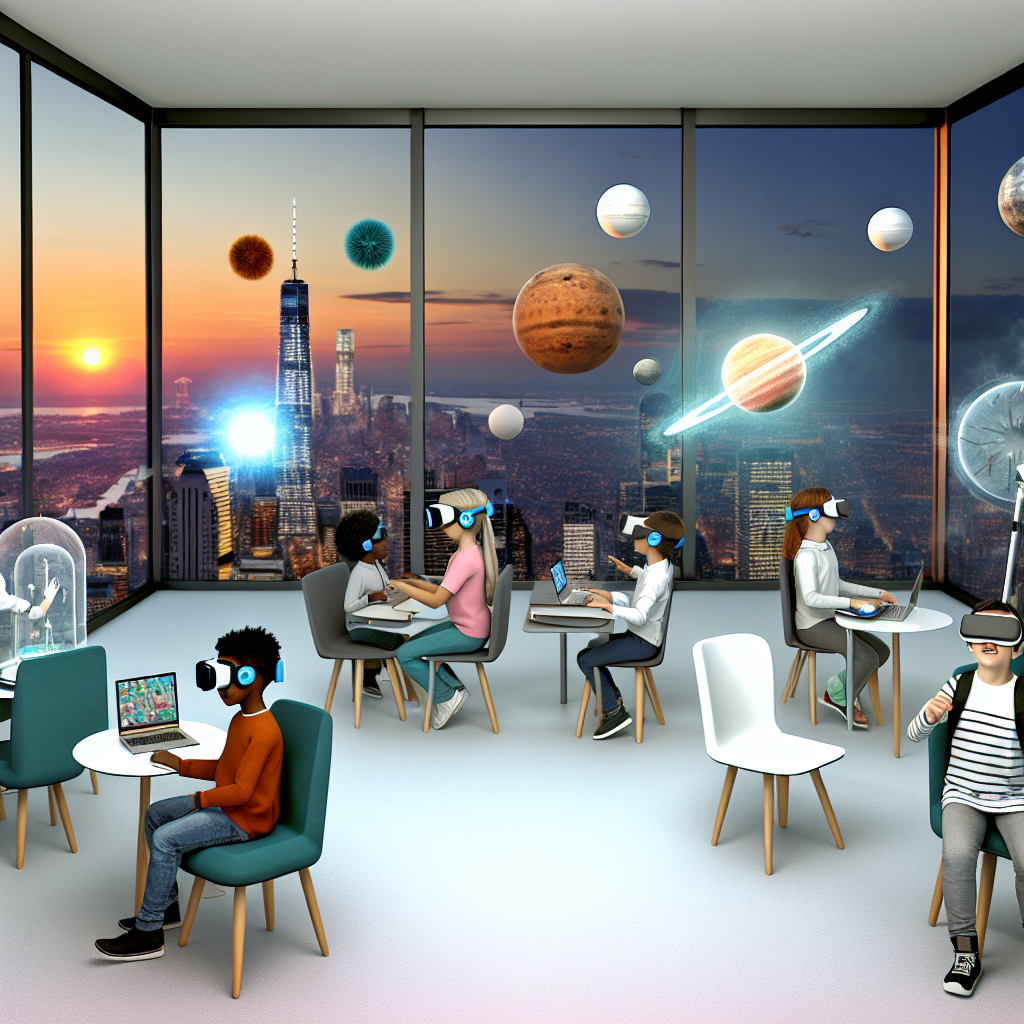
Private VR classrooms allow children to explore ancient civilizations firsthand, dissect virtual frogs without the mess or ethical concerns, and travel to the farthest reaches of the galaxy—all from the safety and comfort of their homes. For the ultra-wealthy, who often prioritize cutting-edge technology and unique learning experiences, these innovations also offer unparalleled levels of customization and control over the learning environment.
Wealthy families often seek privacy and exclusivity, which these VR environments provide. Custom-designed VR educational programs can be developed specifically to cater to a child’s unique interests and learning style, allowing for a truly bespoke educational experience. Meanwhile, highly skilled educators and software developers work collaboratively to create immersive curricula that reinforce knowledge and skills in the most engaging ways.
Another driving force behind the adoption of VR in education for affluent families is the convenience and safety it offers. In a post-pandemic world, where concerns about health, travel, and traditional classroom safety remain high, VR education ensures that children can continue receiving top-tier education without compromising their well-being or disrupting family dynamics. Moreover, private VR classrooms close the geographical gap for families who may travel frequently between homes or live in remote locations, allowing consistent access to premier educational programs regardless of locale. For families spread across multiple properties, this presents an efficient solution to maintain uninterrupted educational continuity.
Features
Several professional and academic studies highlight the advantages of VR in educational settings. A significant benefit is the enhancement of engagement and motivation among students. A study published in the [Journal of Educational Computing Research](https://journals.sagepub.com/home/jec) demonstrates that VR technology significantly increases student engagement, motivation, and learning retention compared to traditional teaching methods. This is particularly beneficial for children who may struggle in conventional classroom settings or for those whose learning style does not align with standard educational techniques.
Furthermore, research conducted by the [Stanford Graduate School of Education](https://ed.stanford.edu) stresses the efficacy of VR in fostering empathy and social learning among students. The immersive nature of VR allows students to understand complex social issues by “placing” them in the shoes of others, thus helping them develop a more nuanced perspective on the world. This aspect is particularly appealing to wealthy families who wish to foster not only intellectual development but also emotional intelligence and global awareness in their children.
In terms of cognitive development, VR learning environments are found to enhance spatial awareness and problem-solving skills. A study by the [University of Maryland](https://www.cs.umd.edu) suggests that students who learn in VR environments exhibit better spatial memory recall and are able to visualize complex concepts more effectively than those taught via conventional methods.
Additionally, private VR classrooms address some of the equity concerns inherent in traditional education systems by removing barriers related to location and accessibility. As families invest in this technology, a crucial advantage is the ability to tap into global networks of educators and experts, providing children with direct access to world-renowned academics and industry leaders who might otherwise be out of reach. This network enhances educational diversity, exposing students to a myriad of perspectives that would be difficult to achieve in a conventional learning setup.
Conclusion
The rise of private VR classrooms illustrates a transformative shift in luxury education, offering affluent families unparalleled opportunities for personalized learning that aligns with their values and lifestyle. As technology continues to evolve, so too will these custom VR learning environments, promising future generations of affluent learners immersive experiences that nurture intellect and empathy. For those families at the helm of these advancements, the future of education is, quite literally, whatever they wish to create.
With the technical landscape continually advancing, what we see now is just the beginning. Future innovations in VR might integrate artificial intelligence and machine learning to further tailor educational experiences, ensuring that education keeps pace with technological evolution.

Dominic E. is a passionate filmmaker navigating the exciting intersection of art and science. By day, he delves into the complexities of the human body as a full-time medical writer, meticulously translating intricate medical concepts into accessible and engaging narratives. By night, he explores the boundless realm of cinematic storytelling, crafting narratives that evoke emotion and challenge perspectives. Film Student and Full-time Medical Writer for ContentVendor.com