High-End Eco-Conscious Play Spaces for Sustainable Parenting
Introduction
In an increasingly eco-conscious world, parenting approaches are evolving to reflect the need for sustainability. As parents, particularly affluent ones, seek to provide the best for their children, they are beginning to focus not only on traditional measures of luxury but also on the environmental impact of their parenting choices. High-end eco-conscious play spaces are becoming a cornerstone in this approach, marrying the allure of luxury with the principles of sustainability.
These upscale play environments provide children with an engaging and stimulating atmosphere while minimizing environmental impact. Such spaces often use sustainably sourced materials, energy-efficient designs, and innovative layouts that encourage an appreciation for nature and responsible consumption. Tailored for those who wish to instill eco-friendly principles in their children from an early age, these play spaces offer a unique blend of luxury and consciousness.
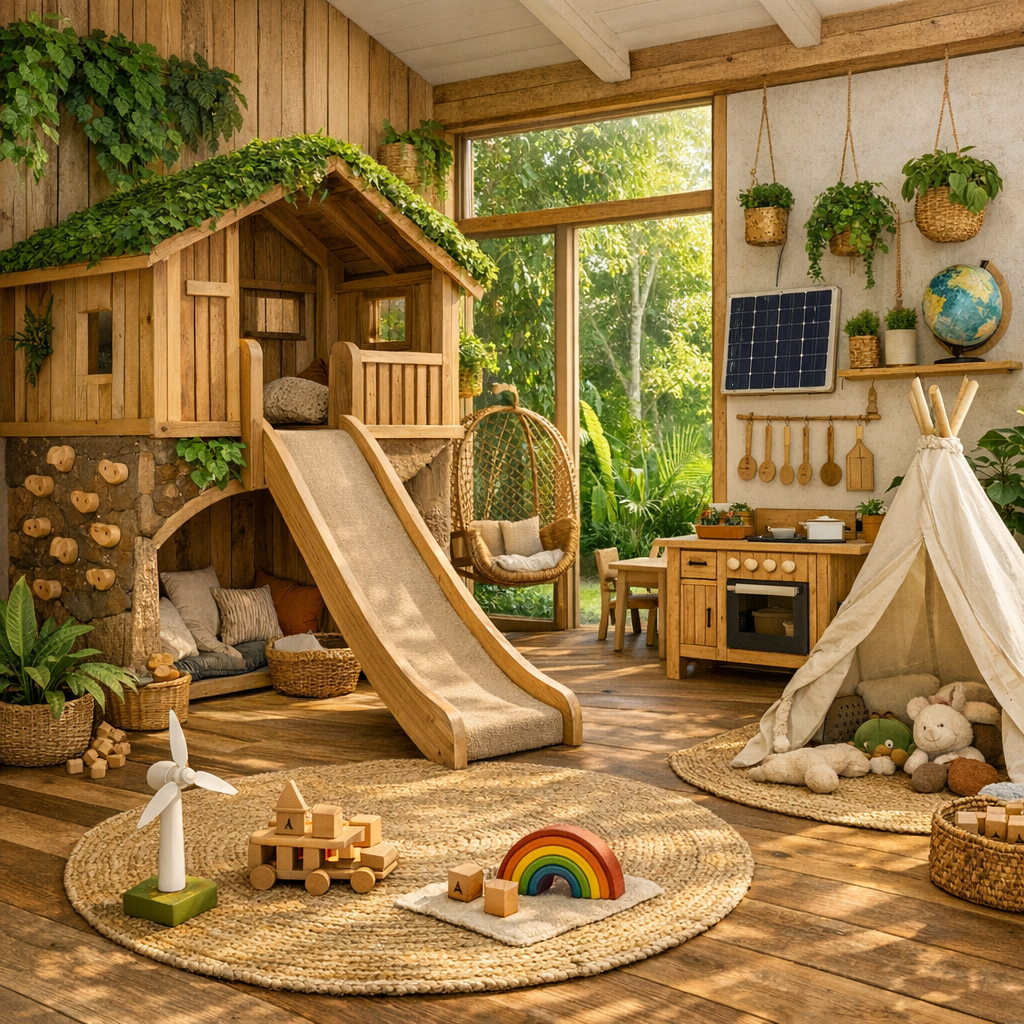
Today’s eco-conscious play spaces go beyond the typical bright colors and plastic surfaces. When designed thoughtfully, they can become immersive experiences that teach children about the importance and benefits of living sustainably. Imagine a play area crafted from sustainably harvested wood, adorned with non-toxic paints and finishes, and filled with educational toys made from recycled materials. Renowned designers are increasingly embracing these elements, creating stunning play zones that do not compromise on style or safety.
Parents opting for such play spaces can choose custom designs that reflect personal aesthetics and family values while adhering to the standards of eco-friendliness. This shift underscores a more holistic approach to luxury parenting: one that includes economic capability, parenting vision, and environmental stewardship. With eco-consciousness at the helm, high-end play spaces are setting a new standard for what it means to raise children in a world where luxury and ecological responsibility are not mutually exclusive.
Features
A multitude of studies and industry reports highlight the importance of eco-friendly environments for children’s development. Research conducted by the Harvard T.H. Chan School of Public Health indicates that exposure to environmental toxins, many of which are found in standard play materials, could negatively impact cognitive development in children. Thus, choosing play spaces designed with certified green materials and furnishings can be a critical step in safeguarding a child’s developmental health.
Equally, a study published in the Journal of Environmental Health Perspectives has linked sustainable indoor environments with improved health outcomes in children. In these spaces, improved air quality and reduced exposure to harmful chemicals can lead to fewer instances of respiratory issues and allergies, often aggravated by traditional building materials and furnishings. This connection substantiates the argument for eco-friendly play areas as viable avenues for not only luxurious living but also healthier living.
Moreover, according to the United Nations Environmental Programme, sustainable development is crucial in early childhood education as it lays the foundation for a lifelong appreciation and respect for the environment. By transforming living spaces into eco-friendly play areas, parents foster an educational environment where children learn through experience. This can foster awareness and instill green-friendly practices that children carry into adulthood.
Designing eco-conscious play spaces often involves partnerships with architects and designers knowledgeable about sustainable materials and layouts. The WELL Building Standard and LEED certifications can guide parents and designers in constructing spaces that meet rigorous benchmarks for indoor environmental quality. Such certifications ensure that play areas are not only captivating but also contribute positively to the environment.
In addition, integrating these sustainable approaches into play spaces can act as a microcosm for larger lifestyle changes. Parents who prioritize eco-conscious play areas often find themselves more open to adopting other sustainable practices, such as zero-waste living, eco-friendly travel, and responsible consumption, thus modeling a balanced and ethically aware lifestyle for their children.
Conclusion
Creating high-end eco-conscious play spaces is not merely about providing a luxury experience—it is about shaping the values and habits of the next generation. By intertwining opulence with sustainability, affluent parents can offer their children the best in both style and substance. As these children grow, they will carry forward the lessons learned in their play spaces, contributing to a more sustainable and harmonious world.

Dominic E. is a passionate filmmaker navigating the exciting intersection of art and science. By day, he delves into the complexities of the human body as a full-time medical writer, meticulously translating intricate medical concepts into accessible and engaging narratives. By night, he explores the boundless realm of cinematic storytelling, crafting narratives that evoke emotion and challenge perspectives. Film Student and Full-time Medical Writer for ContentVendor.com