Private Archaeology Expeditions for Young History Enthusiasts
In an age where experiential learning is redefining education, there’s a growing desire among parents to offer their children unique and enriching experiences that transcend traditional classroom settings. One such experience that has begun captivating the imaginations of young minds is private archaeology expeditions. For families with the means to invest in these exclusive adventures, archaeology expeditions present an unparalleled opportunity for children to connect with the past in a deeply engaging manner. These tailored adventures are meticulously crafted to provide young history enthusiasts with firsthand exposure to ancient civilizations, fostering a sense of curiosity and wonder that textbooks alone cannot inspire.
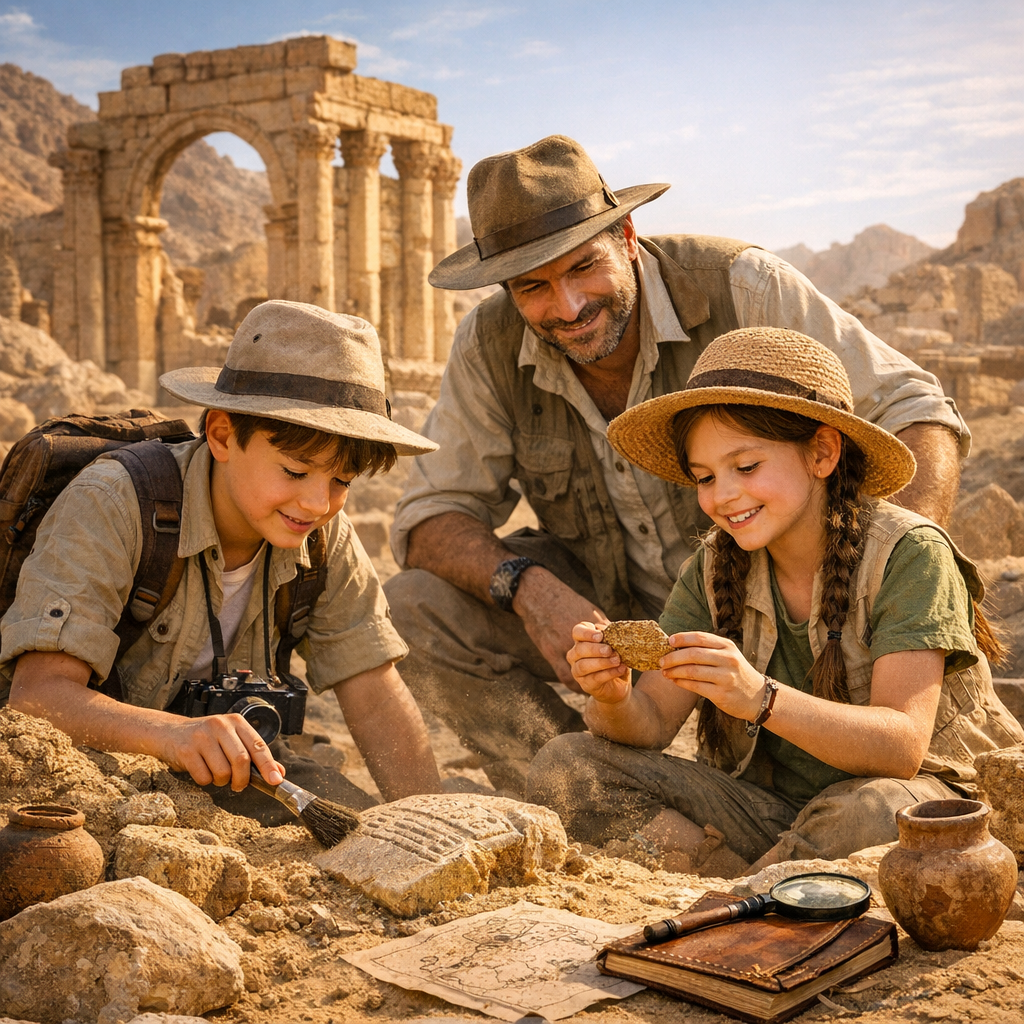
Private archaeology expeditions are carefully curated to be more than mere vacations. They are a journey into time, allowing young explorers to marvel at the remnants of ancient societies, systematically unearth artifacts, and learn the techniques and ethics of archaeology under the guidance of experts in the field. These immersive experiences not only bring textbooks to life but also instill a profound respect for cultural heritage and the meticulous work involved in preserving it. With the guidance of seasoned archaeologists, children get to actively participate in excavation processes, analyze findings, and understand the significance of each artifact, making history tangible and captivating.
For parents wishing to provide not just leisure, but life-shaping experiences, these expeditions offer a perfect blend of adventure, education, and cultural immersion. The logistics of such high-end exploratory trips go beyond standard travel itineraries, involving highly tailored activities that align with educational curriculums and individual interests. Destinations range from the ancient ruins of Pompeii to the Mayan temples in Guatemala and the rich historical landscape of Egypt. Here, young adventurers are encouraged to question, hypothesize, and explore under the tutelage of scholars and field practitioners. These expeditions vary in focus, covering different aspects of archaeology—whether it be historical, environmental, or dealing with contemporary issues like conservation.
Investing in a private archaeology expedition for children is not merely about visiting archaeological sites – it’s about cultivating a mindset that values history, culture, and the stories told through the relics of the past. As parents seek educational experiences that will leave lasting impressions on their children, archaeology expeditions emerge as a meaningful option that encourages a lifelong appreciation for learning and exploring.
Features: The Educational and Developmental Benefits
Recent studies have emphasized the importance of experiential learning in the cognitive and social development of children. According to research published in the [Journal of Educational Psychology](https://www.apa.org/pubs/journals/edu), experiential learning actively engages students in the process of learning through direct experience and focused reflection. This method has shown to significantly improve the retention of knowledge and increase student motivation compared to traditional learning settings.
In the context of archaeology expeditions, students embrace a hands-on approach, which involves group collaboration, critical thinking, and problem-solving—skills that are essential for their holistic development. Evidence from a study conducted by the [American Institutes for Research](https://www.air.org) indicates that students participating in experiential learning programs, specifically focused on history and archaeology, displayed marked improvements in their academic performance and cognitive skills. These students were more adept at applying historical content in new contexts, signifying a deeper understanding of the subject matter.
The [Stanford Center for Opportunity Policy in Education (SCOPE)](https://edpolicy.stanford.edu) also reports that experiential learning can boost a child’s interpersonal skills and emotional intelligence. By immersing themselves in different cultures and historical eras, children develop empathy and a broader world view, enabling them to appreciate diversity and understand different perspectives. In practical terms, this means that young participants in archaeology expeditions learn not only about ancient artifacts but also about teamwork, leadership, and communication—key skills that are immensely valuable in all facets of life.
Furthermore, private archaeology expeditions often incorporate aspects of STEAM (Science, Technology, Engineering, Art, and Mathematics) education. As children analyze artifacts, they engage in scientific reasoning, spatial awareness, and artistic interpretation, thus reinforcing their learning experiences with practical applications. The integration of technology in archaeology, such as using drones for site mapping or 3D modeling for artifact reconstruction, further excites young minds and introduces them to potential career paths at the intersection of technology and humanities.
In conclusion, private archaeology expeditions offer enchanted gateways to the past, cultivating a profound connection between young participants and the rich tapestry of human history. As children unearth remnants of bygone civilizations, they acquire invaluable life skills and resounding lessons about the world they inhabit. Ultimately, these exclusive journeys provide an unmatched educational platform for the next generation of history enthusiasts, aspiring archaeologists, and global citizens. Investing in such experiences is not only an investment in a child’s education but also in their ability to understand and appreciate the complexities and wonders of our shared heritage.

Dominic E. is a passionate filmmaker navigating the exciting intersection of art and science. By day, he delves into the complexities of the human body as a full-time medical writer, meticulously translating intricate medical concepts into accessible and engaging narratives. By night, he explores the boundless realm of cinematic storytelling, crafting narratives that evoke emotion and challenge perspectives. Film Student and Full-time Medical Writer for ContentVendor.com