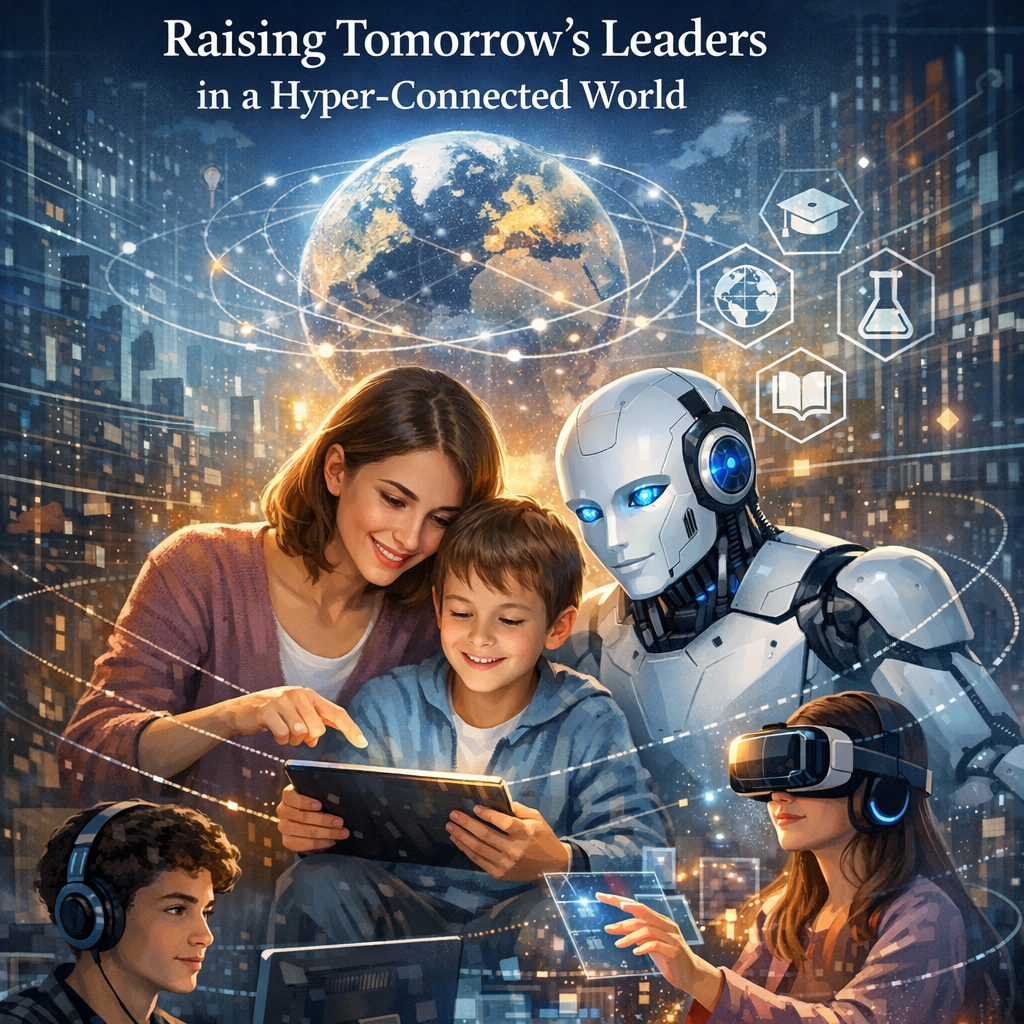
The Ethics of AI Parenting: Raising Tomorrow’s Leaders in a Hyper-Connected World
Introduction:
In today’s hyper-connected world, artificial intelligence (AI) is no longer a distant concept but a present reality that infiltrates various facets of our daily lives. As parents of means, you are likely familiar with AI’s impact on sectors like education, healthcare, and entertainment. However, one area where AI’s influence is becoming increasingly consequential is parenting. The inquiry into how these advanced technologies intersect with traditional parenting styles is pertinent, particularly when considering the responsibility of raising the leaders of tomorrow.
AI in parenting can manifest in various ways, from intelligent toys and educational apps to comprehensive home systems that monitor and report your child’s activities. These tools promise to aid in child development by personalizing education, improving safety, and offering insights into your child’s behavior. However, while these advancements present incredible opportunities, they also necessitate a careful ethical evaluation. For parents who are dedicated to providing a holistic upbringing to their children, the most pressing question isn’t just about adopting AI technologies but understanding its long-term implications on a child’s physical, emotional, and social well-being.
The ethical considerations of AI in parenting revolve around privacy, autonomy, equity, and development. One key concern is data privacy. Intelligent devices and apps often collect vast amounts of personal data, raising concerns about who has access to this information and how it may be used. Additionally, reliance on AI might affect a child’s autonomy. Will children raised with AI assistants become overly dependent on technology for decision-making? Another issue is the potential for AI to widen existing socio-economic divides. While AI can offer personalized education that caters to a child’s unique abilities, those benefits may not be equally accessible to all.
The intersection of AI and parenting is not a future hypothetical but a present challenge requiring thoughtfulness and foresight. As we look towards raising the next generation of leaders, it’s crucial to balance the benefits of AI with responsible, ethical parenting practices.
Features:
Recent professional and medical studies provide a more nuanced view of how AI parenting tools are coming to fruition. According to a study by Nature Machine Intelligence, AI in education can indeed personalize learning experiences, resulting in higher engagement and improved outcomes compared to traditional methods. These tools can adapt lessons to a child’s pace and style of learning, maximizing their educational experience.
However, the Journal of Pediatrics published research examining the potential pitfalls of AI dependency in childhood. The study highlights concerns over diminished face-to-face interactions, which are crucial for social skill development in early years. While AI can assist in learning, it’s clear that it can’t replace the need for human connection and interaction that is fundamental to emotional intelligence and empathy.
Another study conducted by MIT Technology Review illuminates the risks associated with data privacy in AI-assisted parenting tools. The paper indicates how AI-enabled devices continuously collect “non-verbal data” from children, such as behavioral patterns, preferences, and routines. This data, while useful for parents, can be a target for misuse. The increasing sophistication of AI in processing such data can lead to ethically questionable inferences and decisions.
Furthermore, the American Psychological Association points to the crucial role of parents in mediating between their children and technology. Parental guidance is essential in teaching children about balancing AI use, ensuring that technology serves as a tool rather than a crutch or an omnipotent presence in their lives.
AI’s role in modern parenting carries promise and peril, demanding a strategic approach focused on child welfare. By staying informed and vigilant, parents can use these tools to enhance child development while maintaining ethical standards and safeguarding against potential pitfalls.
Conclusion:
Navigating the ethical landscape of AI in parenting requires a delicate balance between embracing technological advancements and maintaining the foundational values of parenting. As parents, the challenge lies in harnessing AI’s potential to enrich children’s lives while ensuring privacy, fostering autonomy, and nurturing human connections. Ultimately, raising tomorrow’s leaders in a hyper-connected world demands a thoughtful blend of technological acceptance and ethical rigor.
References:
1. Nature Machine Intelligence
2. Journal of Pediatrics
3. MIT Technology Review
4. American Psychological Association

Dominic E. is a passionate filmmaker navigating the exciting intersection of art and science. By day, he delves into the complexities of the human body as a full-time medical writer, meticulously translating intricate medical concepts into accessible and engaging narratives. By night, he explores the boundless realm of cinematic storytelling, crafting narratives that evoke emotion and challenge perspectives. Film Student and Full-time Medical Writer for ContentVendor.com