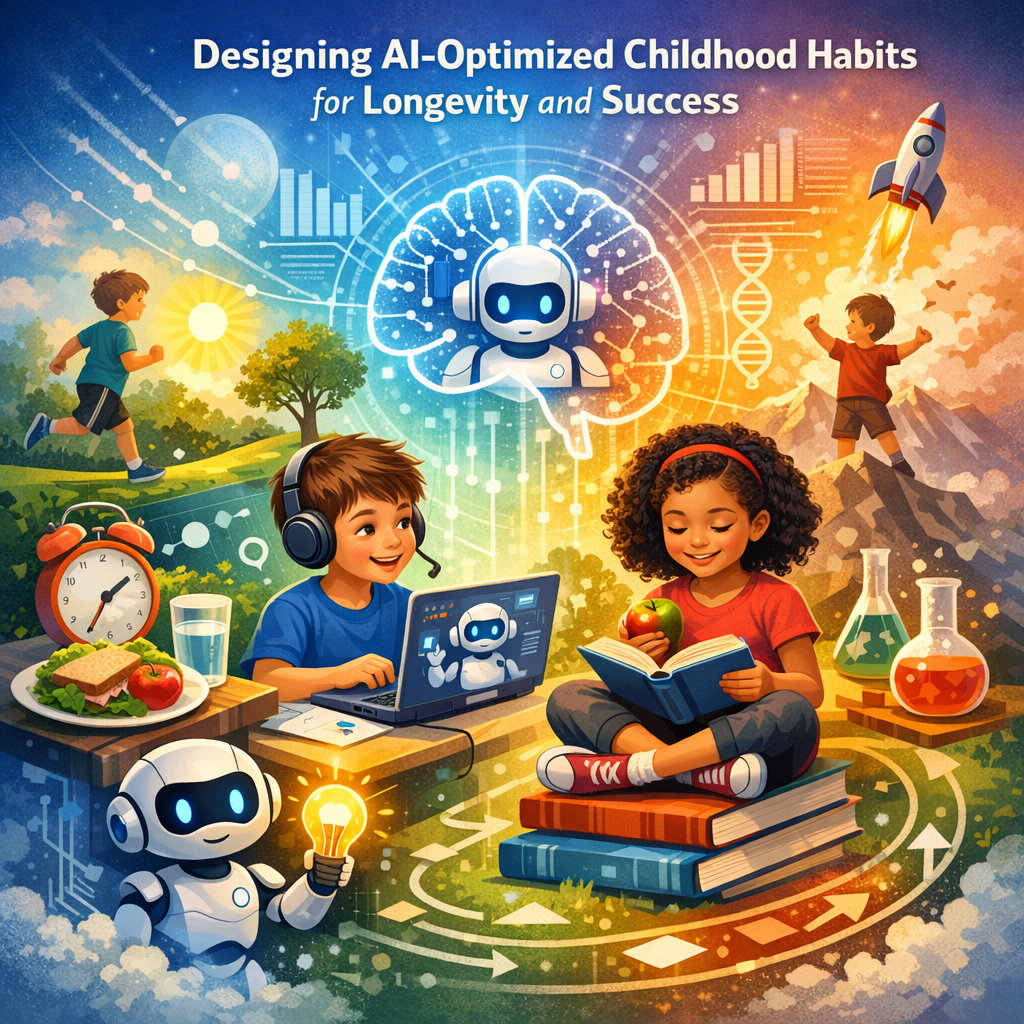
Designing AI-Optimized Childhood Habits for Longevity and Success
Introduction
In a rapidly evolving digital environment, the future belongs to those who can leverage technology effectively. For parents of means, the convergence of artificial intelligence (AI) and childhood development presents an unparalleled opportunity to design habits that underpin both *longevity* and *success*. While traditional notions of childhood have often emphasized experiential learning and creative play, today’s parents stand on the precipice of a paradigm shift. Digital tools and AI systems are not only augmenting how children learn but also how they interact with the world around them.
In crafting the foundations for a thriving future, it is essential to balance these technological innovations with insights from developmental psychology and pediatric health. Forward-thinking parents recognize that AI can enhance cognitive, emotional, and physical development while promoting holistic well-being. By thoughtfully integrating AI into children’s daily routines, parents can cultivate an enriched environment where technology and humanity coexist harmoniously.
This article explores how AI can optimize childhood habits, drawing on recent research in technology’s impact on human development. It delves into actionable strategies parents can adopt to facilitate their children’s growth while ensuring that AI serves as a tool for empowerment, rather than a substitute for genuine human connection. From personalized learning algorithms that adjust to a child’s unique learning pace to AI-driven health apps that promote physical activity and mindfulness, the possibilities are as promising as they are exciting.
As you journey through the realms of AI-optimized habits, imagine a future where your child not only navigates the complexities of tomorrow’s world with confidence but also enjoys a well-rounded, fulfilled life. By harnessing technology responsibly, parents can empower their children for long-lasting success and ultimately, a legacy of health and happiness.
Features
Research underscores the significant role of AI in developing effective childhood habits that factor into lifelong success. A study conducted by the Massachusetts Institute of Technology (MIT) highlights how AI-driven educational tools improve learning efficiency by personalizing instruction to each student’s learning curve. Such tools adapt in real-time, offering tasks that are neither too easy nor too difficult, thus keeping students consistently engaged and avoiding frustration or boredom. [MIT Study on AI in Education](https://news.mit.edu/2020/using-ai-improve-education-0910)
In the realm of health, AI technologies are being harnessed to combat childhood obesity, a growing concern worldwide. According to research published in the “Journal of Pediatric Sciences,” AI health applications are proving invaluable. These apps utilize data-driven insights to provide personalized dietary advice and physical activities for children. The result is a fun, interactive experience where kids, guided by their parents, learn to make healthier lifestyle choices in a time supported by technology. [Journal of Pediatric Sciences](https://www.pediatricsciences.org/ai-health-apps-impact)
Moreover, integrating AI into daily routines has shown promise in bolstering emotional intelligence among youngsters. Harvard University’s Center on the Developing Child points to AI’s capability in creating environments supportive of emotional explorations through virtual reality (VR) scenarios. These scenarios enable children to practice empathy and social skills by interacting within controlled, emotion-evoking situations tailored to their developmental stage. [Harvard University Research on AI and Emotional Intelligence](https://developingchild.harvard.edu/science/key-concepts/emotional-intelligence)
The incorporation of AI in setting bedtime rituals is another promising area. Sleep is vital for mental and physical development in children, and AI-driven applications that assist in establishing consistent sleep patterns have displayed encouraging results. These apps monitor sleep quality and offer suggestions for optimizing bedroom environments, thus creating the perfect conditions for restful sleep.
As these examples illustrate, AI’s potential to foster longevity and success in children is immense. Yet, it is crucial for parents to remain conscious custodians of this technology, ensuring it serves to complement the human experience, rather than dominate it.
Conclusion
To truly optimize childhood habits for longevity and success, parents must strive for an equilibrium that embraces AI’s transformative capabilities while anchoring their children’s growth in traditional, humanistic values. By curating a childhood that is enriched with thoughtfully applied technology, parents can prepare their children not only to thrive in a digital future but also to lead fulfilling, balanced lives. As guardians of the next generation, let us navigate this digital frontier with wisdom and compassion, crafting a legacy that honors both human potential and technological innovation.

Dominic E. is a passionate filmmaker navigating the exciting intersection of art and science. By day, he delves into the complexities of the human body as a full-time medical writer, meticulously translating intricate medical concepts into accessible and engaging narratives. By night, he explores the boundless realm of cinematic storytelling, crafting narratives that evoke emotion and challenge perspectives. Film Student and Full-time Medical Writer for ContentVendor.com