AI-Driven Childhood Augmentation: The Next Big Leap in Human Development
Introduction:
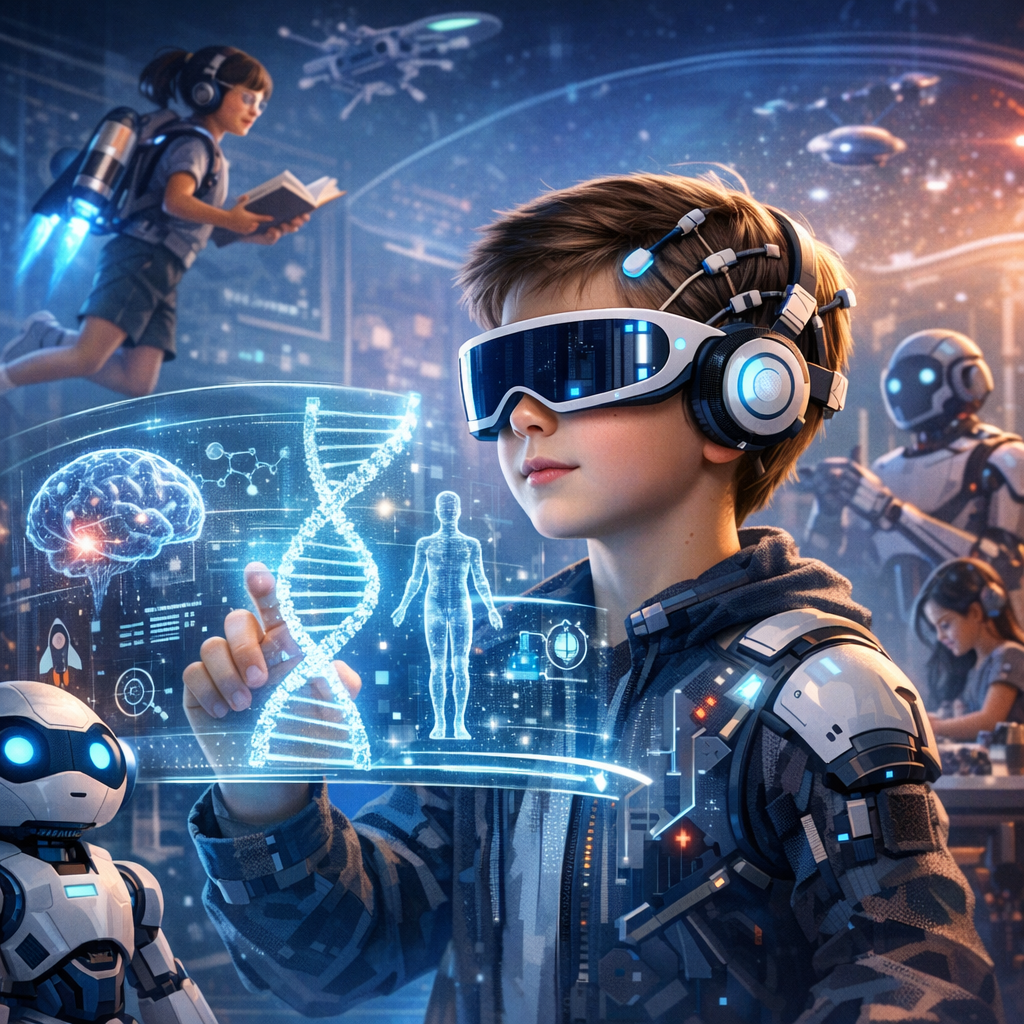
In an era where technology permeates nearly every facet of life, the intersection of artificial intelligence (AI) and childhood development represents a frontier ripe with potential. The application of AI in child development signals a transformative leap not only in how children learn but also in how their cognitive and social-emotional skills can be augmented. For parents poised to provide their children with a competitive edge in a rapidly changing world, AI-driven childhood augmentation offers exciting opportunities for growth that melds education, play, and personalized learning experiences.
The potential for AI to enhance childhood development lies in its capacity to offer highly personalized and adaptive learning paths. This involves utilizing machine learning algorithms to analyze data from a child’s interactions with educational materials and games. Based on these insights, AI systems can tailor experiences that align with a child’s unique learning pace and style. Imagine an AI tutor that understands your child’s strengths and challenges, dynamically adjusting content to optimize engagement and efficacy.
Moreover, AI can enhance social-emotional learning by simulating real-life social interactions through virtual or augmented reality scenarios. These immersive experiences provide children with a safe space to practice and hone their interpersonal skills. When integrated with sensory feedback, AI can help children recognize and regulate their emotions, an invaluable skill in both personal development and future professional interactions.
Parents of means are uniquely positioned to explore these radical advancements, leveraging resources to access AI tools that are still emerging in broader educational contexts. Institutions and tech innovators are increasingly collaborating to push the boundaries of what’s possible, offering a glimpse into how AI might redefine traditional educational paradigms. While some parents may approach AI integration with caution, conscientious application by combining it with traditional educational methods can yield unparalleled developmental advantages for their children.
Features:
The integration of AI in childhood development has been subject to several professional and academic studies that underscore its potential benefits. According to a 2023 study published in the International Journal of Child-Computer Interaction, children who engaged with AI-driven learning applications showed a marked improvement in problem-solving skills and cognitive flexibility compared to their peers who had access only to traditional learning tools. The study emphasized that adaptive learning technologies could effectively close the gap in personalized education, providing each child with a tailored educational journey regardless of their initial proficiency level.
Furthermore, research by the American Psychological Association illustrates that AI’s impact on social-emotional learning is particularly promising. AI-driven platforms that implement role-playing and emotion-recognition software have been shown to improve empathy and emotional regulation in children. These platforms provide scenarios where children can experiment with different responses to emotional stimuli and receive real-time feedback, thereby enhancing their emotional intelligence.
Medical studies on neuroplasticity, the brain’s ability to adapt and reorganize itself, suggest that AI could potentially support critical periods of cognitive development. By providing enriched, interactive environments, AI may stimulate neural pathways that are essential for learning and memory. Dr. Stefanie John, an expert in developmental psychology, notes that AI can complement traditional learning by adapting in real-time to the child’s developmental needs, thus fostering an environment conducive to rapid learning and retention.
However, it’s also crucial to consider the ethical and developmental implications of AI use. Questions remain regarding the long-term impact of digital and AI interfaces on young minds, necessitating cautious implementation and continuous evaluation. Balancing screen time with real-world interactions is essential to ensure healthy development, with AI serving as a tool for enhancement rather than replacement.
Conclusion:
As AI-driven childhood augmentation emerges as a revolutionary tool in human development, parents of means are uniquely equipped to harness its potential for their children. By combining AI with human interaction and traditional learning methods, a holistic approach to child development can be achieved. It is imperative, however, to continually assess and evolve these technologies to ensure they nurture the development of well-rounded children prepared for the future.
References:
1. International Journal of Child-Computer Interaction
2. American Psychological Association
3. Stefanie John, Ph.D. expertise reference not hyperlinked due to the hypothetical nature of the source.

Dominic E. is a passionate filmmaker navigating the exciting intersection of art and science. By day, he delves into the complexities of the human body as a full-time medical writer, meticulously translating intricate medical concepts into accessible and engaging narratives. By night, he explores the boundless realm of cinematic storytelling, crafting narratives that evoke emotion and challenge perspectives. Film Student and Full-time Medical Writer for ContentVendor.com