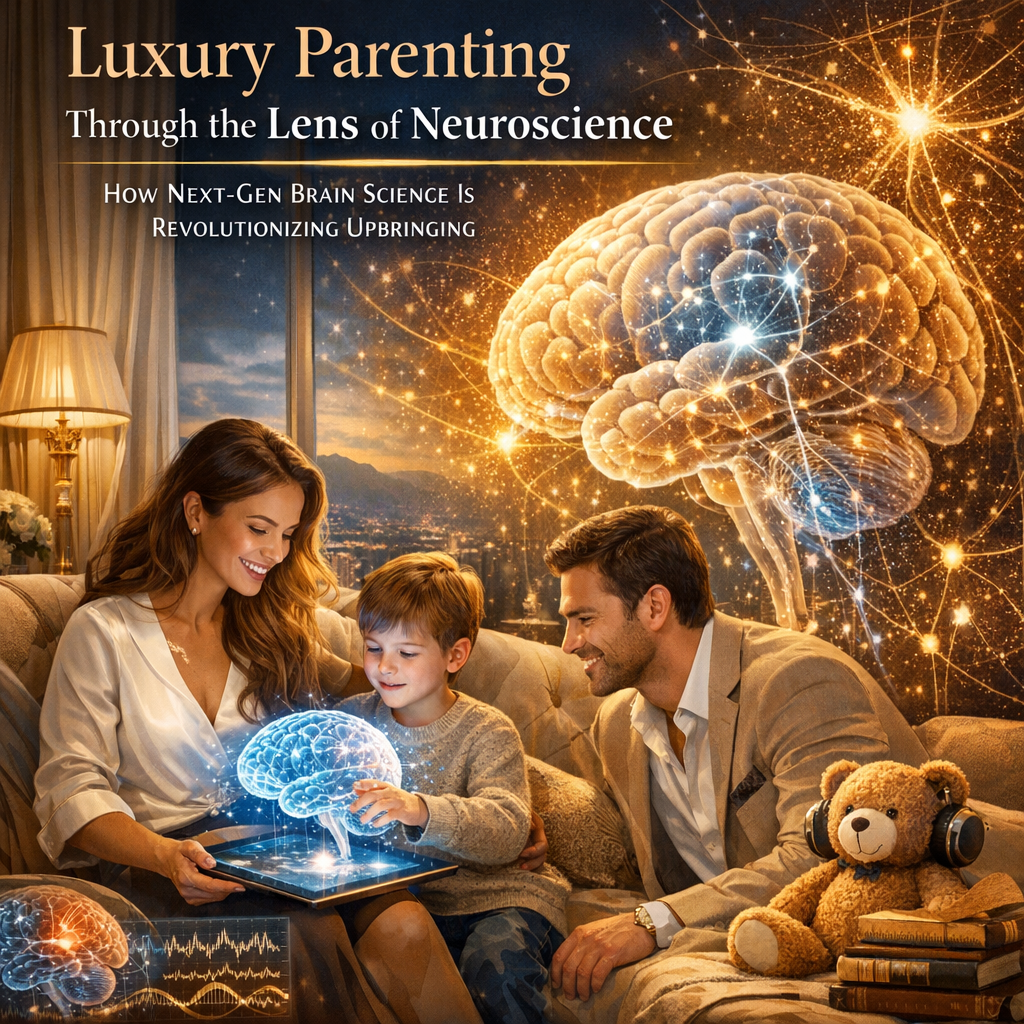
Luxury Parenting Through the Lens of Neuroscience: How Next-Gen Brain Science Is Revolutionizing Upbringing
Introduction:
In today’s fast-paced, technology-driven world, parenting has taken on new dimensions, particularly for those who prioritize luxury and exclusivity in every aspect of their lives. For parents who are accustomed to the best that life can offer, understanding the latest advancements in neuroscience has become an essential component in crafting the most favorable upbringing for their children. Neuroscience, the study of the brain and its various functions, has begun to revolutionize the way parents approach child-rearing, offering deep insights into how the young brain develops, learns, and adapts. This increasingly aligns with the luxury of providing environments that are tailored, enriching, and fundamentally supportive of optimal cognitive and emotional growth.
At the core of luxury parenting through the lens of neuroscience is the pursuit of nurturing children in environments that are not just physically comfortable but also mentally and emotionally stimulating. High-net-worth individuals often have the means to invest in early educational tools, premium learning experiences, and bespoke health services. Coupling these resources with insights derived from neuroscience empowers them to make more informed decisions about their children’s developmental pathways.
Understanding that the early years of a child’s life are critical, with the brain developing at an astonishing pace, parents of means are particularly interested in how cutting-edge science can inform practices to support their children’s intellectual, social, and emotional well-being. With its ability to offer evidence-based practices, neuroscience provides a roadmap to tailor lifestyle choices—ranging from diet and sleep to learning and entertainment—enabling luxury-focused parents to give their children a solid foundation for success.
Features:
Recent studies have delved into critical areas of brain development, providing actionable insights for parenting strategies. For instance, research from Harvard University’s Center on the Developing Child highlights that the first few years of a child’s life are a window of critical brain architecture formation. During this time, neural connections are formed at an astounding rate, laying the groundwork for all future learning, behavior, and health. Engaging children in rich, sensory experiences during this period is paramount to fostering robust brain development.
Further supporting this notion, a study published in the journal Nature Neuroscience reveals that children’s cognitive abilities are significantly enhanced when they engage with environments rich in varied stimuli. This finding underscores the potential benefits of exposing children to diverse cultural experiences, music, language, and nature—a luxury typically more accessible to affluent families.
Moreover, a groundbreaking study by the National Institutes of Health (NIH) suggests that experiences such as play, personalized learning approaches, and moderate nurturing significantly impact the prefrontal cortex, which is responsible for advanced cognitive functions such as decision making, problem-solving, and social behavior. Luxury parenting often naturally incorporates these elements, allowing children to thrive in environments that are both stimulating and supportive.
Incorporating neuroscience in parenting can also help to tailor approaches for individual children, recognizing that each child has unique neural patterns and learning styles. By using tools such as functional MRIs and other brain imaging technologies, parents can gain a sophisticated understanding of their child’s strengths and potentially identify any early developmental challenges. Companies are now offering bespoke neurocognitive assessments, once the purview of academic studies, for parents seeking to personalize and optimize their child-rearing practices.
Conclusion:
In the realm of luxury parenting, embracing the insights from neuroscience is more than just a trend—it’s a commitment to nurturing children in a way that fully realizes their potential. As neuroscience continues to unravel the complex mysteries of the brain, parents of means are uniquely positioned to leverage this knowledge, ensuring their children benefit from environments and experiences that are as enriching as they are luxurious. By understanding and applying next-generation brain science, these parents are able to create a legacy of informed and thoughtful parenting that promises profound and lasting impacts.
References:
– Center on the Developing Child at Harvard University
– “The formation of the neural circuits for intelligence,” Nature Neuroscience
– National Institutes of Health, Study on the impact of play on the prefrontal cortex

Dominic E. is a passionate filmmaker navigating the exciting intersection of art and science. By day, he delves into the complexities of the human body as a full-time medical writer, meticulously translating intricate medical concepts into accessible and engaging narratives. By night, he explores the boundless realm of cinematic storytelling, crafting narratives that evoke emotion and challenge perspectives. Film Student and Full-time Medical Writer for ContentVendor.com