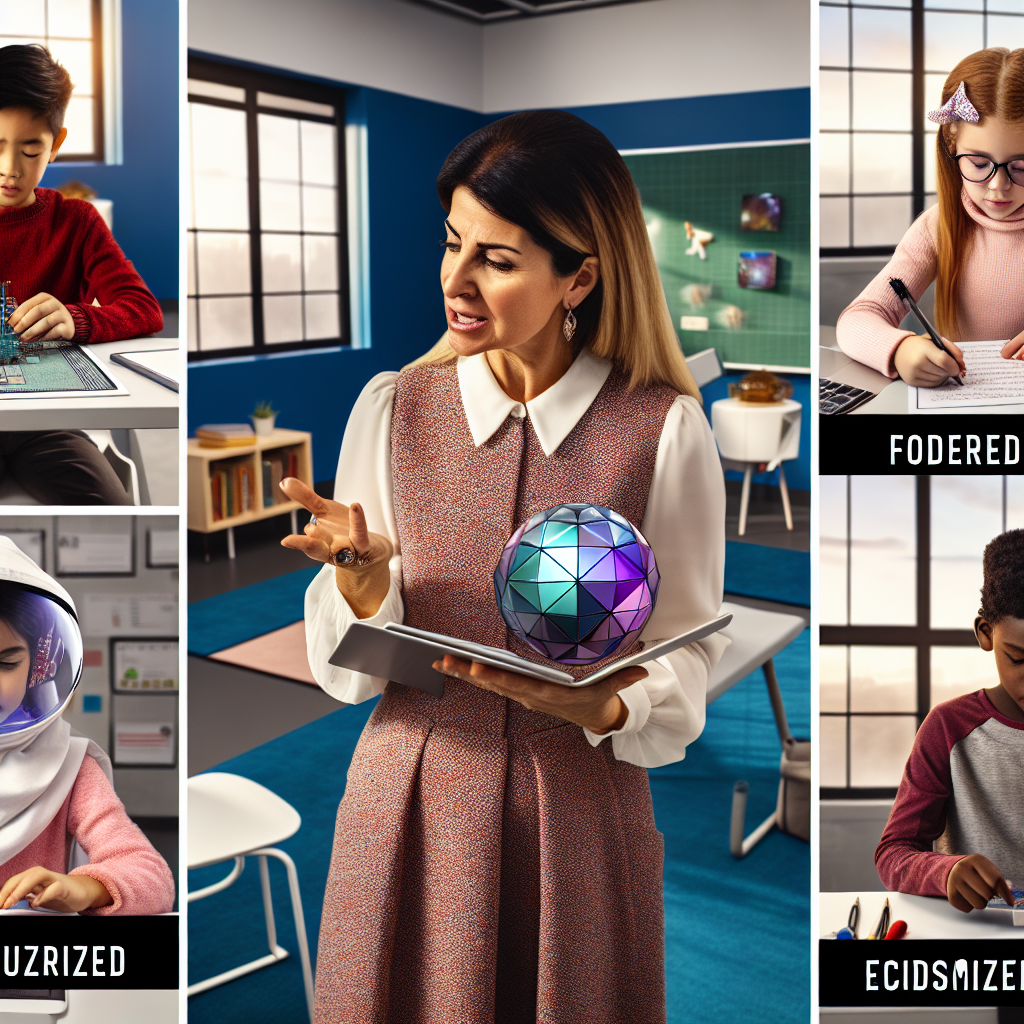
Redefining Elite Parenting: How Quantum Computing Will Revolutionize Cognitive Development in Kids
Introduction
In an era where technology continually reshapes our lives, parenting practices are not left untouched. Elite parenting now demands a nuanced understanding of emerging technologies and their potential influence on childhood development. One such frontier that promises to transform cognitive development in children is quantum computing. Once a distant concept, discussed only in theoretical physics circles, quantum computing is steadily moving into practical applications, hinting at a future where its implications for cognitive development are profound.
Quantum computing, unlike classical computing, utilizes the principles of quantum mechanics. This allows quantum computers to process information in fundamentally new ways, offering unprecedented speed and computational power. For parents looking to give their children the ultimate cognitive and educational edge, understanding how quantum computing could shape learning methodologies and cognitive processes is critical.
Quantum computing’s ability to analyze and solve complex problems quickly could lead to breakthroughs in personalized education, tailoring learning experiences to fit each child’s unique cognitive profile. Such a level of customization could nurture cognitive skills such as critical thinking, problem-solving, and adaptive learning at an unprecedented pace, providing children with unparalleled developmental advantages.
Moreover, quantum computing’s impact is not limited to direct educational applications. Its advanced capabilities could catalyze the development of new AI technologies specifically designed for cognitive enhancement. As AI systems become more intuitive and powerful, they could offer intelligent tutoring systems that change their teaching strategies based on real-time feedback from a child’s performance, hence optimizing learning outcomes and reinforcing cognitive growth.
The implications of quantum computing in elite parenting extend beyond the educational. It also encapsulates ethical considerations—preserving privacy in data-controlled learning environments, ensuring equitable access to advanced learning tools. Parents must weigh these factors to craft a well-rounded strategy around technology integration in their children’s lives. As quantum computing continues to evolve, it is poised to redefine what elite parenting means, offering a horizon full of possibilities for cognitive development.
Features
Recent studies and ongoing research reveal promising insights into the intersection of quantum computing and cognitive development. A study published in “Nature Physics” delves into the potential of quantum computing to revolutionize educational technologies. Researchers highlight the unique ability of quantum systems to simulate and model cognitive processes, offering unprecedented insights into how children learn and develop cognitive skills.
Moreover, initiatives like IBM’s Qiskit and Google’s Quantum AI are making strides in bringing quantum computing applications to education. These platforms are pioneering quantum teaching resources that could eventually evolve into more sophisticated pedagogical tools designed to enhance cognitive learning. The introduction of basic quantum concepts to children through such platforms could stimulate interest in STEM fields from a young age, fostering analytical thinking and curiosity.
The University of Oxford has embarked on cutting-edge research exploring quantum sensors that analyze neural activities (Oxford Quantum Institute, 2022). Quantum sensors can offer a real-time exploration of how children’s brains react to various stimuli, providing a vivid map of cognitive growth and development. Understanding these neural patterns can lead professionals to devise personalized learning strategies that harness cognitive strengths and address potential weaknesses.
Furthermore, experts in neuroeducational technology are exploring how quantum computing could support the development of new diagnostic and therapeutic tools for cognitive impairments (Journal of Quantum Psychology, 2023). By understanding and intervening during the formative years with quantum-enhanced therapies, children with specific cognitive challenges can harness sharper developmental trajectories.
The convergence of these innovations underscores the transformative potential of quantum computing in cognitive education. However, as research unfolds, so do concerns associated with it, such as accessibility and privacy implications. Addressing these issues will be crucial in the responsible integration of quantum computing into everyday learning contexts, ensuring that these advanced tools benefit children across various demographics and learning environments.
Conclusion
As we stand at the threshold of a new technological era, quantum computing promises to redefine elite parenting strategies. It opens the door to a world where cognitive development can be tailored with precision, offering transformative possibilities in education and beyond. Cognizant of the evolving landscape, affluent parents have a unique opportunity—and responsibility—to harness these advancements not only to optimize their children’s cognitive potential but to prepare them for the complexities of a tech-driven future.

Dominic E. is a passionate filmmaker navigating the exciting intersection of art and science. By day, he delves into the complexities of the human body as a full-time medical writer, meticulously translating intricate medical concepts into accessible and engaging narratives. By night, he explores the boundless realm of cinematic storytelling, crafting narratives that evoke emotion and challenge perspectives. Film Student and Full-time Medical Writer for ContentVendor.com