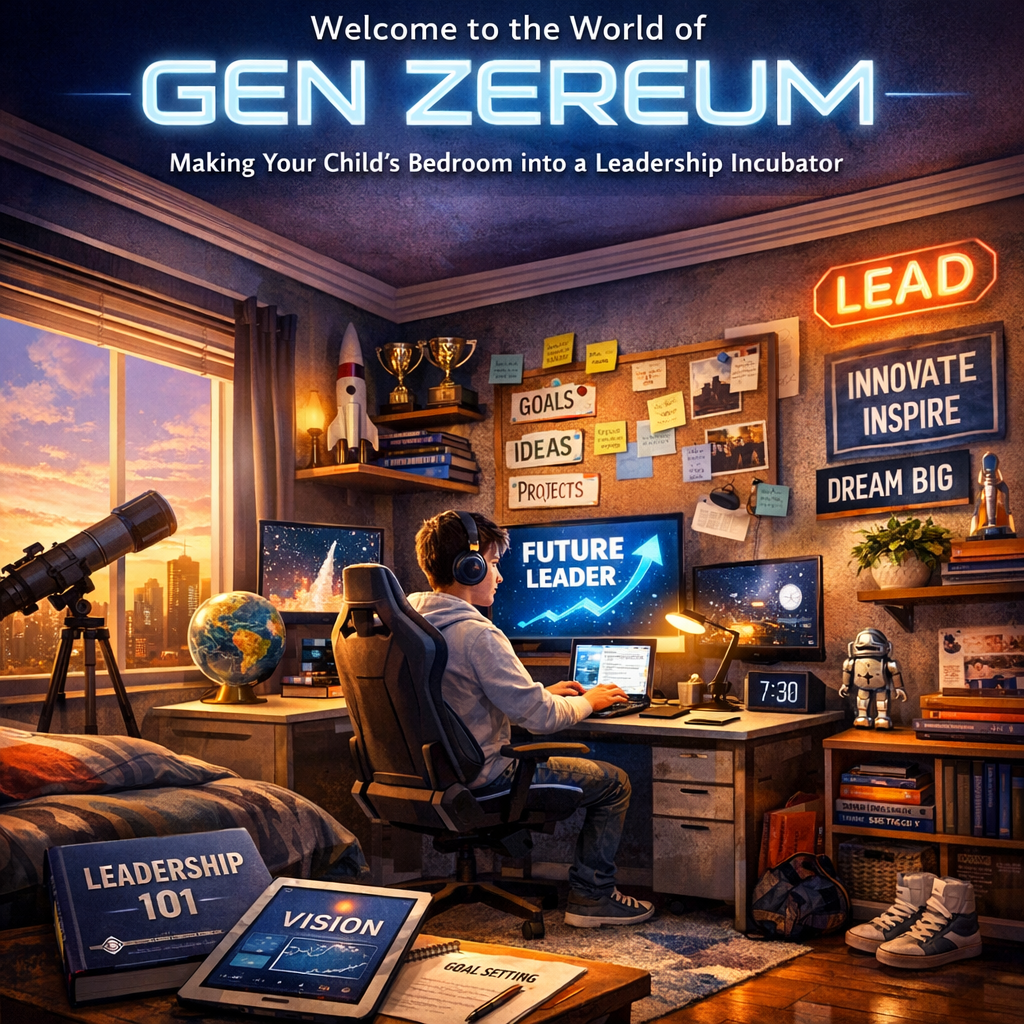
Welcome to the World of Gen Zereum: Making Your Child’s Bedroom into a Leadership Incubator
In today’s fast-paced world, where innovation is key and change is constant, fostering leadership qualities in children is an investment that offers lifelong dividends. Each era presents its unique challenges and opportunities, and for Generation Z—often referred to as “Gen Zereum“—these challenges are intricately tied to technology, cross-cultural communication, and sustainability. As parents of means, you play an influential role in cultivating an environment that can nurture these qualities from a young age. One often overlooked but crucial space for development is your child’s bedroom. Transforming this personal sanctuary into a ‘Leadership Incubator’ is a cutting-edge approach to modern parenting.
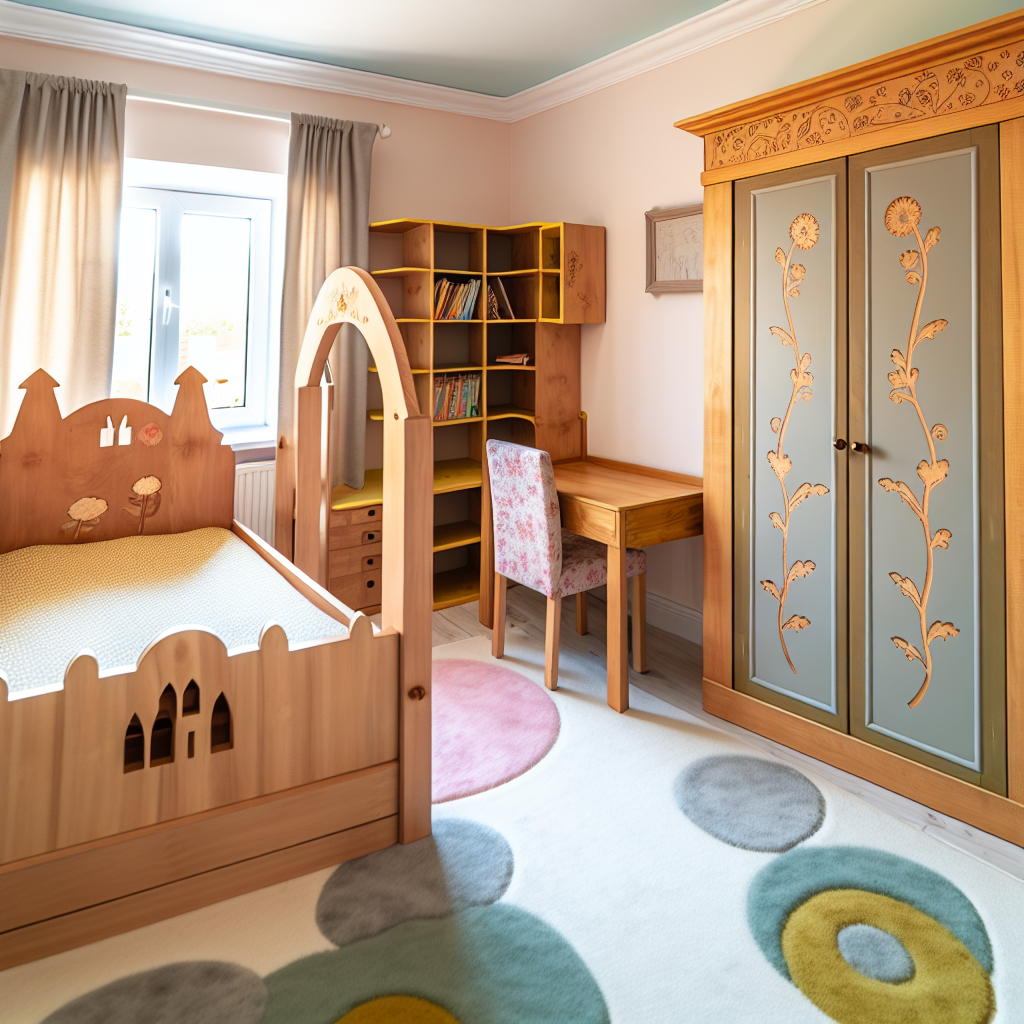
The bedroom is more than just a place for sleep; it’s a personal environment where children cultivate their ideas, dreams, and skills. With a design that nurtures leadership, your child’s room can become a space that encourages innovation, independence, confidence, and decision-making. As children spend increasing amounts of time engaged in digital environments, this physical space needs to counterbalance with creativity, critical thinking, and problem-solving skills.
Designing such a space involves incorporating elements that spark curiosity and encourage exploration. For instance, interactive world maps or a well-stocked library can inspire global awareness and intellectual curiosity. Flexible furniture that encourages adaptability can similarly foster problem-solving and resilience. Furthermore, engaging with them in the process of redesigning their own space can teach valuable lessons about decision-making and self-expression.
Incorporating technology in a responsible manner is also key. As digital natives, Gen Z children require spaces that embrace technology’s advantages while teaching digital responsibility. Smart desks with tailored lighting can enhance productivity, and virtual assistant devices can teach voice-command technology’s emerging future. However, it’s crucial to establish boundaries that ensure balance and mindfulness. This forward-thinking room design aligns with the traits necessary for future leaders: global citizenship, critical thinking, adaptability, and emotional intelligence.
Features: The Science Behind Leadership and Space Design
Recent professional and medical studies support the idea that physical environments significantly impact cognitive development and leadership skill cultivation. A study from the University of Salford explored the impact of school environments on academic performance and found that well-designed spaces with appropriate lighting, color, and layout can enhance learning by up to 16%. Though the study focuses on schools, these findings can be correlated to home environments, emphasizing how strategic design fosters better cognitive function and skill acquisition.
Furthermore, Harvard University’s Center on the Developing Child highlights the importance of ‘serve and return’ interactions—reciprocal exchanges between children and their caregivers—as critical to the development of executive function skills needed for leadership. Designing a child’s bedroom with elements that promote interactive learning can facilitate these developmental exchanges.
In addition, insights from environmental psychology note the benefits of biophilic design—integrating natural elements into a room. A study featured in “Frontiers in Psychology” showed that natural environments improve attention capacity and reduce stress, fostering a clear mind for decision-making and leadership.
Conclusion: Crafting Leaders of Tomorrow
In tailoring your child’s bedroom as a leadership incubator, you are contributing to their holistic development, equipping them with the environment to build crucial skills for the future. Design choices that encourage exploration, responsibility, technological fluency, and well-being play a fundamental role in shaping an innovative, adaptable leader capable of navigating the complexities of the future world. As parents of means, the opportunity to influence your child’s future through impactful environmental design is unparalleled—seize it to cultivate the leaders of tomorrow.
References:
– [University of Salford Study](http://usir.salford.ac.uk/29519/)
– [Harvard’s Center on the Developing Child](https://developingchild.harvard.edu/)
– [Frontiers in Psychology Study](https://www.frontiersin.org/articles/10.3389/fpsyg.2019.00608/full)

Dominic E. is a passionate filmmaker navigating the exciting intersection of art and science. By day, he delves into the complexities of the human body as a full-time medical writer, meticulously translating intricate medical concepts into accessible and engaging narratives. By night, he explores the boundless realm of cinematic storytelling, crafting narratives that evoke emotion and challenge perspectives. Film Student and Full-time Medical Writer for ContentVendor.com