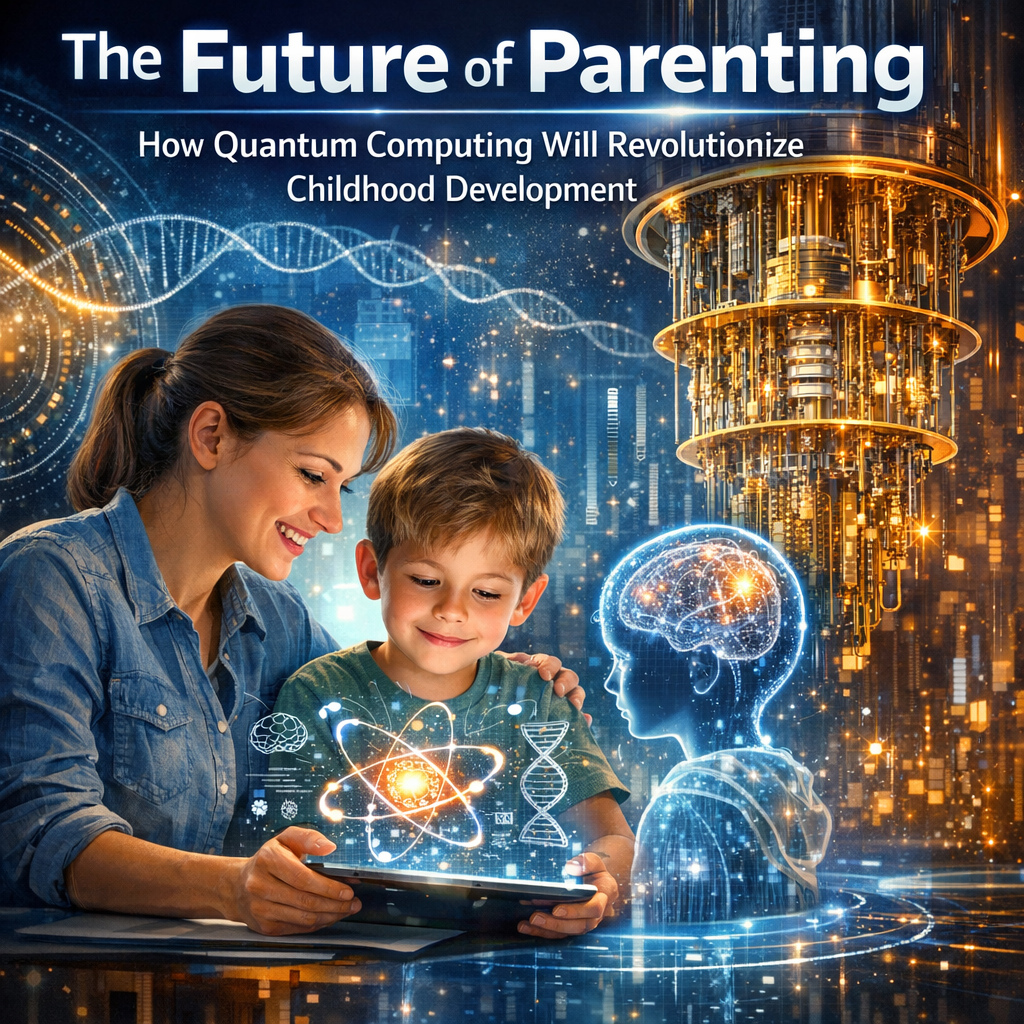
The Future of Parenting: How Quantum Computing Will Revolutionize Childhood Development
In an era where technology is inextricably woven into the fabric of our daily lives, it is essential to explore how upcoming technological advancements can influence the most sacred journey of all: parenthood. Quantum computing, a term that once sounded like something from a sci-fi novel, is increasingly becoming a topic of interest for researchers and innovators across various fields. But what does this cutting-edge technology mean for childhood development, and how can parents of means leverage it to provide unparalleled growth opportunities for their children?
Quantum computing is a groundbreaking technology that processes information at unimaginable speeds and efficiency levels by harnessing the peculiar properties of quantum mechanics. Unlike classical computers that utilize bits in a binary state of 0s and 1s, quantum computers use quantum bits, or qubits, which can exist in multiple states simultaneously. This capability allows for processing complex calculations and storing vast amounts of data at a fraction of the time compared to conventional computers.
Parents today are more tech-savvy than ever, keen on integrating the latest innovations into their children’s education and development. As quantum computing matures, it holds vast potential to transform personalized learning experiences, diagnose developmental delays with unprecedented precision, and even foster emotional intelligence from an early age. Imagine an era where quantum-enhanced algorithms offer insights into a child’s unique learning style, interests, and cognitive abilities, enabling educators and parents to tailor experiences that maximize their developmental potential.
Moreover, the application of quantum computing in medical research could redefine pediatric healthcare. Rapid data analysis can lead to earlier detection of genetic predispositions and developmental disorders, allowing for timely interventions and customized therapy plans. Quantum computing may also pave the way for breakthroughs in understanding the neurological underpinnings of childhood growth, from language acquisition to the intricacies of social behavior.
The enthusiasm surrounding quantum computing is not without its skeptics, and as with all technologies, ethical considerations will need to be thoroughly addressed. However, there’s no denying that the advent of quantum computing marks a pivotal point in technological evolution—one that promises to create dynamic shifts in how we approach childhood development and reshape the existing paradigms of parenting.
Features
Leading experts in child development and computing have begun exploring how quantum computing could intersect with various aspects of early childhood and educational fields. A prominent study conducted by the Massachusetts Institute of Technology ([MIT Study on Quantum Computing and Education](https://www.technologyreview.com/)) delves into how the unmatched data processing capabilities of quantum computers could enhance machine learning algorithms used in educational technologies. The study advocates that these advanced algorithms could provide personalized learning solutions tailored to each child’s cognitive profile and learning preferences.
One area with promising implications is the potential for early detection and intervention in developmental disorders. Research published in the journal *Nature* ([Nature Journal on Quantum Genetic Analysis](https://www.nature.com/)) highlights the capacity of quantum systems to process complex genetic data, which could lead to groundbreaking advancements in identifying autism spectrum disorders or ADHD at much earlier stages than currently possible. Early diagnosis, coupled with personalized treatment plans, could significantly improve outcomes for children at risk.
Quantum-enhanced MRI machines are also on the horizon, with potential to revolutionize pediatric neurology by offering detailed insights into brain development at various growth stages. A study by the University of California, Berkeley ([UC Berkeley Report on Quantum-Enhanced Imaging](https://news.berkeley.edu/)), proposes that such technologies could create high-resolution imaging of the neural architecture in children, allowing for a deeper understanding of how different factors influence cognitive growth and providing valuable data to inform parenting strategies and educational methodologies.
Quantum computing can also enhance our understanding of emotional intelligence in children, an area often overlooked in traditional education. By analyzing vast datasets of behavioral patterns, quantum algorithms might help identify tendencies towards empathy and social interaction, thus informing programs that nurture these essential life skills from a young age.
Conclusion
The frontier of quantum computing heralds a transformative era for childhood development and parenting. This revolutionary technology has the potential to unlock unprecedented insights into a child’s unique developmental journey, bridging gaps in personalized education and pediatric healthcare. As parents of means look to the future, embracing these technological advancements with informed discernment could forge new pathways to nurturing well-rounded, capable young minds. The future of parenting is intertwined with technological innovation, and quantum computing stands as a beacon of possibility.

Dominic E. is a passionate filmmaker navigating the exciting intersection of art and science. By day, he delves into the complexities of the human body as a full-time medical writer, meticulously translating intricate medical concepts into accessible and engaging narratives. By night, he explores the boundless realm of cinematic storytelling, crafting narratives that evoke emotion and challenge perspectives. Film Student and Full-time Medical Writer for ContentVendor.com