“`html
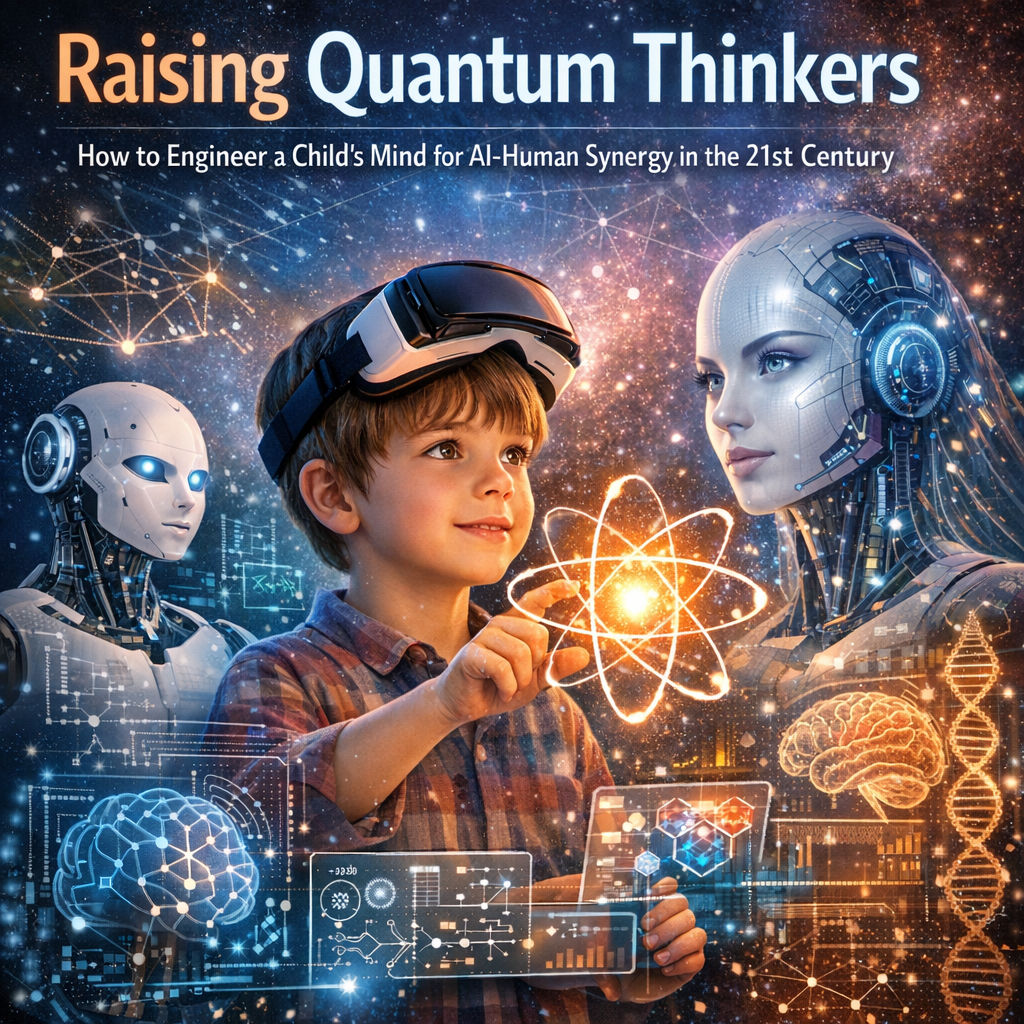
Raising Quantum Thinkers: How to Engineer a Child’s Mind for AI-Human Synergy in the 21st Century
In the dynamic landscape of the 21st century, we’re at the precipice of extraordinary advancements in technology and artificial intelligence (AI). As parents with the resources and foresight to provide unique opportunities for our children, the pressing question arises: How do we prepare our young ones for a future where AI and human interaction are expected to be seamless and ubiquitous? The term “quantum thinkers” embodies this new wave of individuals who possess the ability to think critically, adapt rapidly, and integrate technological advancements into their day-to-day lives in meaningful ways. Quantum thinking is not just about understanding digital systems or possessing tech-savvy skills; it’s about fostering a mindset that thrives on innovation, creativity, and ethical awareness in relation to technology.
As AI systems continue to evolve, they change the way we live, work, and interact. For parents hoping to equip their children to succeed and find fulfillment in a world increasingly defined by AI, cultivating quantum thinkers who can harness the power of these tools is crucial. These future leaders will need to synthesize vast troves of information efficiently, make ethically sound decisions in coordination with AI, and creatively innovate solutions for tomorrow’s challenges.
The foundation of quantum thinking is laid early in life. Encouraging curiosity, teaching problem-solving, and integrating an understanding of technology from a young age are critical steps. It’s about striking the right balance between nurturing creativity and providing robust technical learning opportunities. Parents must consider the cognitive development of their children and find ways to stimulate both the logical and creative sides of the brain. This could involve interactive STEM activities, exposure to diverse experiences that challenge their worldview, and open-ended learning environments where questioning is encouraged and failure is viewed as a stepping stone to success.
Features: Studies and Expert Insights
The importance of equipping children with skills for a future dominated by AI is supported by a growing body of research. Studies in developmental psychology underline the significance of critical thinking and creativity. According to a study by the [American Academy of Pediatrics – The Power of Play](https://pediatrics.aappublications.org/content/142/3/e20182058), children who engage in problem-solving games and activities tend to develop better critical thinking skills. As AI takes on repetitive and linear tasks, the human skillset increasingly leans towards creative and abstract thinking—areas where humans outperform AI.
The integration of STEM (Science, Technology, Engineering, and Mathematics) education from an early age further supports the development of quantum thinkers. A report by the [National Science Foundation – STEM Education](https://www.nsf.gov/news/special_reports/stem/) emphasizes that early exposure to STEM helps children develop a mindset conducive to technological literacy and flexible thinking. This report highlights curricula that encourage inquiry-based learning and hands-on experimentation as crucial in building these skills.
Moreover, collaboration and communication skills cannot be understated. A paper published in the [Journal of Educational Psychology – Collaborative Learning](https://psycnet.apa.org/record/2018-13735-001) discusses the role of collaborative learning in enhancing cognitive and social skills crucial for navigating an AI-enhanced world. This study points out that activities promoting teamwork enhance empathy, a critical component of human-AI synergy in cooperative environments.
Digital literacy is another pillar supporting the transition into becoming a quantum thinker. Education systems around the globe are increasingly incorporating coding and digital ethics into their syllabi. Countries like Estonia have successfully integrated coding into the curriculum at the primary school level, creating an early appreciation and understanding of digital systems while mitigating risks associated with technology, as reported by the [OECD – Coding in the Curriculum: Estonia](https://www.oecd.org/education/coding-the-essential-oecd-country-notes.pdf).
Ethics play a pivotal role as well; teaching children to question the ethical implications of AI systems is essential for future leaders who will shape the boundaries of technology usage. According to the [Center for Humane Technology – Digital Ethics Education](https://www.humanetech.com/), conceptual education focusing on the impact of digital tools can inspire a more responsible and mindful generation of tech users.
Conclusion
Fostering quantum thinkers involves more than simply providing access to technology. It requires a comprehensive approach that nurtures curiosity, creativity, and ethical awareness. By equipping our children with these critical skills, we empower them to not only coexist with AI but to lead in a future where AI-human synergy drives global progress. Parents play a pivotal role in laying this foundation, one that promises to prepare children not just for success, but for a lifetime of meaningful, tech-savvy achievements.
“`

Dominic E. is a passionate filmmaker navigating the exciting intersection of art and science. By day, he delves into the complexities of the human body as a full-time medical writer, meticulously translating intricate medical concepts into accessible and engaging narratives. By night, he explores the boundless realm of cinematic storytelling, crafting narratives that evoke emotion and challenge perspectives. Film Student and Full-time Medical Writer for ContentVendor.com