“`html
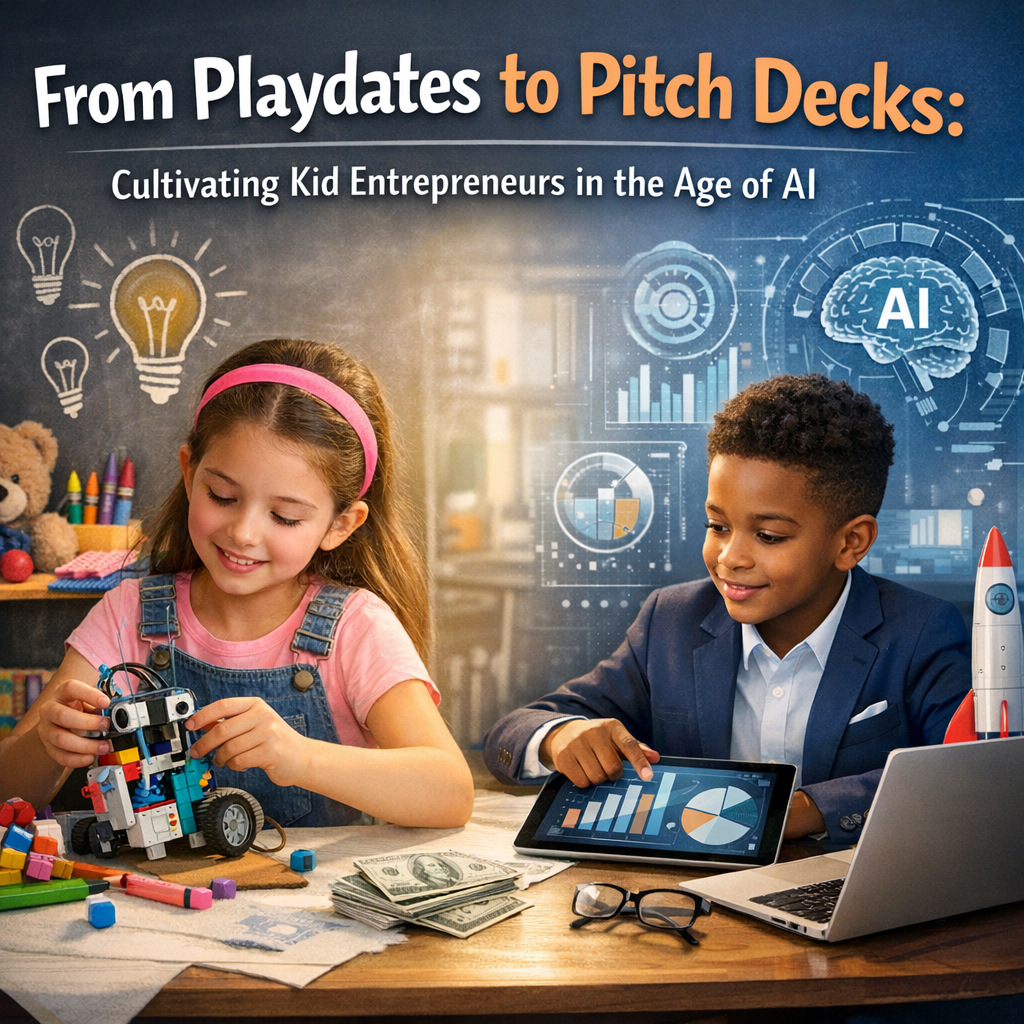
From Playdates to Pitch Decks: Cultivating Kid Entrepreneurs in the Age of AI
Introduction:
In today’s dynamic world, where artificial intelligence (AI) is rapidly transforming industries and redefining the boundaries of innovation, nurturing entrepreneurial skills in children is no longer just an option—it’s a necessity. While playdates traditionally focus on social interaction and play, the concept is evolving to encompass entrepreneurial brainstorming sessions among young innovators. Parents of means are uniquely positioned to facilitate this transition, offering resources and guidance to help their children navigate the world of business from an early age. The age of AI presents a fertile ground for young minds to cultivate ideas that could potentially redefine tomorrow’s markets.
The importance of fostering entrepreneurial skills in children extends beyond mere business acumen. It is about encouraging critical thinking, creativity, and resilience. Today’s children can become the innovators of tomorrow, equipped to tackle complex challenges with confidence and ingenuity. Engaging in entrepreneurial activities from a young age develops skills such as problem-solving, leadership, and financial literacy. Moreover, incorporating AI into the learning process can amplify these skills, providing children with tools that give them a competitive edge. AI’s role in education has been augmented by adaptive learning technologies and intelligent tutoring systems that cater to a child’s individual learning pace and style.
As parents, understanding the intersection of childhood development, entrepreneurial thinking, and technological advancement can empower you to guide your child towards a future of limitless possibilities. By investing in educational toys, tech-forward learning experiences, and even child-friendly coding classes, you’re planting seeds for their future success. Creating an environment that encourages curiosity, experimentation, and failure as learning opportunities will build a robust entrepreneurial spirit in your child, setting them on a path to become future leaders in their chosen fields.
Features:
The concept of cultivating entrepreneurship from a young age is not only appealing but is also supported by academic research and professional studies. A study published in the Journal of Small Business Management highlights that early exposure to entrepreneurial environments can significantly influence a child’s future entrepreneurial intentions and capabilities. By engaging children in entrepreneurial activities, such as creating a simple business plan or undertaking a small project, they begin to understand the value of money, innovation, and strategic thinking.
Additionally, research on the role of AI in education underscores its potential to be a transformational force. A study by the MIT Task Force on the Work of the Future emphasizes the growing importance of integrating AI into educational curricula to prepare students for future job markets. AI-driven tools can personalize learning, adapt to a child’s strengths and weaknesses, and introduce complex concepts in relatable ways. Educational platforms like Khan Academy and Coursera are already utilizing AI to provide tailored lesson plans that cater to each student’s unique learning needs.
Furthermore, the creative aspect of entrepreneurship is enhanced by integrating technology like AI in problem-solving tasks. The International Journal of STEM Education indicates that coding classes and STEM initiatives can significantly enhance children’s cognitive development, improving their analytical and critical thinking skills. This foundation is crucial for aspiring young entrepreneurs who need to understand the dynamics of innovation-driven markets.
Medical research also underscores the importance of developing a child’s entrepreneurial spirit early on. Studies reveal that children engaged in entrepreneurial activities often demonstrate better psychosocial health, with improved self-esteem and resilience. Such skills are vital in navigating the challenges of both personal and professional realms. The positive impacts extend to cognitive development, where exposure to problem-solving and strategic thinking boosts neural connectivity, leading to enhanced cognitive functions.
Conclusion:
In an era where AI reshapes every facet of life, fostering entrepreneurial skills in children becomes imperative. By leveraging technology and encouraging innovative thinking, parents can equip their children with tools to thrive in the future’s competitive landscape. As AI continues to evolve, today’s young entrepreneurs can become pioneers of tomorrow, setting new standards in creativity, leadership, and innovation.
References:
1. Journal of Small Business Management
2. MIT Task Force on the Work of the Future
3. International Journal of STEM Education
“`

Dominic E. is a passionate filmmaker navigating the exciting intersection of art and science. By day, he delves into the complexities of the human body as a full-time medical writer, meticulously translating intricate medical concepts into accessible and engaging narratives. By night, he explores the boundless realm of cinematic storytelling, crafting narratives that evoke emotion and challenge perspectives. Film Student and Full-time Medical Writer for ContentVendor.com