Luxury Parenting in the Age of AI: Mastering Future Skills for Kids with Next-Gen Tech
Introduction
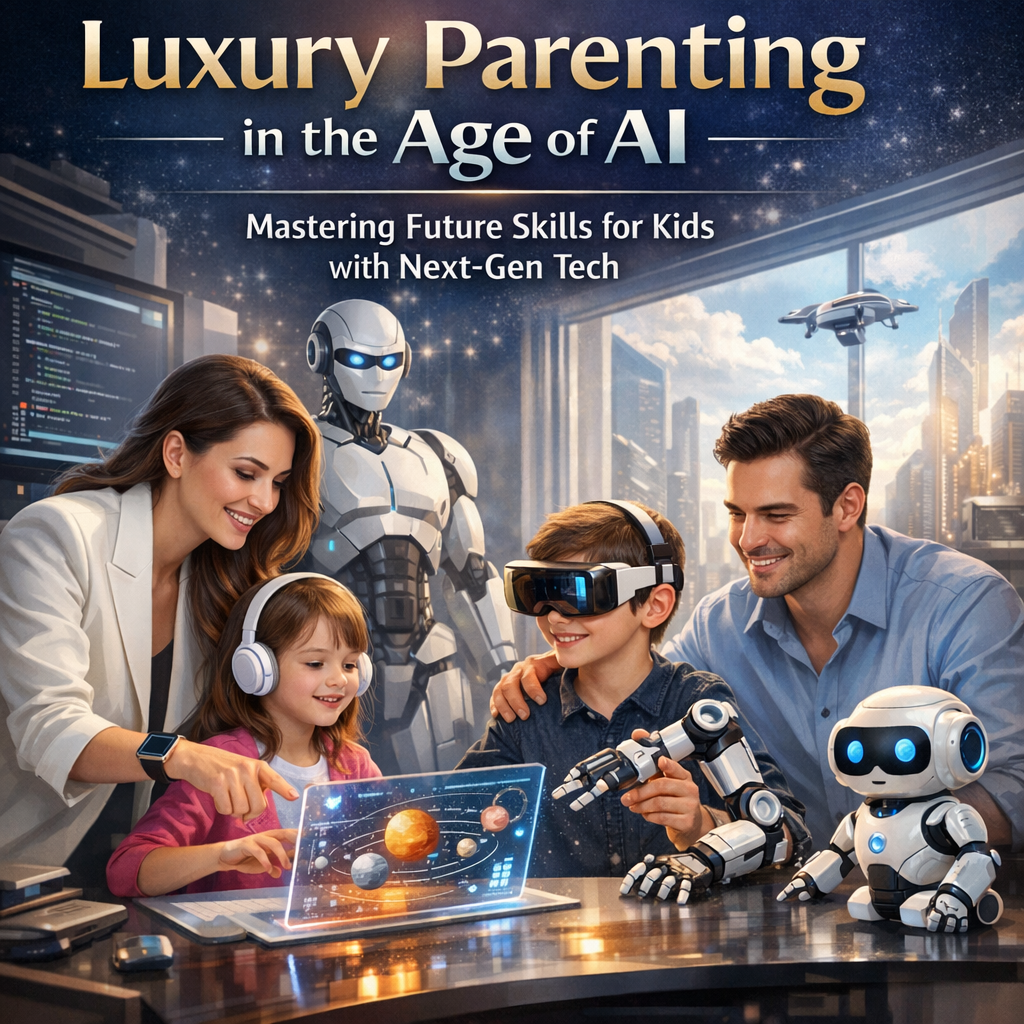
In today’s fast-evolving tech landscape, luxury parenting is taking on a new dimension—one that is deeply intertwined with artificial intelligence (AI). Parents of means hold the keys to a world of opportunities for their children that previous generations could only dream of. The new age of AI is not just about machines making decisions—it’s about leveraging cutting-edge technologies to nurture, educate, and prepare your child for a future brimming with possibilities.
While the allure of luxury often revolves around tangible goods, in the digital era, it extends into the domain of intellectual wealth and capability. The ability to seamlessly integrate AI into parenting goes beyond privilege—it’s about ensuring your child is equipped with future-ready skills that guarantee success in any industry. From smart learning platforms that adapt to a child’s unique learning style to robotic companions that foster emotional intelligence, AI offers a plethora of tools to elevate parenting to an unprecedented level of sophistication.
The challenge, however, lies in navigating the vast, sometimes perplexing, array of options available. How do you sift through the noise to determine what tools will genuinely benefit your child? How can AI be wielded to maintain a healthy balance between tech and real-world interactions? These are questions at the forefront of modern luxury parenting, promising deep rewards for those willing to engage thoughtfully.
By strategically incorporating AI into your parenting approach, you’re setting your child up to acquire essential skills such as critical thinking, problem-solving, and creativity—the very skills that organizations around the globe are clamoring for. This isn’t just about fostering potential; it’s about crafting a bespoke educational journey as unique as your child’s fingerprint. Stepping into this avant-garde realm of parenting requires a sound strategy that harmoniously blends technology, tradition, and a forward-thinking mindset.
Features
AI technology has made noteworthy advancements in personalizing educational experiences, a fundamental aspect of modern luxury parenting. According to a study published by the [Journal of Educational Psychology](https://www.apa.org/pubs/journals/edu), adaptive learning technologies powered by AI have the remarkable capacity to transform how children engage with content. By tailoring the difficulty and complexity of materials to each learner’s pace, AI tools can enhance comprehension and retention. This personalized education ensures that children master core concepts more thoroughly, satisfying not just educational but emotional and psychological needs as well.
Moreover, AI’s role isn’t limited to academic prowess. A study by the [American Academy of Pediatrics](https://pediatrics.aappublications.org/) emphasizes the importance of teaching emotional intelligence alongside intellectual skills. Here, AI has made substantial inroads with emotionally responsive robots and applications that assist children in recognizing and appropriately responding to emotions—both their own and others’.
Navigating future industry landscapes will also require a robust grounding in STEM skills, an area where AI-powered educational tools excel. Studies by the [Organisation for Economic Co-operation and Development (OECD)](https://www.oecd.org/education/) highlight how new AI technologies can remove barriers to STEM education by making complex subjects accessible and engaging for children at all educational levels.
However, it’s important to balance the use of AI tools with real-world experiences. The [Journal of Child Psychology and Psychiatry](https://www.acamh.org/journal/) discerns that while AI can edge out traditional learning methods, face-to-face interactions are vital for developing social skills. Thus, AI should be viewed as a supplement, not a substitute, in striking the right educational equilibrium.
Conclusion
In a world where the lines between technology and reality are increasingly blurred, luxury parenting in the age of AI involves developing a strategy that merges state-of-the-art tools with time-honored parenting principles. By intentionally integrating AI technologies, while ensuring a balance with interpersonal experiences, parents can offer their children not just luxury in the material sense but a luxurious education in critical thought, empathy, and adaptability—skills that will serve them well in an unpredictable future.
References
1. [Journal of Educational Psychology](https://www.apa.org/pubs/journals/edu)
2. [American Academy of Pediatrics](https://pediatrics.aappublications.org/)
3. [Organisation for Economic Co-operation and Development (OECD)](https://www.oecd.org/education/)
4. [Journal of Child Psychology and Psychiatry](https://www.acamh.org/journal/)

Dominic E. is a passionate filmmaker navigating the exciting intersection of art and science. By day, he delves into the complexities of the human body as a full-time medical writer, meticulously translating intricate medical concepts into accessible and engaging narratives. By night, he explores the boundless realm of cinematic storytelling, crafting narratives that evoke emotion and challenge perspectives. Film Student and Full-time Medical Writer for ContentVendor.com