Parenting in the AI Age: How Smart Algorithms Are Becoming the Newest Family Members
Introduction
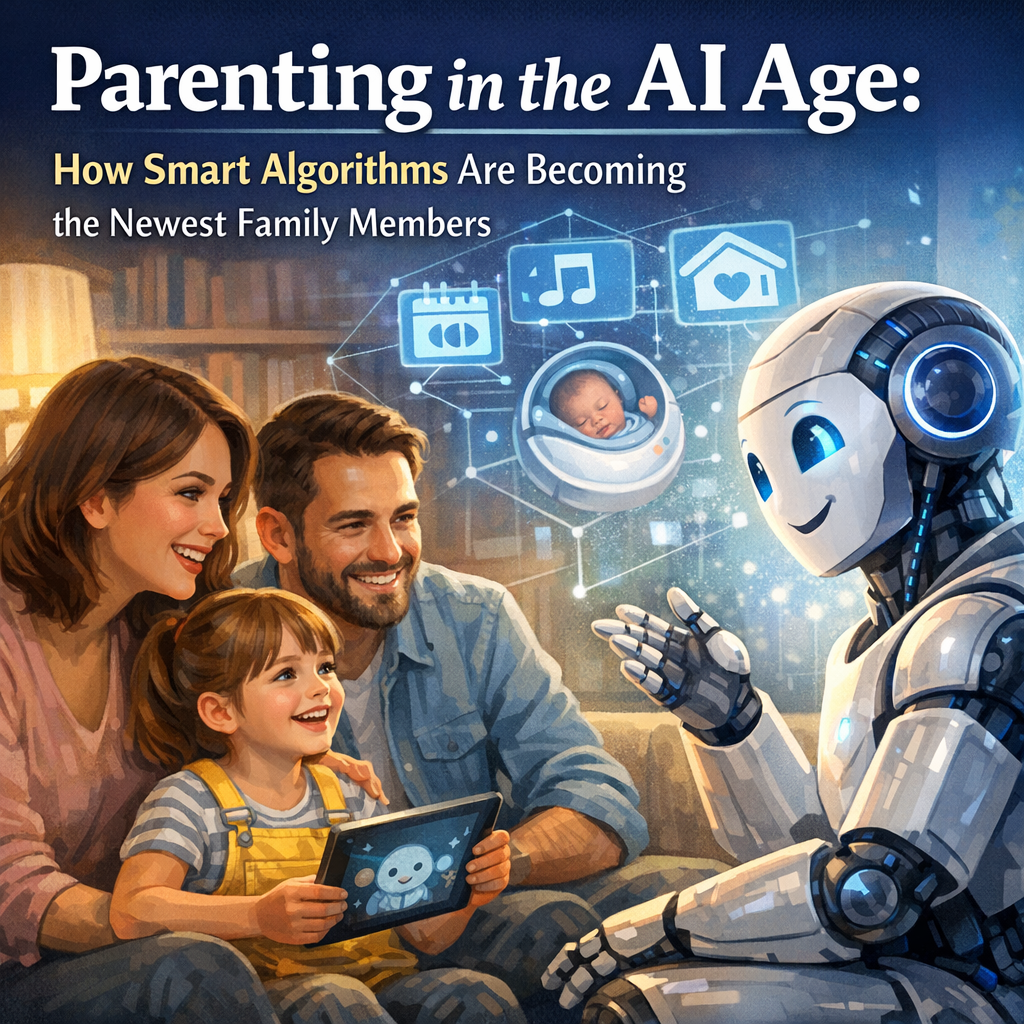
In an era where technology rapidly evolves, the landscape of parenting is being reshaped by the rise of artificial intelligence (AI). The concept of AI may have been the subject of science fiction decades ago, but today, it seamlessly integrates into our everyday lives, vastly transforming how we approach parenting. For parents of means, AI offers tools and resources that promise to enhance both the parenting experience and the developmental trajectory of their children.
The role of AI in modern households ranges from smart toys that adapt to a child’s learning pace, to AI-driven apps that help in tracking developmental milestones. Imagine a scenario where a smart home system not only dims the lights and sets the room temperature but also adjusts the environment based on your child’s mood and needs, an environmental cocoon tailored by algorithms. Parents can rely on AI to suggest activities tailored to their child’s current cognitive development level or dietary needs, offering a personalized parenting experience that was once thought impossible.
Furthermore, AI doesn’t just stop at convenience. It’s also making strides in safety and security. Wearable tech powered by AI can monitor a child’s vitals and alert parents to potential health issues before they become serious, enabling timely medical interventions. The same algorithms also enhance educational capabilities, popularizing adaptive learning environments that adjust based on the child’s progress, fostering an enriched academic experience.
Yet, as smart algorithms become more involved in the upbringing of children, ethical and pragmatic discussions arise regarding privacy, data security, and the importance of human intuition in parenting. Parents might ponder the true cost of relying too heavily on AI: are we at risk of undervaluing our natural parental instincts in exchange for algorithmic oversight? As these smart algorithms gradually take on roles traditionally reserved for family members, they become virtual companions to our children and fellow guides on the parenting journey. This technological evolution in our homes prompts us to consider how we can harness AI responsibly, ensuring that it serves as a tool to enhance rather than replace our parental role.
Features
Recent studies show the substantial impact AI can have on childhood development and family dynamics. According to research by [MIT’s Media Lab](https://www.media.mit.edu/projects/learning-at-scale/overview/), smart technologies that employ AI can lead to improved learning outcomes in children. These technologies often use adaptive learning platforms that tailor educational content to the child’s unique learning style, pace, and preferences. By analyzing real-time data, these platforms can suggest personalized pathways and materials that enhance engagement and retention, a level of customization impossible in traditional educational settings.
The healthcare sector is also seeing significant benefits from AI integration in child monitoring systems. Pediatric health studies published in the [Journal of Medical Internet Research](https://www.jmir.org/health/) have highlighted how AI-driven wearable technology can predict and alert parents and healthcare professionals to potential health concerns before they materialize. This preemptive capability gives parents peace of mind and ensures the child’s well-being is consistently monitored with a level of diligence that human oversight alone could seldom match.
Moreover, the [Stanford Institute for Human-Centered Artificial Intelligence](https://hai.stanford.edu) explores the psychological impacts of AI toys and companions on young minds. These AI devices often develop social and emotional programming, enabling them to engage children in meaningful interactions that enhance empathy, communication skills, and social intelligence. This, in turn, can foster healthier social development outcomes.
However, concerns regarding data privacy and ethical considerations remain prominent. The [Brookings Institution](https://www.brookings.edu/research-areas/data-privacy/) has published papers questioning the implications of massive data collection by AI systems, suggesting that while AI technology offers unprecedented convenience and insights, it necessitates stringent data governance to protect family privacy. The potential for data breaches and misuse looms over the convenience AI promises, urging families to be vigilant about the terms and conditions under which these smart technologies operate.
Conclusion
As we witness the seamless integration of AI into our lives, it becomes essential for parents to navigate this digital era with informed awareness. By striking a balance between embracing the conveniences AI provides and maintaining the irreplaceable value of human instinct and interaction, families can harness the potential of AI to positively impact their children’s growth and family dynamics. Smart algorithms, when used responsibly, can be invaluable companions in the modern parenting landscape, making them not just new members of the family but trusted allies in your child’s development journey.

Dominic E. is a passionate filmmaker navigating the exciting intersection of art and science. By day, he delves into the complexities of the human body as a full-time medical writer, meticulously translating intricate medical concepts into accessible and engaging narratives. By night, he explores the boundless realm of cinematic storytelling, crafting narratives that evoke emotion and challenge perspectives. Film Student and Full-time Medical Writer for ContentVendor.com