Parenting for the AI Era: Mastering Child Development with Digital Behavior Twins
Introduction:
In the rapidly evolving landscape of the 21st century, artificial intelligence (AI) is no longer a futuristic concept but an integral part of our daily lives. From chatbots to self-driving cars, AI innovations are transforming the way we live, work, and communicate. As parents, the challenge of raising children in this digitally-focused era is immense. The digital revolution brings both exciting opportunities and daunting challenges to the forefront of parenting. Specifically, for parents of means, leveraging AI to enhance child development and unlock potential presents a cutting-edge avenue worth exploring. Enter Digital Behavior Twins—a pioneering tool that holds the promise of transforming child-rearing.
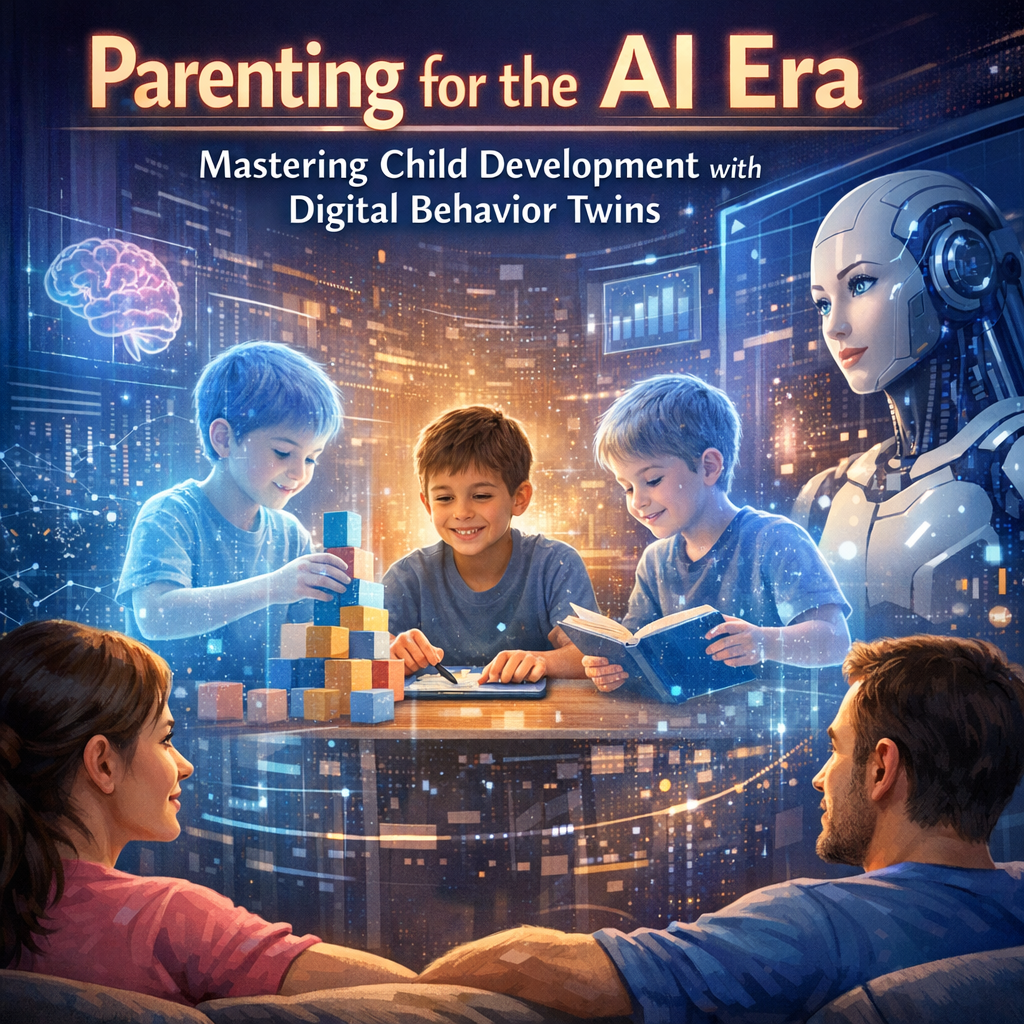
Digital Behavior Twins are sophisticated AI models that simulate the unique attributes, behaviors, and preferences of a child. By analyzing data on a child’s habits, learning styles, and interactions, these virtual models serve as comprehensive mirrors, allowing parents to understand and anticipate their child’s needs better. This innovative approach is not merely about monitoring but about nurturing growth, enhancing cognitive and emotional development, and making informed decisions that align with a child’s potential.
Parents are increasingly recognizing the importance of tailoring developmental strategies to individual children. In this context, Digital Behavior Twins step in as invaluable allies. Imagine having insights into your child’s learning curve as if peering through a lens that highlights strengths, identifies areas of improvement, and suggests personalized educational interventions. By harnessing the power of AI, parents can foster environments where their children thrive—academically, socially, and emotionally.
For families with access to such advanced technology, Digital Behavior Twins could revolutionize parenting strategies. It’s about moving beyond one-size-fits-all approaches, recognizing that every child is a unique puzzle to be celebrated, not solved. As these digital models evolve, tools that once seemed the stuff of science fiction become practical daily assets in nurturing the next generation. It’s an era where parenting aligns intelligence with intuition, setting a stage where technology and empathy coalesce to cultivate potential in every unique child.
Features:
The integration of AI in child development is bolstered by numerous studies highlighting its profound impact. Researchers from Stanford University conducted a study revealing that personalized education, facilitated by AI-based systems, can significantly improve learning outcomes. By dynamically adapting to each student’s progress, these systems cater to individual learning paces and styles, reducing anxiety and increasing engagement. Learn more in their [study on AI in Education](https://news.stanford.edu/2021/05/12/ai-education/).
Moreover, an extensive study from the Massachusetts Institute of Technology (MIT) highlights how AI simulations such as Digital Behavior Twins could revolutionize cognitive therapy for children. By mapping behavior patterns and emotional responses, these tools offer groundbreaking interventions for children with neurodiverse conditions like ADHD and autism. The early application of AI interventions has shown promise in enhancing social skills and reducing developmental delays. More details can be found in the [MIT overview](https://www.media.mit.edu/projects/cognitive-therapy-learning-twins/overview/).
In the context of healthcare, researcher Pamela Hurst-Della Pietra explores how AI models assist in predicting childhood obesity, allowing for early lifestyle interventions. The data-driven approach moves beyond conventional methods, providing a dynamic framework for addressing health issues early, which can lead to better long-term outcomes. Her research is available in the [Association for Computing Machinery publication](https://doi.org/10.1145/3134756).
Another significant application of Digital Behavior Twins is in the realm of emotional development. Studies by the University of California, Berkeley, have demonstrated that AI can help identify subtle emotional cues from children, providing parents with actionable insights to support emotional intelligence development. Further information is available at the [Greater Good Science Center](https://greatergood.berkeley.edu/article/item/how_digital_behavior_twins_can_transform_childhood_emotional_development).
Professionals and academics agree that responsible AI usage is critical. The Children’s Commissioner for England has emphasized the importance of safeguarding children’s data, ensuring AI applications in parenting adhere to ethical standards while fully respecting privacy. For more, visit their [report on Growing Up Digital](https://www.childrenscommissioner.gov.uk/report/growing-up-digital-the-report/).
Conclusion:
As we navigate the complexities of the AI era, Digital Behavior Twins emerge as transformative tools for next-generation parenting. By blending AI’s analytical power with the nuanced art of raising children, parents of means can uniquely equip themselves to meet and anticipate their children’s needs. While challenges remain, the thoughtful, informed use of AI in child development holds unprecedented potential to shape well-rounded, resilient individuals prepared for the future.
References:
1. [Stanford University – AI in Education](https://news.stanford.edu/2021/05/12/ai-education/)
2. [MIT – Cognitive Therapy Learning Twins](https://www.media.mit.edu/projects/cognitive-therapy-learning-twins/overview/)
3. [Association for Computing Machinery – AI in Predicting Childhood Obesity](https://doi.org/10.1145/3134756)
4. [Greater Good Science Center – Emotional Development and AI](https://greatergood.berkeley.edu/article/item/how_digital_behavior_twins_can_transform_childhood_emotional_development)
5. [Children’s Commissioner for England – Growing Up Digital](https://www.childrenscommissioner.gov.uk/report/growing-up-digital-the-report/)

Dominic E. is a passionate filmmaker navigating the exciting intersection of art and science. By day, he delves into the complexities of the human body as a full-time medical writer, meticulously translating intricate medical concepts into accessible and engaging narratives. By night, he explores the boundless realm of cinematic storytelling, crafting narratives that evoke emotion and challenge perspectives. Film Student and Full-time Medical Writer for ContentVendor.com