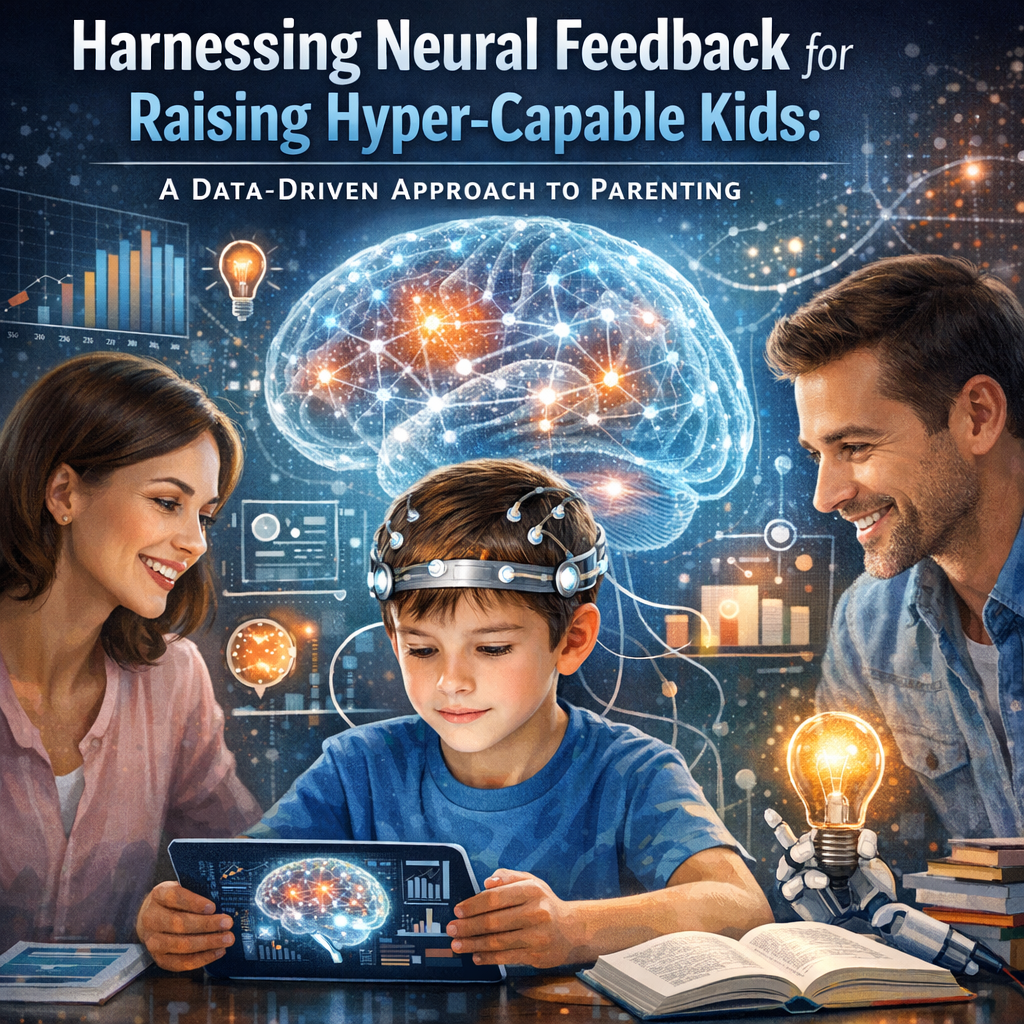
Harnessing Neural Feedback for Raising Hyper-Capable Kids: A Data-Driven Approach to Parenting
In an ever-evolving world, where technology and human capability intertwine more seamlessly than ever, the pursuit of raising children who are not only successful but also adaptable and resilient has gained significant importance. Modern parents, especially those of means, often find themselves searching for the most advanced methods to give their children an edge in life. Enter neural feedback—an innovative approach grounded in neuroscience that promises to unlock the full potential of young minds.
Neural feedback, also known as neurofeedback, is a type of biofeedback that uses real-time brain activity monitoring to teach self-regulation of brain function. By utilizing sophisticated equipment, typically EEG (electroencephalography) devices, individuals can receive immediate feedback on their brainwave patterns. This form of training empowers individuals to consciously adjust their brain activity, potentially enhancing cognitive function, emotional regulation, and even creativity.
The appeal of neural feedback for parents lies in its promise of a tailored, data-driven approach to augmenting a child’s development. Imagine a scenario where children can enhance their focus, improve emotional resilience, or even boost their creativity with methods that are individualized and responsive to their unique neurological makeup. In a competitive world, where every advantage matters, this cutting-edge approach promises not only to prepare children for future challenges but also to nurture a love for learning and personal growth.
The integration of neural feedback as a parenting tool is part of a broader trend towards incorporating advanced technology and rigorous data analysis into daily life. By adopting these scientifically backed methodologies, parents can move away from traditional, one-size-fits-all models of raising children, transitioning instead to an empirical and personalized strategy. As technology continues to advance, neural feedback may soon become a cornerstone in the toolkit of forward-thinking parents committed to nurturing hyper-capable, well-rounded individuals.
While the theory behind neural feedback is compelling, parents are naturally inclined to question the scientific validity and efficacy of these methods before diving in. Fortunately, there is a growing body of research demonstrating its potential benefits, providing a solid foundation for its practical implementation.
One notable study, published in the journal Clinical EEG and Neuroscience, investigated the effectiveness of neurofeedback in children with attention deficit hyperactivity disorder (ADHD). The study found that children who participated in neurofeedback sessions showed significant improvements in attention and behavioral control compared to those who did not. These results suggest that neurofeedback can play a crucial role in enhancing cognitive and behavioral capabilities, potentially translating into better academic and social outcomes.
Additionally, research from the University of California, San Francisco, explored neural feedback’s capacity to enhance creativity. Participants engaged in neurofeedback training displayed increased verbal creativity, an essential skill for problem-solving and innovation. This finding is particularly intriguing for parents eager to cultivate versatile thinkers capable of thriving in dynamic environments.
Moreover, neural feedback is not limited to addressing deficits but can also be utilized to boost already high-performing children’s abilities. In a study conducted by the Swiss Federal Institute of Technology, researchers found that participants in a neurofeedback program exhibited notable improvements in memory retention and processing speed. These enhancements provide promising insights into how neural feedback can benefit gifted children, supporting them in realizing their full potential and excelling.
While more research is needed to fully understand the long-term implications and optimization of neural feedback for children, current studies offer promising evidence of its advantage in fostering an environment where young minds can flourish.
In conclusion, harnessing neural feedback represents an exciting frontier in the quest to raise hyper-capable kids. By leveraging real-time brain data, parents can offer their children an unprecedented level of personalized guidance, supporting their journey towards becoming well-rounded, resilient, and capable individuals. As more research emerges and technology advances, neural feedback may soon become an integral aspect of modern parenting, aligning with a vision of nurturing the leaders, innovators, and change-makers of tomorrow.

Dominic E. is a passionate filmmaker navigating the exciting intersection of art and science. By day, he delves into the complexities of the human body as a full-time medical writer, meticulously translating intricate medical concepts into accessible and engaging narratives. By night, he explores the boundless realm of cinematic storytelling, crafting narratives that evoke emotion and challenge perspectives. Film Student and Full-time Medical Writer for ContentVendor.com