Revolutionizing Play: How AI-Driven Toys Are Redefining Childhood Learning and Development
Introduction
In the fast-paced world of technological advancement, artificial intelligence (AI) is a term we’ve grown accustomed to hearing. Its applications are diverse, spanning from healthcare to automotive industries. But now, perhaps most intriguingly, AI is making its way into the realm of children’s toys, promising to revolutionize how we perceive play, learning, and development. For parents who can afford premium educational tools, the era of AI-driven toys offers something truly captivating—a fusion of intelligent design and play that seeks to nurture your child’s innate curiosity and potential.
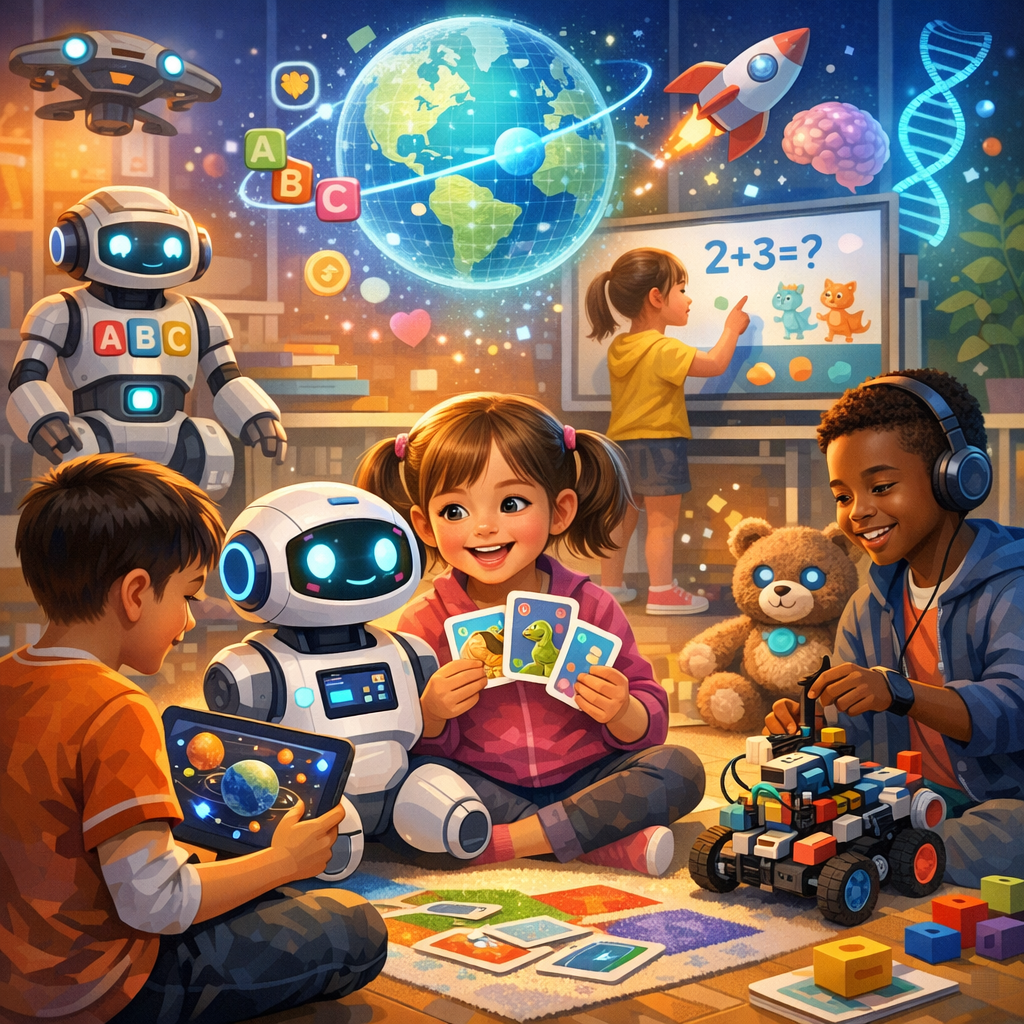
Imagine a toy that not only responds to your child’s verbal prompts but also grows with them, adapting to their developmental needs. AI-driven toys are not about replacing traditional play but enhancing it by offering personalized learning experiences. These innovative toys are designed to recognize speech, anticipate preferences, and build an engaging educational journey tailored to each child’s unique pace and style.
Today’s parents understand that play is not just a pastime; it’s an essential component of early childhood development. Quality playtime cultivates imagination, hones decision-making skills, and fosters emotional intelligence. With AI, the educational value of play is amplified, opening new avenues for holistic growth. AI-driven toys harness machine learning algorithms to offer customized challenges and activities that evolve as children progress, ensuring play remains relevant and exciting.
As digital natives, today’s children are growing up in environments saturated with technology, making it crucial that the tools and toys they interact with are both safe and beneficial. AI-driven toys can monitor engagement levels, suggest activities that pique interest, and even provide parents with insights about their child’s progress and preferences. This deeper understanding enables parents to foster environments that support their child’s learning trajectory more effectively.
However, as we stand on the brink of this transformative era, questions around privacy, data security, and the potential for over-dependence on technology are prevalent. It’s crucial for parents of means to carefully evaluate these smart toys, ensuring they strike the right balance between digital interaction and traditional play. A curated selection that emphasizes quality, safety, and educational value can make AI-driven toys an integral part of a child’s learning ecosystem.
Features
Research into the impact of AI-driven toys on childhood development is burgeoning. Studies suggest that these toys can significantly enhance learning outcomes if used correctly. According to a report in the journal [*Science Robotics*](https://robotics.sciencemag.org/), AI technologies in educational toys are being used to support language learning and social development skills. Researchers found that AI-enabled toys which facilitate interactive learning can improve vocabulary by aligning with a child’s individual learning pace, making language acquisition more effective.
A notable study by the [*Journal of Child Psychology and Psychiatry*](https://acamh.onlinelibrary.wiley.com/) examines how AI-infused interactive robots can aid in children with autism spectrum disorders. These smart toys help children by providing consistent, tailored interaction that traditional human helpers might find challenging due to resource constraints. The study demonstrates improvement in attention span and social interaction when using AI-driven companions.
Furthermore, the [*American Journal of Play*](http://www.journalofplay.org/) highlights that AI-driven toys encourage problem-solving and critical thinking, as they can present age-appropriate challenges and puzzles tailored to the user’s cognitive specifications. As such, children are given opportunities to engage in intricate problem-solving activities that promote higher-order thinking skills.
Medical professionals also weigh in on this trend. Pediatricians emphasize the potential of smart toys to engage children without imposing passive screen time. Interactive learning through AI toys involves physical activity and collaboration, important factors in a child’s holistic development. According to the [*American Academy of Pediatrics*](https://pediatrics.aappublications.org/), integrating these technologies with careful moderation can result in physical, cognitive, and social benefits.
However, experts stress the importance of adult supervision and the responsible use of AI-enabled toys. Ensuring that toy manufacturers prioritize data privacy and the secure handling of user information is paramount. Parents should not only consider gadget appeal but also verify the educational credentials of AI-driven playthings.
Conclusion
AI-driven toys herald a new era of childhood play and learning, offering unprecedented opportunities for personalized, engaging educational experiences. Yet, responsible integration is key. As parents explore these exciting tools, the goal should always be to complement traditional developmental activities, ensuring a well-rounded approach to nurturing well-equipped, creative, and socially adept future generations. Balancing innovation with traditional parenting wisdom can make AI-driven toys a harmonious part of childhood development.

Dominic E. is a passionate filmmaker navigating the exciting intersection of art and science. By day, he delves into the complexities of the human body as a full-time medical writer, meticulously translating intricate medical concepts into accessible and engaging narratives. By night, he explores the boundless realm of cinematic storytelling, crafting narratives that evoke emotion and challenge perspectives. Film Student and Full-time Medical Writer for ContentVendor.com