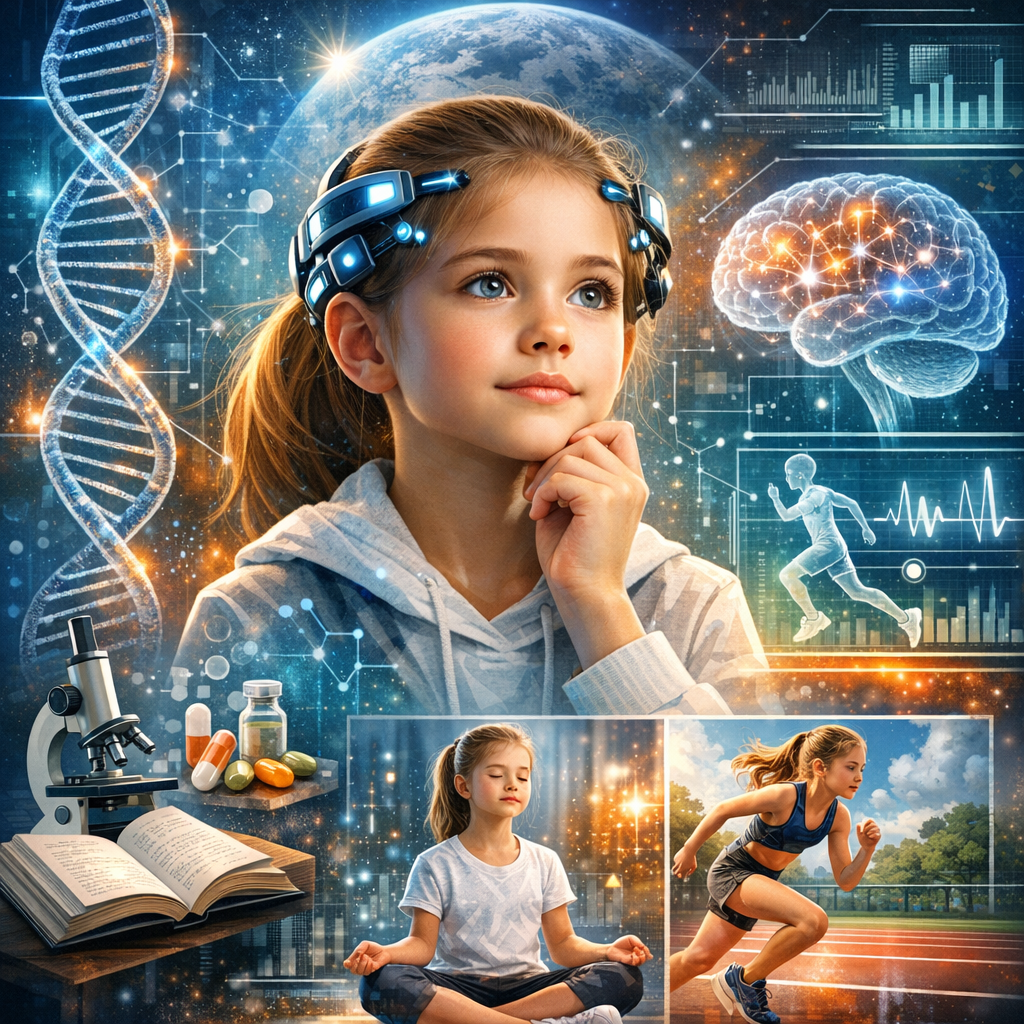
Unlocking Future-Ready Minds: The Role of Biohacking in Elite Child Development
In an increasingly fast-paced and technologically driven world, parents of means are continuously seeking innovative methods to give their children a competitive edge. While traditional forms of education, nutrition, and extracurricular activities remain essential, a new frontier has emerged that promises to reshape the landscape of child development: biohacking. Biohacking—once a concept relegated to the realm of adult self-improvement—is now being explored as a pathway to unlocking the potential of young minds, making it a growing trend among elite families.
Biohacking refers to the practice of optimizing biological functions through science and technology. At its core, it involves the conscious improvement of bodily systems to achieve a more efficient and enhanced life experience. For children, this can mean everything from nutritional interventions and personalized exercise routines to cognitive enhancement techniques that focus on the brain’s development. The aim is to foster cognitive agility, emotional resilience, and personal health, thus equipping children with the necessary skills to thrive in future challenges.
Elite parents interested in biohacking are drawn to its promise to personalize development strategies tailored to individual needs. Today’s pioneering parents use cutting-edge parental and medical technologies to measure everything from brain wave activities to gut microbiomes in order to personalize diets and enhance cognitive functions. The goal is to maximize the potential of young minds, fostering an environment where children not only learn but thrive intellectually and emotionally.
While the concept of biohacking might seem advanced, its components are grounded in scientific research. Studies in fields such as neuroscience, nutrition, and kinesiology provide the evidence-based underpinning for many of these techniques. For instance, nutrition research suggests that specific diets, rich in omega-3 fatty acids and specific vitamins, can significantly enhance cognitive function and improve attention span in children. Similarly, exercise has been proven to improve neuroplasticity, which is vital for learning efficiently and adapting to new information.
Furthermore, advancements in technology have made biohacking more accessible. Wearable devices now provide real-time feedback on physical and mental performance, enabling parents to make informed decisions about their child’s development. This data-driven approach is especially appealing to parents who prioritize not just academic success but overall well-being, ensuring their children develop into well-rounded individuals.
Features: Professional and Scientific Studies on Biohacking
Biohacking is not just a trend but a practice backed by science. Numerous studies have explored its components, providing credibility to the strategies being employed by forward-thinking parents.
One of the most compelling areas of biohacking in child development is dietary interventions, powered by continuous advancements in nutritional science. Research has consistently shown that omega-3 fatty acids, for example, found in fish oil supplements, are crucial for brain health. A study published in [The American Journal of Clinical Nutrition](https://academic.oup.com/ajcn/article/96/6/1267/4576781) found that children who consumed higher levels of omega-3s demonstrated better memory and learning capabilities compared to their peers.
Beyond nutrition, exercise stands out as a cornerstone of biohacking practices. Physical activity is known to promote the production of neurotrophins, such as brain-derived neurotrophic factor (BDNF), which improves brain function and neural plasticity. A comprehensive review in [Frontiers in Neuroscience](https://www.frontiersin.org/articles/10.3389/fnins.2013.00321/full) illustrated that active children not only performed better academically but also showed enhanced attention and cognitive flexibility.
In addition to diet and exercise, cutting-edge technologies such as neurofeedback—an approach that trains brain wave patterns—are gaining traction. A study highlighted in [Nature Reviews Neuroscience](https://www.nature.com/articles/nrn.2017.112) revealed how neurofeedback could potentially improve attention and behavioral regulation in children with ADHD, indicating its potential applications in enhancing focus in otherwise healthy children as well.
Conclusion
Biohacking offers a promising avenue for optimizing the development of children in an age where adaptability and cognitive prowess are paramount. By embracing a combination of scientific research and innovative technologies, parents can empower their children to become future-ready individuals equipped to tackle unprecedented challenges. As evidence mounts in favor of these techniques, biohacking may well become an indispensable part of elite child development strategies.
—
References:
– The American Journal of Clinical Nutrition: [Omega-3 fatty acids](https://academic.oup.com/ajcn/article/96/6/1267/4576781)
– Frontiers in Neuroscience: [Effects of physical activity on brain function](https://www.frontiersin.org/articles/10.3389/fnins.2013.00321/full)
– Nature Reviews Neuroscience: [Neurofeedback and cognitive enhancement](https://www.nature.com/articles/nrn.2017.112)

Dominic E. is a passionate filmmaker navigating the exciting intersection of art and science. By day, he delves into the complexities of the human body as a full-time medical writer, meticulously translating intricate medical concepts into accessible and engaging narratives. By night, he explores the boundless realm of cinematic storytelling, crafting narratives that evoke emotion and challenge perspectives. Film Student and Full-time Medical Writer for ContentVendor.com