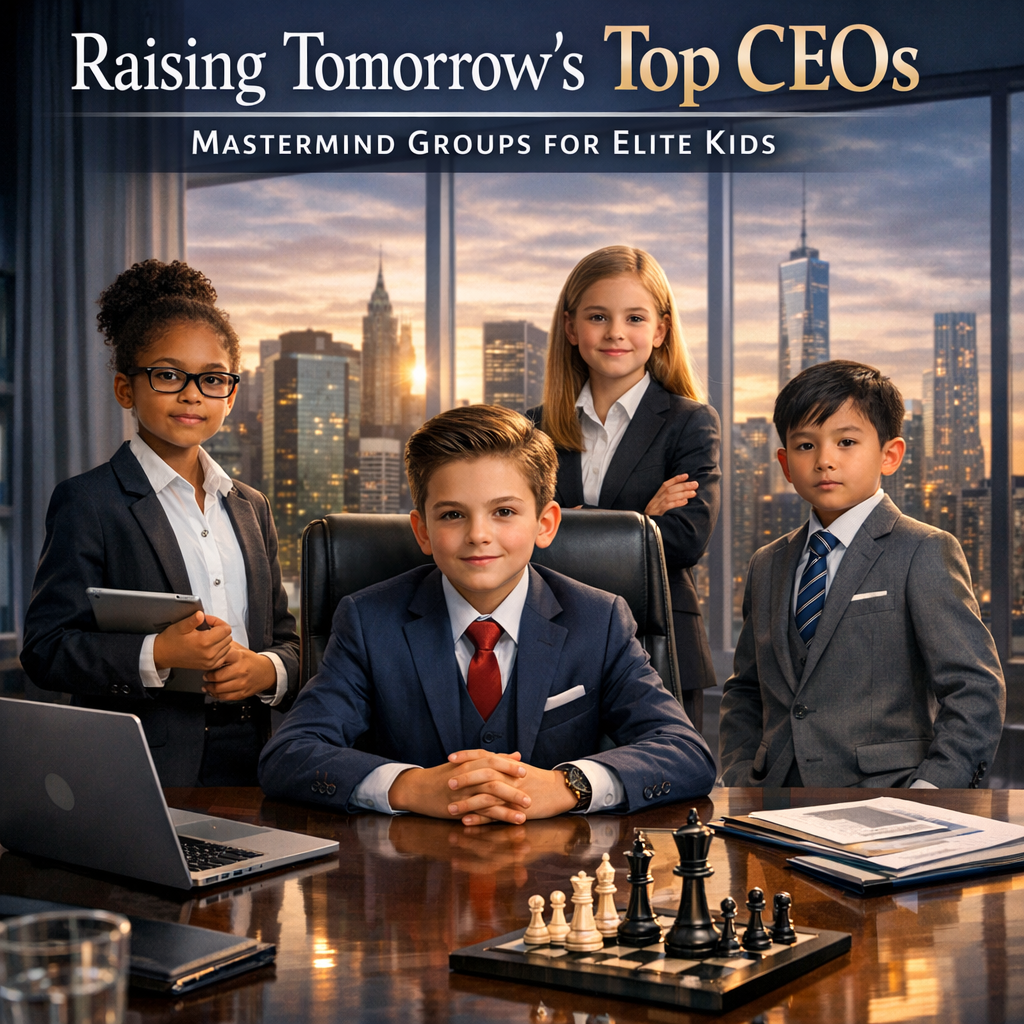
Raising Tomorrow’s Top CEOs: Mastermind Groups for Elite Kids
In a world where entrepreneurship is celebrated and CEOs are the new rockstars, parents of means often wonder how to prepare their children for such prestigious future roles. While academic excellence, top-tier extracurricular activities, and global exposure play significant roles, there is another powerful and often underutilized tool: mastermind groups for elite kids. Originally designed for adults seeking peer support and diverse perspectives to grow their goals and businesses, these collaborative groups are now being adapted for children. This concept is gaining traction as a strategic way for young minds to cultivate leadership skills, strategic thinking, and emotional intelligence from an early age.
Elite children often grow up in environments where exceptionalism is expected, yet their unique challenges can sometimes lead to isolation from peers. Mastermind groups offer a safe space where ambitious young people can engage with similarly motivated peers to share insights, tackle challenges, and uplift each other in pursuit of individual and shared goals. The idea is rooted in the belief that peer-to-peer learning and mentorship among equals can accelerate personal and professional growth in ways that traditional education may not fully cover.
When children are part of a mastermind group, they are exposed to diverse perspectives and innovative thinking. They learn to think outside the box, question the status quo, and develop resilience in the face of obstacles. In these groups, the focus is not just on academic learning but on holistic development, including emotional intelligence, communication skills, and ethical leadership. By consistently engaging in these environments, children build the skills needed to become well-rounded individuals.
Parents aiming to ensure their children stand out in tomorrow’s competitive world should consider forming or joining elite mastermind groups specifically designed for children. These are carefully curated groups where young minds are encouraged to forge meaningful connections, engage in deep intellectual discussions, and develop skills that will set them apart as future leaders. The exposure to diverse thinking and challenges within these groups trains young participants to become adaptable and resourceful – crucial traits for any top executive or entrepreneur.
Features: Insights from Professional Studies
The concept of mastermind groups is not just a trend but is backed by significant research and psychological theories. Professional studies highlight the importance of peer dynamics and collaborative learning in child development. According to Vygotsky’s social development theory, learning is fundamentally a social process, meaning children develop higher mental functions through social interaction.
Moreover, collaboratively engaging with peers who share similar interests and ambitions can promote creativity and deeper learning. A study from the Harvard Graduate School of Education underscores the value of learning environments that emphasize “active, engaged participation,” aligning closely with the collaborative and participatory nature of mastermind groups.
Additionally, programs focusing on socio-emotional learning (SEL) have shown a marked improvement in emotional intelligence, self-regulation, and leadership qualities among young participants. According to a report by the Collaborative for Academic, Social, and Emotional Learning (CASEL), children who participate in SEL programs demonstrate better social behaviors, lower levels of emotional distress, and improved academic performance. The structure of mastermind groups naturally incorporates SEL principles, thereby supporting emotional and interpersonal growth alongside intellectual development.
For elite children, especially those who may experience high-pressure environments, the supportive nature of mastermind groups can serve as a crucial counterbalance, allowing them to develop empathy, cultural awareness, and ethical judgment. Studies have shown that such leadership traits are essential for success in top executive roles, where understanding diverse perspectives and making ethical decisions are part of daily operations.
Conclusion
Engaging elite kids in mastermind groups is about more than enhancing academic prowess; it’s about cultivating future leaders who are emotionally intelligent, socially aware, and ethically grounded. These groups offer a nurturing ground where young minds learn to collaborate, innovate, and lead with empathy and integrity. As parents and educators prepare children for a future filled with unknown challenges, mastermind groups can be an invaluable tool in raising tomorrow’s top CEOs, ready to make a positive impact on the world.

Dominic E. is a passionate filmmaker navigating the exciting intersection of art and science. By day, he delves into the complexities of the human body as a full-time medical writer, meticulously translating intricate medical concepts into accessible and engaging narratives. By night, he explores the boundless realm of cinematic storytelling, crafting narratives that evoke emotion and challenge perspectives. Film Student and Full-time Medical Writer for ContentVendor.com