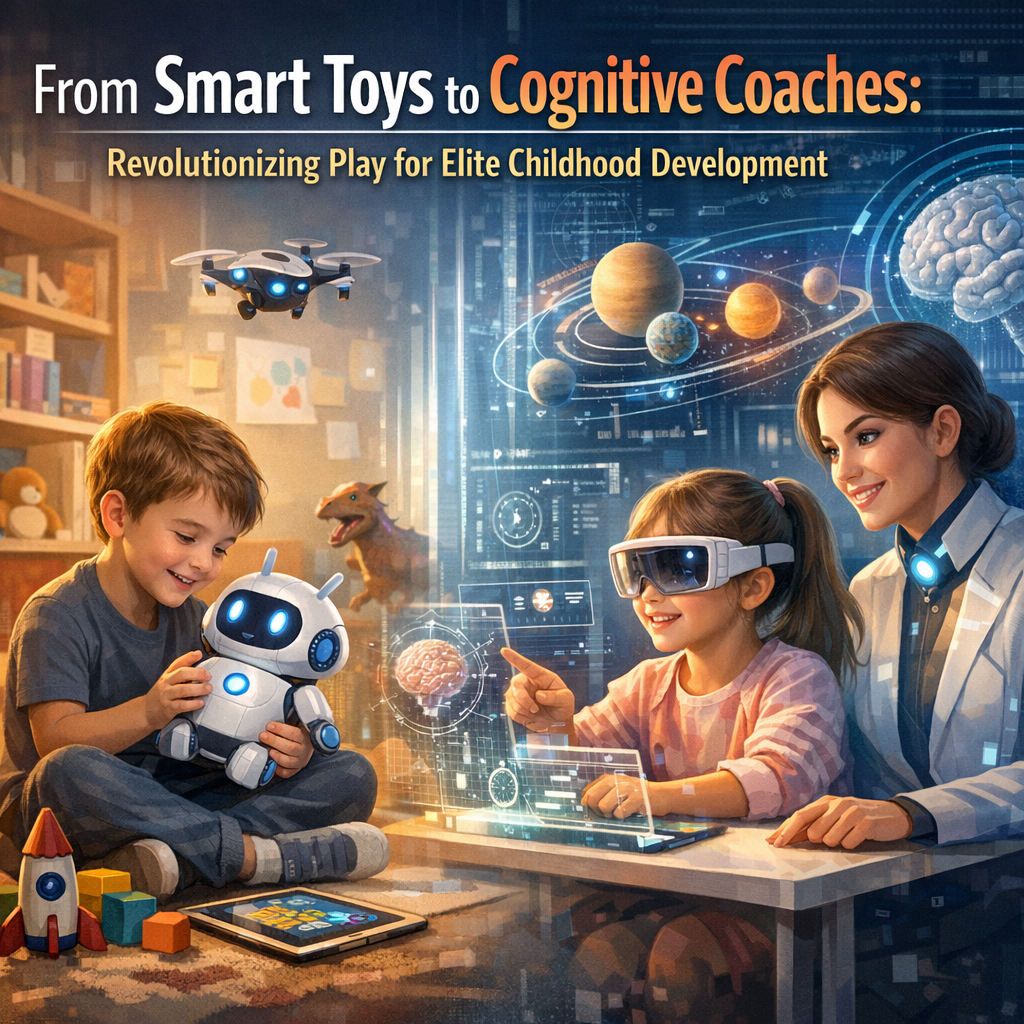
From Smart Toys to Cognitive Coaches: Revolutionizing Play for Elite Childhood Development
Topic Introduction:
In today’s fast-paced digital world, the landscape of childhood play is undergoing a radical transformation. For parents who prioritize a holistic and elite developmental approach for their children, the integration of smart toys and cognitive coaching presents groundbreaking opportunities. Gone are the days when play was merely incidental to a child’s growth. It is no longer restricted to physical toys that solely stimulate fine motor skills. Instead, a new era of sophisticated play is emerging—one that combines the tactile pleasure of traditional toys with advanced technology and cognitive insights to foster comprehensive child development.
The demand for smart toys is surging as parents recognize the potential they hold in expanding children’s cognitive abilities. These toys are designed to be more than mere objects of entertainment; they are powerful tools that leverage artificial intelligence to adapt to a child’s unique learning trajectory. Whether it’s a robot that teaches coding or puzzles that respond to a child’s problem-solving skills in real-time, smart toys are redefining how children learn and grow.
In tandem with the evolution of smart toys is the growth of cognitive coaches. These personalized, often AI-driven platforms offer insights and systems to encourage optimal cognitive and emotional growth in young minds. Cognitive coaching takes into account individual learning styles, strengths, and areas of improvement, providing suggestions and activities that nurture a child’s potential. It is the marriage of psychology, education, and technology, brought to life in real-world applications that can truly revolutionize a child’s developmental journey.
For affluent parents aiming to offer their children every possible advantage, navigating through these sophisticated avenues of play and learning is imperative. The synergy between traditional values of play and contemporary technological advancements offers a comprehensive approach to elite childhood development. As we delve into the features and benefits of these innovative tools, it’s crucial to assess their potential impact, guided by emerging studies from the realms of psychology and education.
Features:
In recent years, a host of studies have underscored the impact of smart toys and personalized cognitive coaching on childhood development. A study conducted by the Massachusetts Institute of Technology (MIT) delves into how adaptive learning technology in toys can significantly enhance a child’s problem-solving skills. The research demonstrated that children who engaged with AI-driven learning platforms showed notable improvement in their ability to solve complex problems as compared to those who played with conventional toys [source](https://www.media.mit.edu/projects).
Another study by the Journal of Psychological Science observed the benefits of cognitive coaching in enhancing children’s executive functioning—the mental processes that enable planning, attention, and memory. The study involved using AI-guided activities tailored to individual learning profiles; children participating in these activities displayed marked improvements in their ability to concentrate and recall information compared to their peers who did not receive personalized coaching [source](https://journals.sagepub.com).
The application of technology-driven tools in early education is further validated by the American Academy of Pediatrics. Their research indicates that under the guidance of structured cognitive coaching, children build not just cognitive skills but also emotional intelligence. Exposure to these tools helps children comprehend emotions, fostering better interpersonal skills and empathy [source](https://pediatrics.aappublications.org).
Moreover, the technological framework of smart toys and cognitive coaches complement the learning of languages and mathematical concepts through experiential education. Insights from the European Journal of Educational Research highlight that children using interactive toys enriched with linguistic and numeracy features develop these competencies at an accelerated pace [source](https://www.eu-jer.com).
The advancements in smart toys and cognitive coaching not only have the potential to elevate the standard of learning for children but also significantly contribute to a child’s adaptability in a tech-driven world. For parents poised at the intersection of luxury and early childhood education, integrating these advanced learning tools represents an invaluable investment in their child’s developmental journey.
Conclusion:
As the landscape of play continues to evolve, integrating smart toys and cognitive coaching into childhood development is fast becoming indispensable for enriching both cognitive and emotional intelligence. For elite families intent on optimizing their children’s growth, these innovations offer a frontier of possibilities. By embracing the synergy between emerging technologies and traditional learning principles, parents can ensure that their children are armed with the skills to thrive in the ever-changing world. For further exploration, these themes can be further investigated through scientific findings and personalized contextual experiences available online.

Dominic E. is a passionate filmmaker navigating the exciting intersection of art and science. By day, he delves into the complexities of the human body as a full-time medical writer, meticulously translating intricate medical concepts into accessible and engaging narratives. By night, he explores the boundless realm of cinematic storytelling, crafting narratives that evoke emotion and challenge perspectives. Film Student and Full-time Medical Writer for ContentVendor.com