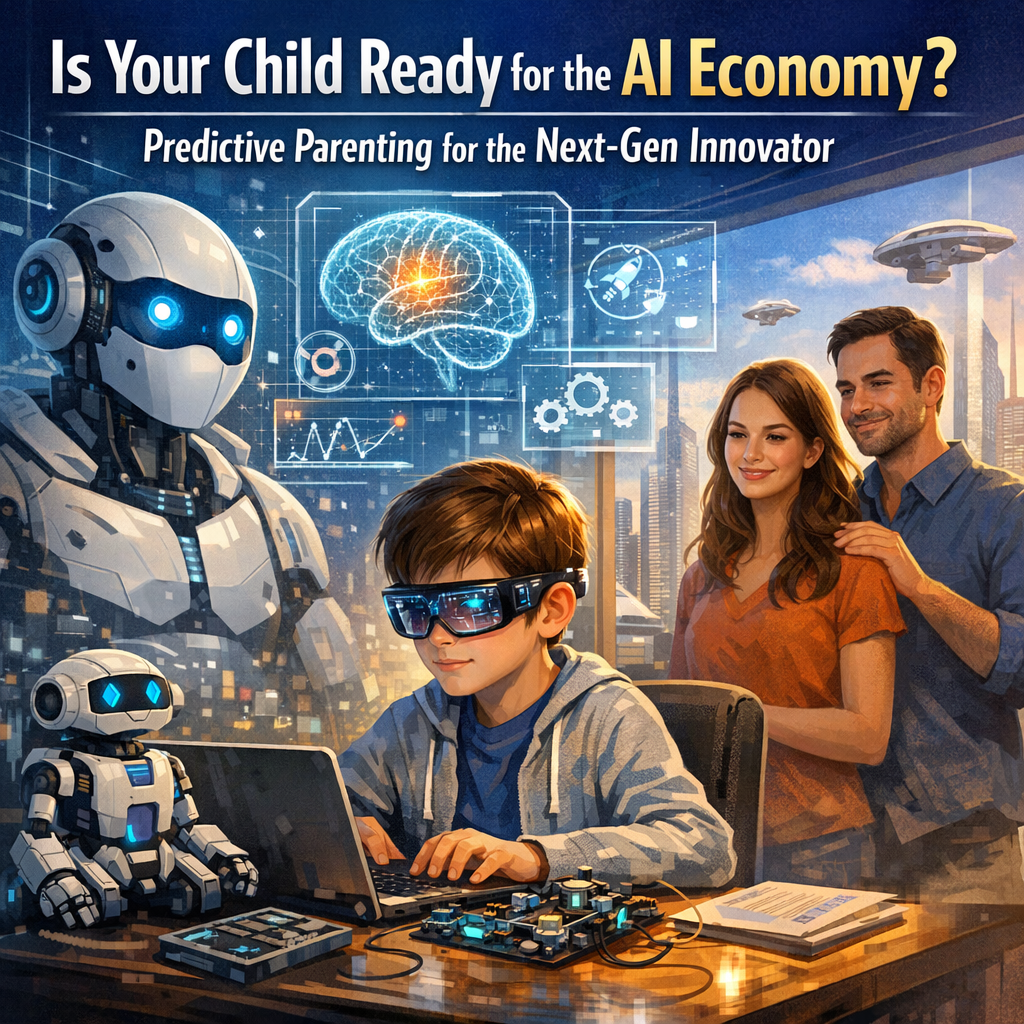
Is Your Child Ready for the AI Economy? Predictive Parenting for the Next-Gen Innovator
Introduction
The rapidly evolving landscape of the global economy is being significantly shaped by advances in artificial intelligence (AI). As children today are on the cusp of entering a workforce that will be vastly different from the one their parents encountered, it becomes crucial for parents, especially those who are fortunate enough to provide every advantage, to prepare their children for this new reality. The integration of AI in various industries is not just shifting job roles but is also redefining the skills necessary to thrive. So, how do you ensure that your child is not just an observer but an innovator in the AI economy?
Predictive parenting involves anticipating future trends and equipping your child with the right set of tools, knowledge, and skills. This isn’t just about coding or learning how to use technology; it’s about nurturing a mindset that embraces change, fosters creativity, and drives innovation. The advantages of exposing children to AI from a young age are manifold, from developing problem-solving skills to enhancing logical thinking. Yet, equally important is fostering emotional intelligence, creativity, adaptability, and ethical reasoning—skills that AI cannot replicate.
Furthermore, the AI economy will demand a new tier of soft skills—empathy, resilience, and teamwork. A holistic approach to education, combining STEM (Science, Technology, Engineering, and Mathematics) with arts and humanities, is being increasingly endorsed by thought leaders in education and futurists. This blended methodology encourages children to be well-rounded individuals who engage with AI not just passively but as collaborative creators and problem solvers.
As a parent of means, you are uniquely positioned to give your child access to resources, experiences, and learning environments that can build these competencies. Whether it’s through specialized programs, access to cutting-edge technology, or exposure to international cultures and ideas, your role is pivotal in ensuring that your child is not just ready but eager for the challenges and opportunities that the AI economy presents.
Features
Numerous studies underscore the importance of equipping children for an AI-driven future, emphasizing not only technical skills but a broader cognitive and emotional skill set. According to a study conducted by the World Economic Forum, alongside advanced technological skills, critical thinking and problem-solving will be among the core job skills needed in the new economy by 2025. Moreover, the same study highlights creativity as a top skill, reflecting the demand for innovative thinking when AI tools are mainstream.
In the sphere of educational strategies, researchers like Dr. Yong Zhao from the University of Kansas advocate for an “entrepreneurial” approach to education. This approach prepares children to be creators rather than mere users of technology, fostering an entrepreneurial mindset that is crucial in a technology-driven world. Zhao’s research emphasizes that problem-based and project-based learning are effective in promoting such mindsets, as they naturally integrate technology in a creative, engaging manner.
Additionally, a report by the Institute for the Future in collaboration with Dell Technologies projects that 85% of the jobs that will exist in 2030 have not yet been invented. This startling projection emphasizes the need for adaptability and lifelong learning. Curiosity, the ability to learn continuously, and the ready embrace of new challenges are crucial traits for your child to develop.
Neurological studies also suggest that the plasticity of a child’s brain makes it an ideal time to introduce complex concepts like empathy and ethics in technology use. As AI systems grow more autonomous, understanding the ethical implications of technology becomes key. Principles of ethical AI usage, imbued at a younger age, can ensure responsible innovation in later stages of life.
Therefore, while technical literacy is important, parents must advocate for an educational framework that integrates these varied skills. Encouraging participation in after-school programs, technology camps, or interdisciplinary courses can provide the exposure necessary to thrive in an AI-heavy future.
Conclusion
Preparing your child for the AI economy involves more than just a focus on technology. It demands an intentional strategy that includes fostering creativity, critical thinking, and emotional intelligence. By taking a predictive parenting approach and equipping your child with these multifaceted skills, you ensure they are not only ready for the challenges of the next-gen economy but are positioned to be leaders and innovators within it. For parents of means, the ability to direct resources and attention towards building this foundation is an opportunity to shape the architects of tomorrow’s world.
References
1. [World Economic Forum Future of Jobs Report 2020](https://www.weforum.org/reports/the-future-of-jobs-report-2020)
2. [Yong Zhao, A World Class Education](https://yongzhao.medium.com)
3. [Institute for the Future & Dell Technologies: Future Work Skills 2030](https://www.iftf.org/futureworkskills/)
4. [Harvard University Study on the Plasticity of Child Development](https://developingchild.harvard.edu)

Dominic E. is a passionate filmmaker navigating the exciting intersection of art and science. By day, he delves into the complexities of the human body as a full-time medical writer, meticulously translating intricate medical concepts into accessible and engaging narratives. By night, he explores the boundless realm of cinematic storytelling, crafting narratives that evoke emotion and challenge perspectives. Film Student and Full-time Medical Writer for ContentVendor.com