“`html
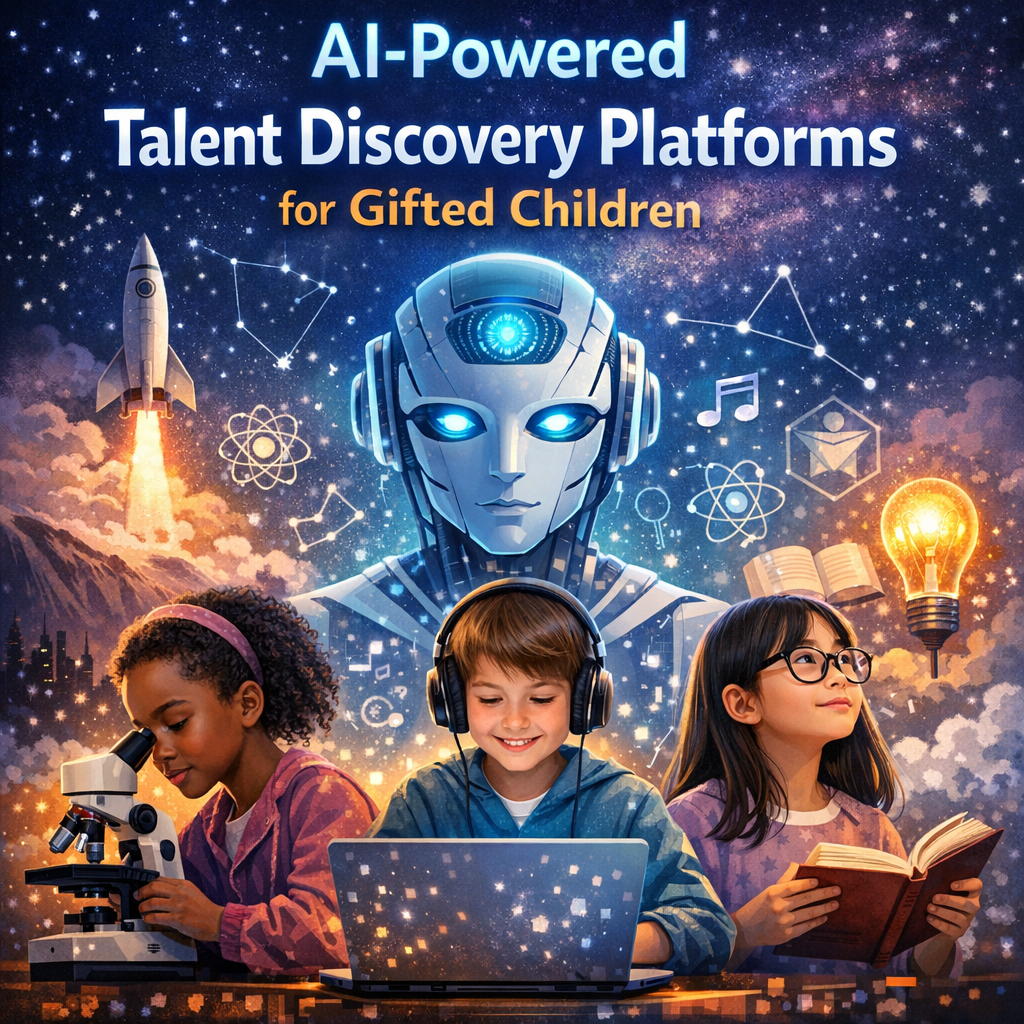
AI-Powered Talent Discovery Platforms for Gifted Children
In an age driven by technological advancement, the paradigm of identifying and nurturing giftedness in children is rapidly evolving. Traditional methods of talent recognition, relying heavily on observations and standard IQ tests, often fail to capture the diverse range of abilities possessed by today’s gifted youth. Enter AI-powered talent discovery platforms—an innovative approach to discovering, understanding, and fostering potential in children with precision and scale never before achievable.
The intersection of artificial intelligence and talent discovery provides an unprecedented opportunity to tailor educational and developmental pathways to individual needs. These cutting-edge platforms employ machine learning algorithms and data analytics to assess various domains of talent, from intellectual and creative prowess to social and emotional intelligence. By analyzing vast amounts of data, AI can identify patterns and indicators of giftedness that might otherwise go unnoticed. Such platforms not only evaluate cognitive skills but also consider less tangible traits such as creativity, leadership potential, and emotional intelligence, offering a more holistic understanding of a child’s abilities.
For parents of means, investing in AI-based talent discovery tools affords a significant advantage: personalized insights into their child’s unique capabilities that traditional assessments might overlook. These platforms can suggest targeted enrichment opportunities, guide extracurricular involvement, and recommend specific educational paths, thereby enabling parents to make informed decisions about nurturing their child’s talents. As children experience heightened engagement and motivation, their prospects for success and fulfillment in life become immeasurably enriched.
However, as we integrate AI into talent discovery, it’s crucial to remain cognizant of privacy concerns and the ethical implications of data use. Ensuring that the platforms prioritize security and the child’s best interests is paramount. Parents must seek platforms that offer transparency about their data collection and usage policies to maintain control over their child’s information.
Features: The Science Behind AI-Powered Talent Platforms
The application of AI in talent discovery is underpinned by solid scientific research aimed at understanding human cognition and behavior. Studies from institutions like Stanford University and MIT reveal how artificial intelligence can emulate human thought processes, making it a powerful tool for nuanced assessments. For example, AI can analyze patterns in a child’s artwork or writing, correlate these with psychological indicators, and accurately predict cognitive abilities and creative potential—capabilities far beyond traditional testing methods.
A notable study conducted by the Massachusetts Institute of Technology explored the efficiency of AI in identifying giftedness through pattern recognition. By analyzing datasets of test scores, behavioral inputs, and even social interactions, AI systems demonstrated superior accuracy over human assessors in distinguishing exceptional talents. This analytical prowess stems from AI’s ability to process vast amounts of data and derive complex insights, which human evaluators may overlook due to cognitive biases or limitations in information processing.
Moreover, professional studies highlight the potential of AI to reduce inherent biases in talent identification. A research project at the University of California emphasized that AI could minimize the cultural and socio-economic biases traditionally present in testing environments, ensuring equal opportunities for all children, regardless of background. This leveling of the playing field is essential for ensuring that talent is recognized based on merit rather than external factors, making these platforms especially valuable for parents who wish to provide equitable opportunities for their children.
In the medical realm, AI’s ability to swiftly process and interpret neuropsychological data is harnessed to assess aspects of cognitive function and highlight areas that indicate advanced capacity or giftedness. As highlighted in a study in the “Journal of Pediatric Neuropsychology,” AI’s role in analyzing neurodevelopmental profiles enables a deeper understanding of each child’s unique neural architecture, guiding interventions, and enhancing personalized learning strategies.
Conclusion
AI-powered talent discovery platforms represent a revolutionary stride forward in the identification and nurturing of gifted children. They provide unparalleled insights into a child’s abilities, allowing for a tailored approach to education and development that respects individuality and encourages growth. As parents of means look to harness their child’s potential, these platforms offer a strategic advantage that encompasses not just academic success but personal fulfillment and life readiness.
References
1. Stanford University: [Stanford AI Research](https://ai.stanford.edu/)
2. MIT News on AI Studies: [MIT News](https://news.mit.edu/topic/artificial-intelligence2)
3. University of California Study on Bias in AI: [UC Berkeley Research](https://www.berkeley.edu/)
4. Journal of Pediatric Neuropsychology: [Springer Journal](https://www.springer.com/journal/12311)
“`

Dominic E. is a passionate filmmaker navigating the exciting intersection of art and science. By day, he delves into the complexities of the human body as a full-time medical writer, meticulously translating intricate medical concepts into accessible and engaging narratives. By night, he explores the boundless realm of cinematic storytelling, crafting narratives that evoke emotion and challenge perspectives. Film Student and Full-time Medical Writer for ContentVendor.com