“`html
Future-Proofing Parenthood: AI-Driven Strategies for Raising Tomorrow’s Innovators
Introduction
In an era where groundbreaking technologies lead exponential growth, the role of parents in preparing their children for the future has never been more crucial. The advent of artificial intelligence (AI) is transforming industries, reshaping societal norms, and redefining the skills necessary for future success. Parents, particularly those with substantial resources, have the unique opportunity and responsibility to harness AI advancements to empower their children to thrive as tomorrow’s innovators.
The premise of future-proofing parenthood involves leveraging AI not merely as an academic aid but as a comprehensive tool for nurturing cognitive and emotional intelligence. Platforms powered by AI now offer personalized learning experiences, predicting children’s educational needs, and providing learning paths tailored to individual strengths and weaknesses. Such platforms can discern a child’s learning style, giving parents insights to better support their child’s educational journey. This shift represents a significant advancement over traditional educational methods, providing a dynamic and responsive approach that can address the unique needs of each child.
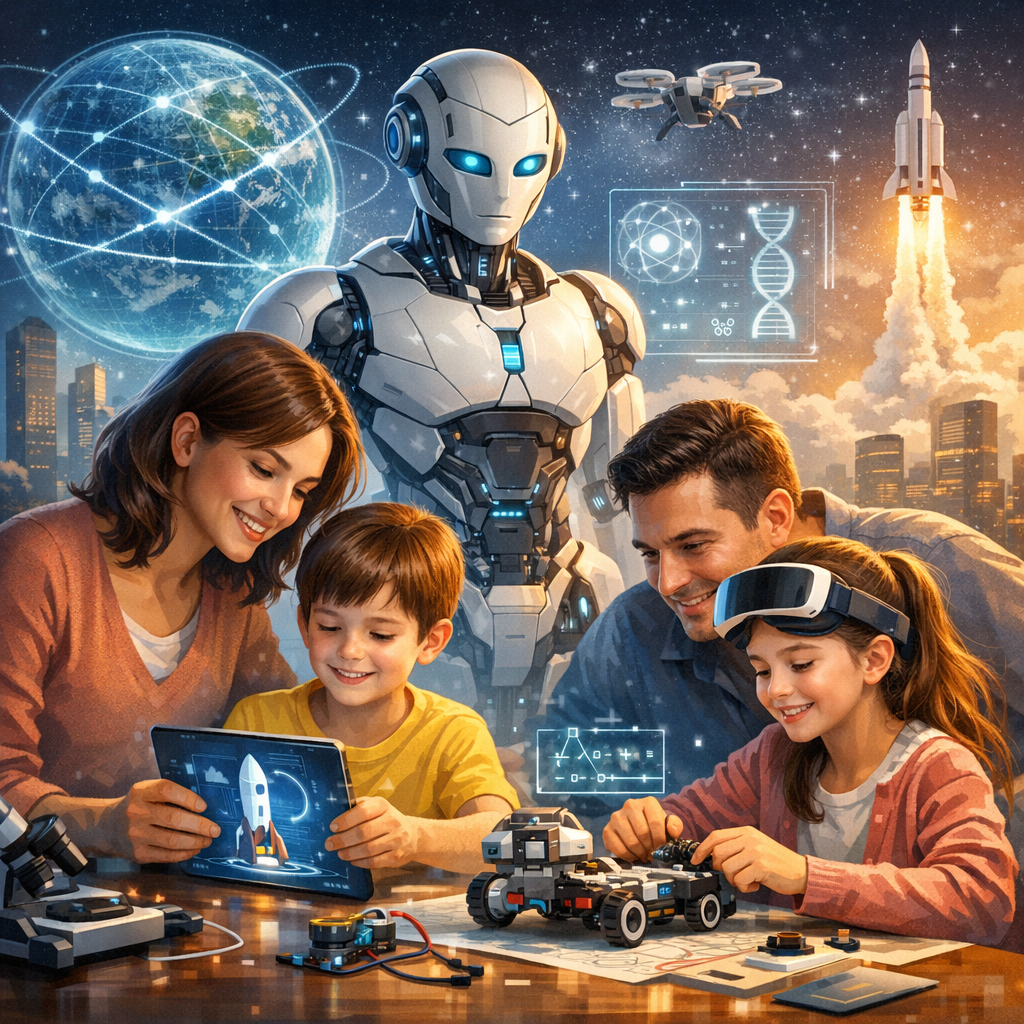
Moreover, AI’s role in fostering creativity and critical thinking cannot be overlooked. Today’s luxury children’s products often incorporate AI elements—interactive robots, smart games, and augmented reality experiences—all cultivating a child’s imaginative faculties in ways previously unimaginable. The challenge for parents is to foster a balanced approach, combining guidance and technology-driven learning, to build resilience, adaptability, and ethical consciousness. By carefully monitoring their children’s use of technology, parents can ensure that AI serves as an enriching tool rather than a distraction.
Yet, AI is not confined to academic enhancement alone. Its reach extends to emotional and mental wellness, through AI-driven apps that monitor mood fluctuations and offer mindfulness exercises tailored to a child’s emotional landscape. For children of affluent backgrounds, this blend of AI-supported learning and emotional growth can serve as the bedrock for becoming leaders of tomorrow. These advances ensure a supportive environment where children can develop holistically, becoming well-rounded individuals prepared for any challenges the future may bring.
Features
Several professional and academic studies bolster the idea that AI is instrumental in shaping future innovators. One study by the Massachusetts Institute of Technology (MIT) highlighted that AI-assisted learning systems could significantly close educational gaps by real-time assessments and adjustments to learning materials. These systems use algorithms to evaluate how students engage with content, refining instructional approaches continuously (source: [MIT News](https://news.mit.edu)). This adaptive learning can create a more equitable educational landscape by offering personalized learning experiences to all students, regardless of their starting point.
Moreover, a Stanford University research study demonstrated the efficacy of using AI in improving emotional intelligence among children. Through AI-driven games and apps, children learned empathy, collaboration, and emotional regulation, fundamental attributes for innovative thinking and leadership (source: [Stanford University](https://www.stanford.edu)). By providing experiences that encourage social skills, these tools empower children with the interpersonal abilities that are essential for the collaborative nature of the future workforce.
AI’s role in children’s cognitive development is further cemented by Harvard University’s Center on the Developing Child. Their research found that early intervention using AI tools could enhance problem-solving skills by encouraging exploration and curiosity, key components of innovative capacity (source: [Harvard University](https://developingchild.harvard.edu)). By nurturing a child’s innate curiosity, AI can lay the groundwork for a lifetime of learning and innovation.
Medical studies also accentuate AI’s potential in mitigating childhood mental health issues. AI algorithms can analyze behavioral patterns, offering early interventions in cases of stress or anxiety, increasingly common in high-pressure environments often seen in affluent communities. The AI-based strategies ensure children achieve a mental balance, thereby facilitating a nurturing ground for creativity and innovation (source: [Journal of Medical Internet Research](https://www.jmir.org)). This proactive approach to mental health can lead to better long-term outcomes for children, providing the emotional stability needed to succeed in an ever-changing world.
Conclusion
As AI continues to merge seamlessly with our daily lives, parents are presented with extraordinary opportunities to prepare their children for a rapidly evolving world. By embracing AI-driven strategies, parents can nurture innovative thinkers, empathetic leaders, and resilient individuals capable of thriving in any future landscape. By investing wisely in AI tools and platforms, parents of means can future-proof their parenthood journey, equipping their children to become the pioneering minds of tomorrow. Through a thoughtful integration of technology into everyday life, parents can ensure their children are not only consumers of innovation but also the innovators shaping our future.
“`

Dominic E. is a passionate filmmaker navigating the exciting intersection of art and science. By day, he delves into the complexities of the human body as a full-time medical writer, meticulously translating intricate medical concepts into accessible and engaging narratives. By night, he explores the boundless realm of cinematic storytelling, crafting narratives that evoke emotion and challenge perspectives. Film Student and Full-time Medical Writer for ContentVendor.com