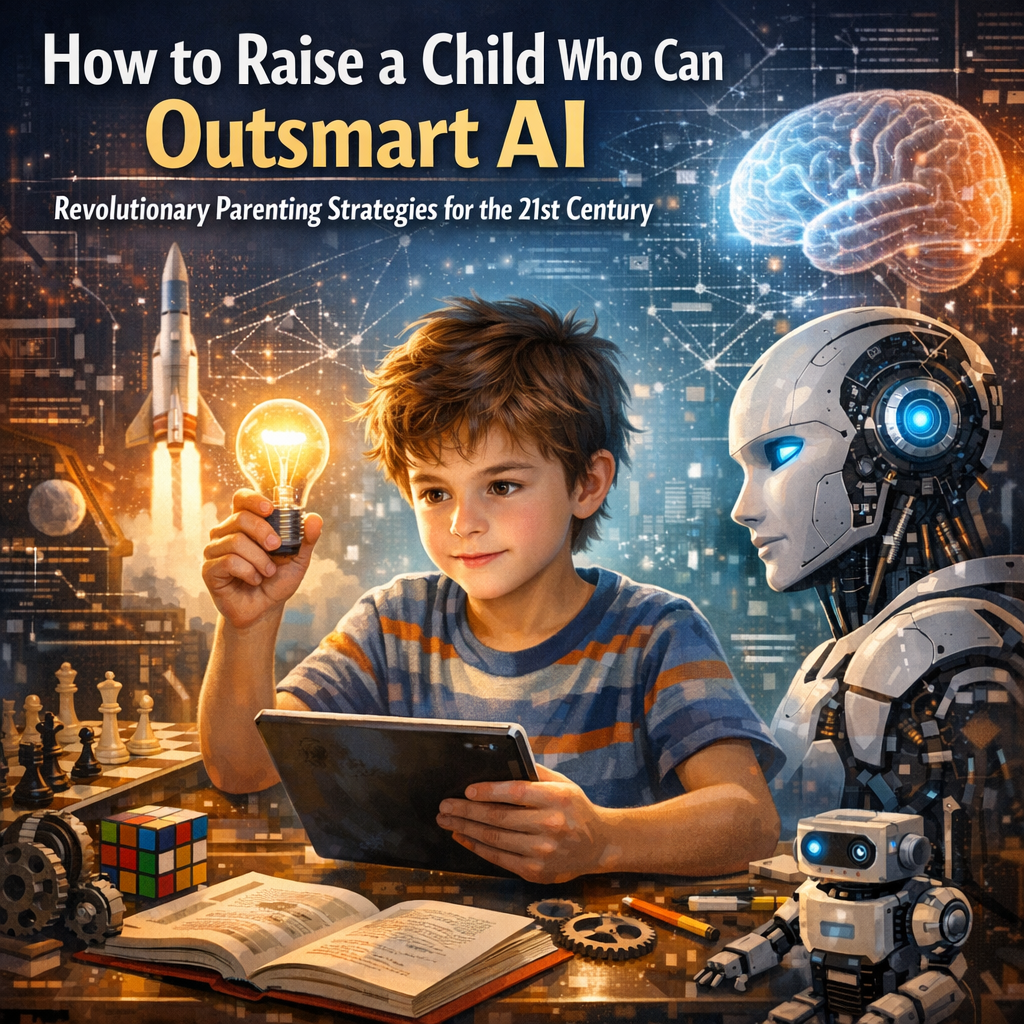
How to Raise a Child Who Can Outsmart AI: Revolutionary Parenting Strategies for the 21st Century
Introduction
As artificial intelligence (AI) continues to revolutionize our digital landscape, it is imperative that parents invest in developing skills in their children that go beyond what machines are capable of. The 21st century floods us with technology capable of performing complex calculations, analyzing trends, and even composing music or writing essays akin to human outputs. The question then arises: how do you prepare your children to not only co-exist with AI but to thrive and lead in such an era?
Raising a child who can outsmart AI doesn’t mean nurturing a tech-savvy whiz with coding skills from a young age, though that can be part of it. Real ingenuity lies in enhancing capabilities that machines struggle with—creativity, empathy, critical thinking, and ethical reasoning. In a landscape dominated by machine learning, your child’s ability to think outside the box, initiate complex emotional connections, and make ethical decisions with nuance will become invaluable.
Additionally, fostering an environment that values lifelong learning, adaptability, and resilience will arm your child against the ever-evolving nature of AI. As AI systems are developed to handle more day-to-day tasks, children will need to learn the art of integrating technology without losing their unique human touch.
Our journey begins with understanding the areas of growth that allow your child to operate at higher cognitive and emotional levels than AI can replicate. While AI can be programmed to mimic human interaction and interpret basic sentiment, it lacks the genuine emotional intelligence and innovation capabilities inherent in people. Exploring fields like liberal arts, creative problem-solving activities, and social-emotional learning can provide avenues for growth. Parental involvement, where you set challenges that require inventive solutions, will sharpen your child’s mental acumen and moral compass.
Let us delve deeper into how science supports strategies in nurturing these human skills and ensuring your child doesn’t just stand clear of the AI revolution but is positioned to redefine it.
Features
Understanding the pathway to raising a child equipped to navigate a world dominated by AI is supported by an array of scientific findings and studies. A critical area is the nurturing of creativity and problem-solving skills, which are far less replicable by AI. The Torrance Tests of Creative Thinking, developed by psychologist Ellis Paul Torrance, emphasize the importance of creativity in education. Research has shown a high correlation between creativity and problem-solving abilities that are not only applicable to artistic endeavors but are essential in scientific and technological advancements as well. Encouraging open-ended play, imagination-based activities, and exposure to the arts can enhance creative skills in children.
Likewise, emotional intelligence (EI) is a realm where humans often outperform AI. According to Daniel Goleman, an eminent psychologist and advocate for EI, emotional intelligence encompasses skills such as empathy, self-regulation, and emotional awareness. Fostering an understanding of emotions helps children navigate interpersonal relationships and ethical dilemmas—areas where artificial constructs often fall short. Studies indicate that children with a high level of emotional intelligence display better academic success, leadership capabilities, and mental health.
Furthermore, the philosophy of lifelong learning is essential, especially as automation transforms traditional careers. A study by the World Economic Forum underscores the importance of adaptability and continuous skill development in the future job market. Parents should encourage habits of self-study, curiosity, and resourcefulness. Introduce kids to a wide array of subjects, ranging from STEM to humanities, to instill a broad base of knowledge and interdisciplinary thinking, preparing them for any future field of work which might not yet exist.
Cultivating ethical reasoning is another area where human intuition surpasses AI. Children should be engaged in discussions about current global issues, justice, and empathy through story-telling or debates to refine their ethical frameworks. Modeling ethical behavior yourself provides a solid example for them to follow.
Conclusion
Preparing your child to outsmart AI involves a holistic approach that goes beyond embracing technology; it is about fostering inherent human qualities that AI cannot replicate. Creativity, emotional intelligence, lifelong learning, and ethical reasoning will equip children to not only thrive alongside AI but to leverage it for leadership. By embracing these skills and nurturing their development, we provide the next generation with the tools they need to navigate and redefine the future.
References
1. [Torrance Tests of Creative Thinking](https://www.cpsb.com/research/teaching/kidscreativity/torrance.html)
2. [Emotional Intelligence by Daniel Goleman](https://www.danielgoleman.info/topics/emotional-intelligence/)
3. [World Economic Forum: Future of Jobs Report](https://www.weforum.org/reports/the-future-of-jobs-report-2023)

Dominic E. is a passionate filmmaker navigating the exciting intersection of art and science. By day, he delves into the complexities of the human body as a full-time medical writer, meticulously translating intricate medical concepts into accessible and engaging narratives. By night, he explores the boundless realm of cinematic storytelling, crafting narratives that evoke emotion and challenge perspectives. Film Student and Full-time Medical Writer for ContentVendor.com