Personalized Sound Therapy Rooms for Cognitive Enhancement
Introduction
In today’s fast-paced world, where stress and cognitive demands are at an all-time high, parents seeking the best for their children are turning to innovative methods of enhancing mental acuity and emotional well-being. Personalized sound therapy rooms are rapidly gaining traction as a novel approach to cognitive enhancement, particularly among families who value luxury and scientific advancement. These specialized environments leverage the power of sound to stimulate the brain, offering a holistic avenue for mental and emotional development in children.
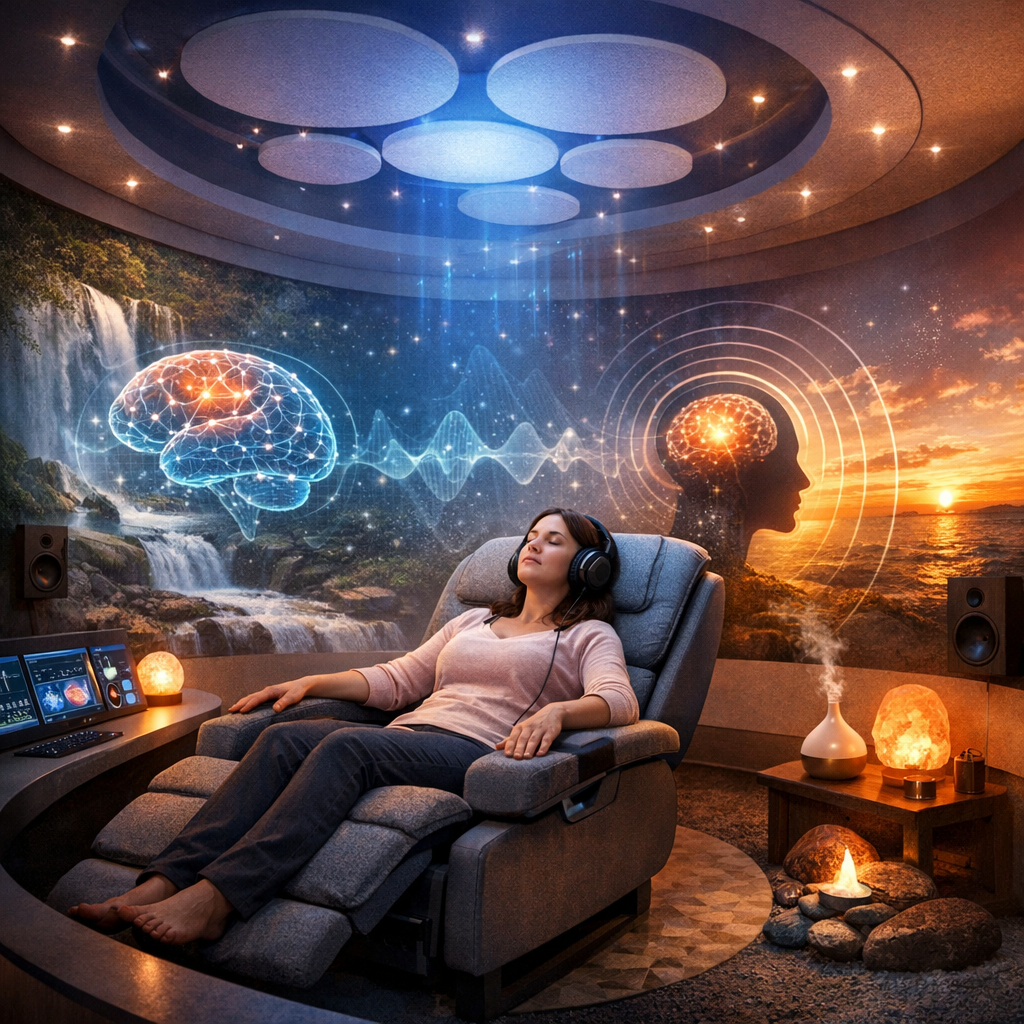
At its core, sound therapy involves the use of sound frequencies and vibrations to influence brainwave activity. This therapy draws from age-old practices that utilize sound as a healing and transformational tool, integrating these traditions with modern technology to create a cutting-edge approach to cognitive enhancement. Personalized sound therapy rooms are designed to cater to individual needs, incorporating carefully curated soundscapes that promote relaxation, focus, and enhanced cognitive function. These spaces are thoughtfully crafted to appeal to both the auditory and aesthetic senses, offering a calming yet stimulating environment for children to explore their cognitive potential.
For parents of means, the opportunity to personalize these environments means more than just handpicking sound frequencies. It involves creating a space that truly reflects their child’s unique personality and cognitive needs. These rooms can be tailored with state-of-the-art sound systems, interactive elements, and luxurious materials, transforming them from simple therapy rooms into multisensory sanctuaries. The incorporation of scientifically-backed sound therapies ensures that each session is not only enjoyable but also effective, guiding children on a path of intellectual and emotional growth.
The potential benefits of sound therapy are supported by emerging scientific research, which suggests that sound frequencies can be used to enhance neuroplasticity, the brain’s ability to reorganize itself by forming new neural connections. This ability is crucial for learning and cognitive development, making personalized sound therapy an appealing choice for families seeking innovative, science-backed methods for boosting their children’s mental capabilities.
Features
The field of sound therapy is experiencing a surge of interest, particularly as contemporary studies begin to validate the effects of sound on cognitive functioning. Recent research has shown that certain sound frequencies can activate various parts of the brain, potentially improving areas such as attention, memory, and even creativity.
One compelling study published in Frontiers in Human Neuroscience investigated the effects of [binaural beats](https://www.frontiersin.org/articles/10.3389/fnhum.2019.00021/full) — an auditory illusion created when two tones of slightly different frequencies are presented to each ear—on cognitive performance and mood. The results suggested that exposure to specific binaural beat frequencies could enhance alertness and attention, offering a promising tool for parents aiming to enhance their children’s cognitive engagement and focus.
Furthermore, a study featured in the Journal of Acoustical Society of America explored the impact of [low-frequency sound therapy](https://asa.scitation.org/doi/10.1121/1.4996304) on mental health, reporting significant improvements in mood and reductions in anxiety levels among participants. This aligns with the notion that sound therapy can play a vital role in emotional regulation, allowing children to better manage stress and anxiety.
The personalized aspect of sound therapy rooms adds another layer of effectiveness. By tailoring the soundscapes and incorporating elements that resonate with a child’s individual preferences and cognitive profile, these rooms can optimize the beneficial effects of sound therapy. The use of high-quality audio technology and immersive sound environments ensures that the therapeutic sounds are delivered with precision and clarity, maximizing their impact.
Moreover, personalized sound therapy aligns with the principles of neuroplasticity, a concept extensively studied by neuroscience research. According to research in [Nature Reviews Neuroscience](https://www.nature.com/articles/nrn1940), creating enriched environments with diverse stimuli, such as those offered in sound therapy rooms, can enhance neuroplasticity, supporting cognitive development and flexibility.
Conclusion
The evolution of personalized sound therapy rooms represents a promising frontier in cognitive enhancement for children. Grounded in scientific research and tailored to individual needs, these environments offer a luxurious yet effective method for nurturing mental and emotional growth. For parents desiring to provide their children with cutting-edge advantages, investing in scientifically-backed personalized sound therapy rooms could be an ideal step toward unlocking their full cognitive potential. As science continues to unravel the complex relationship between sound and the brain, the future of sound therapy looks rich with potential, promising exciting developments in the realm of cognitive enhancement.

Dominic E. is a passionate filmmaker navigating the exciting intersection of art and science. By day, he delves into the complexities of the human body as a full-time medical writer, meticulously translating intricate medical concepts into accessible and engaging narratives. By night, he explores the boundless realm of cinematic storytelling, crafting narratives that evoke emotion and challenge perspectives. Film Student and Full-time Medical Writer for ContentVendor.com