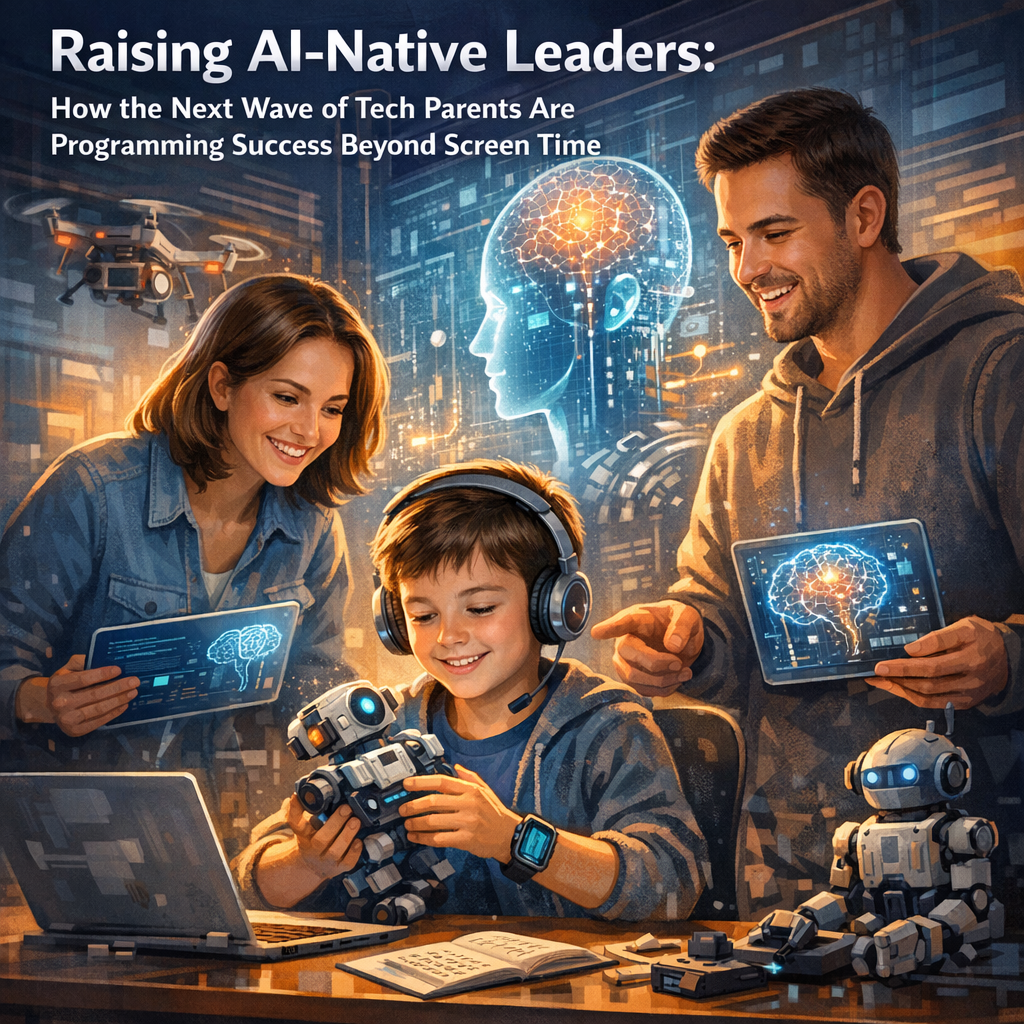
Raising AI-Native Leaders: How the Next Wave of Tech Parents Are Programming Success Beyond Screen Time
In the era of artificial intelligence (AI), raising children has transformed from a series of age-old practices to a careful orchestration of skill development that aligns with technological advancements. Today’s parents, especially those with access to luxury and resources, face a unique challenge and opportunity: to nurture AI-native leaders who are not just passive consumers of technology, but proactive innovators and ethical pioneers. The advent of AI has redefined what it means to be a leader, emphasizing skills like creativity, empathy, and ethical reasoning.
The concept of AI-native leadership extends beyond mere proficiency in technology; it’s about cultivating an environment where young minds can develop a profound understanding and respect for the power and constraints of AI. For parents of means, this often entails providing children with advanced educational tools, enrolling them in groundbreaking STEM programs, and encouraging a hands-on approach to learning about AI and technology. This approach steers clear of limiting screen time to foster an early appreciation for how AI can be harnessed to solve real-world problems and encourage social good.
One of the critical concerns among parents is balancing exposure to technology with safeguarding against its pitfalls. The American Academy of Pediatrics stipulates that balanced and mindful integration of technology into a child’s life can augment innovation and critical thinking skills without causing developmental setbacks. The discussion is shifting from limiting screen time to understanding how digital interfaces can be used to develop critical skills. Tech-savvy parents are utilizing AI tools to customize their children’s learning experiences, from interactive coding games that cultivate computational thinking to apps that teach empathy through storytelling.
Moreover, today’s children must be taught the importance of ethical considerations in AI. Understanding AI’s implications in privacy, security, and bias is crucial for the next generation of leaders. Parents can foster this understanding by encouraging inquisitive dialogue, ensuring children understand that technology should serve humanity constructively and inclusively.
Features
Recent studies have shown the profound impact that AI and related technologies can have on child development and learning. According to research conducted by the World Economic Forum, children who are exposed to AI-driven learning platforms develop enhanced problem-solving skills and adaptability—traits essential for future leadership roles. The study suggests that AI can personalize education, thus providing children with unique learning pathways tailored to their strengths and interests.
A study published in the Journal of Educational Computing Research highlights the importance of early exposure to computing and programming. The research found that children introduced to basic coding at a young age tend to exhibit increased logical thinking and creativity. These skills are integral to fostering AI-native leaders who can think outside the box and come up with innovative solutions to complex problems.
Furthermore, medical studies emphasize the developmental benefits of incorporating AI into learning environments, noting improved cognitive flexibility and executive function in children who engage with AI in structured formats. The key is a guided interaction where technology supports exploration and expression, rather than passive consumption.
AI is not just changing how we educate children; it’s also redefining what they learn. Programs that integrate AI ethics into their curriculum are increasing, ensuring that tomorrow’s leaders are not just technologically adept but also socially responsible. Parents are pivotal in this early education, supplementing formal education with resources and discussions that challenge children to think about the moral dimensions of technology use.
Conclusion
Raising AI-native leaders requires a nuanced approach that balances technological engagement with ethical responsibility. For parents of means, the task is to embrace these innovations and align them with a broader educational vision that prepares their children not just to succeed but to lead in an AI-enhanced world. By fostering environments that cultivate critical thinking, creativity, and conscientiousness, parents can ensure their children are well-equipped for the challenges and opportunities of the future.

Dominic E. is a passionate filmmaker navigating the exciting intersection of art and science. By day, he delves into the complexities of the human body as a full-time medical writer, meticulously translating intricate medical concepts into accessible and engaging narratives. By night, he explores the boundless realm of cinematic storytelling, crafting narratives that evoke emotion and challenge perspectives. Film Student and Full-time Medical Writer for ContentVendor.com