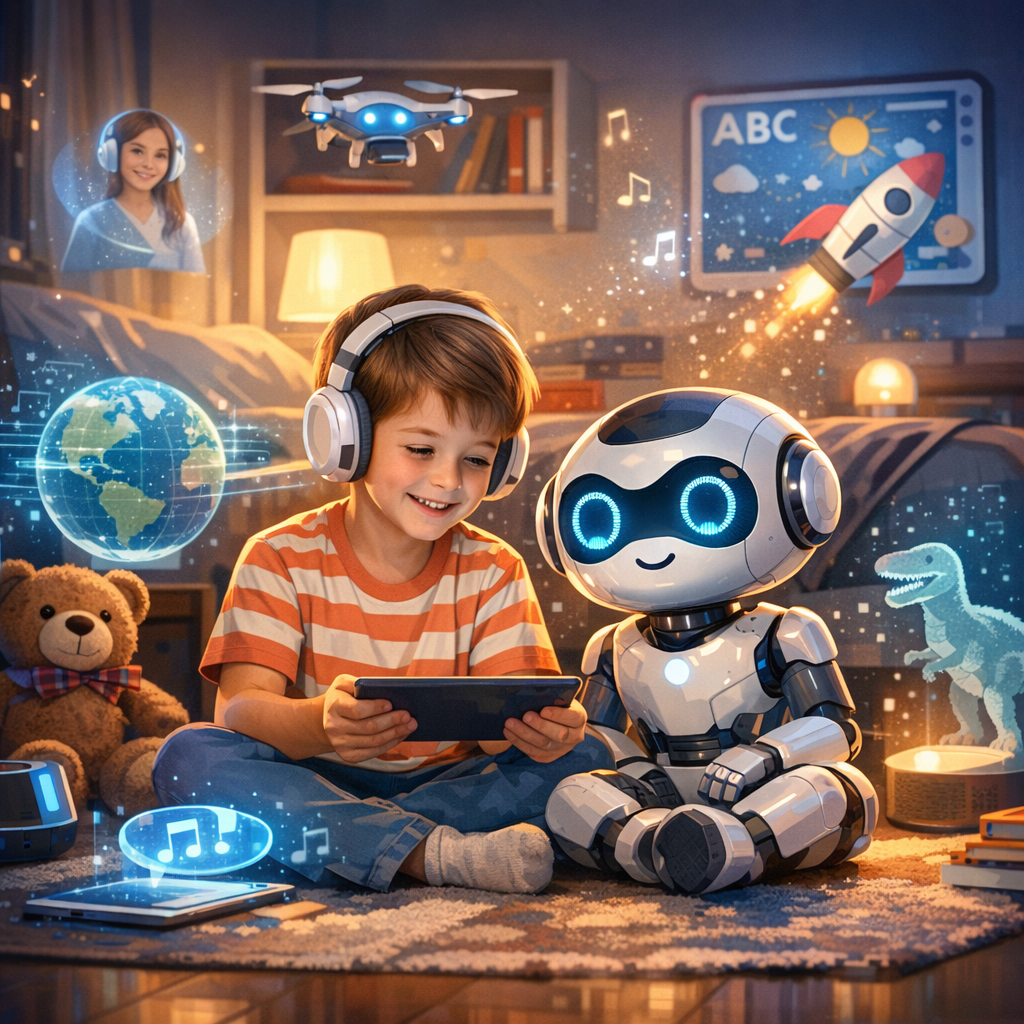
Raising AIs: How Child-Centric Technology Will Dominate Tomorrow’s Parenting
Introduction
In the fast-paced world of today, where technology continuously revolutionizes almost every aspect of our lives, parenting too is evolving under the auspices of digital advancements. Enter the era of Raising AIs—where child-centric technology takes the reins, offering tools and platforms that promise to reshape how we nurture the next generation. As parents of means who seek to provide the very best for their children, understanding how these intelligent systems are integrating into childhood development is paramount.
Modern-day parenting faces unique challenges and opportunities as technology becomes increasingly interwoven into the social fabric of childhood. From AI-driven educational apps to smart toys that adapt to a child’s individual learning style, the landscape of child-centric technology is vast and profound. The devices and applications available today are not just tools for entertainment but are specifically designed to nurture cognitive, social, and emotional development in children. These advancements bring about pivotal discussions on how best to integrate them into daily routines and educational practices to optimize childhood enrichment.
One such groundbreaking innovation is the emergence of AI-powered learning companions. Brands are now creating cutting-edge interactive robots and apps that can personalize learning and provide intellectual stimulation tailored to each child’s growth trajectory. These AI entities can identify the strengths and weaknesses in a child’s understanding of particular subjects and adapt the educational content accordingly. Furthermore, they serve as vigilant companions, offering the dual advantage of entertainment and education in a secure digital environment.
Similarly, AI has a remarkable application in therapeutic settings for children needing additional support. For instance, intelligent toys equipped with emotional recognition algorithms can help children with autism or anxiety disorders by offering a non-judgmental, understanding entity that reacts to their emotional needs. This not only aids in creating a supportive learning atmosphere but also paves the way for more inclusive educational experiences.
As parents plan for the future, it becomes essential to discern the advantages and limitations of this technology. The goal is not to replace genuine human interactions but to complement them, ensuring children grow into well-rounded individuals who are both technologically adept and emotionally intelligent.
Features
Recent scientific studies and professional insights shed light on the profound impact that child-centric technology has on developmental milestones. According to a study published in Pediatrics, interactive media, when paired with parental involvement, can significantly boost language acquisition and academic skills in young children. The study emphasizes the role of joint media engagement, where parents participate in digital play, thereby enhancing the overall learning experience.
Moreover, a report by the American Academy of Child & Adolescent Psychiatry highlights the significance of AI learning tools in promoting cognitive development. The adaptive nature of AI technology enables it to cater lessons to a child’s unique pace and interests, leading to increased motivation and improved learning outcomes. As emphasized by experts, this personalized approach can be especially beneficial for children who exhibit a preference for self-directed, technology-mediated learning environments.
The psychological component of AI in child engagement has been explored in research by the MIT Media Lab. Their study on embodied AI outlines how robots as social companions can bolster emotional development, particularly in fostering empathy and communication skills among children. By simulating human-like interactions and understanding emotional cues, these intelligent systems can help prepare children for social intricacies beyond their digital interactions.
However, the integration of AI in child-rearing must be approached with prudent consideration of potential drawbacks. Experts warn against over-reliance on technology, urging parents to maintain a balanced approach that combines digital and non-digital activities. Excessive screen time without active parental mediation can, in fact, detract from physical and creative play, which is vital to holistic child development.
Conclusion
The fusion of artificial intelligence into the realm of child-centric technology represents an exciting frontier in parenting. While AI offers transformative potential in personalizing education and supporting emotional growth, it is the responsibility of parents to leverage these advancements judiciously. By embracing this digital age thoughtfully, parents can ensure that their children receive the best of both technological and human worlds, raising a generation that is both intellectually vibrant and emotionally resilient.
References
1. Pediatrics – Studying the Role of Digital Media in Child Development
2. AACAP – Role of AI in Education
3. MIT Media Lab – Embodied AI for Children

Dominic E. is a passionate filmmaker navigating the exciting intersection of art and science. By day, he delves into the complexities of the human body as a full-time medical writer, meticulously translating intricate medical concepts into accessible and engaging narratives. By night, he explores the boundless realm of cinematic storytelling, crafting narratives that evoke emotion and challenge perspectives. Film Student and Full-time Medical Writer for ContentVendor.com