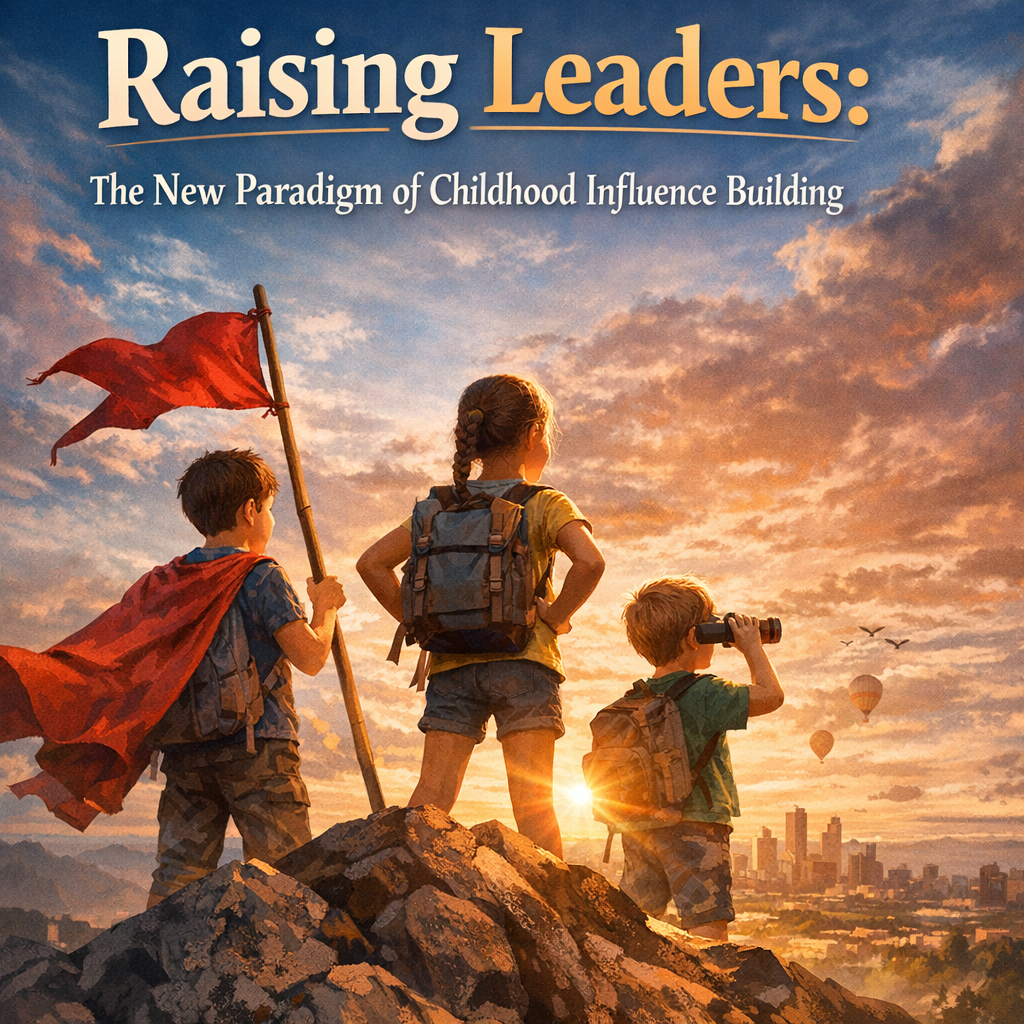
Raising Leaders: The New Paradigm of Childhood Influence Building
Introduction
In the ever-evolving landscape of childhood development, the notion of raising influential leaders is emerging as a priority among forward-thinking parents. In today’s interconnected world, leadership is no longer confined to corporate boardrooms or political offices; it begins in childhood. As parents, especially those with substantial means, consider the legacy and impact their children will leave, the focus turns to nurturing the intrinsic qualities of leadership, influence, and social consciousness from a young age.
Leadership among children is not merely about guiding others or being at the forefront; it embodies influence, vision, empathy, and initiating positive change. Historically, leadership skills were considered innate attributes, surfacing later in adolescence or adulthood. However, emerging research and educational paradigms suggest that leadership potential can be identified and cultivated during the early formative years.
The journey of raising a young leader involves a delicate balance of providing opportunities, fostering individuality, and instilling values that promote empathy, integrity, and resilience. It’s about crafting an environment where children feel empowered to express their ideas, take risks, and perceive failures as stepping stones to success. For parents with the resources at their disposal, this could mean choosing educational institutions that prioritize leadership and communication skills, or engaging them in bespoke extracurricular activities designed to hone their leadership qualities.
Moreover, technology and digital interactions have given a platform to younger generations to voice their opinions and participate actively in societal dialogues. This exposure not only equips children with the skills to articulate their thoughts but enables them to become robust influencers in their communities and beyond. Wealthy parents are in a unique position to leverage these platforms to facilitate their children’s journey into becoming impactful leaders.
Prioritizing leadership development is about more than creating successful individuals; it’s about shaping compassionate citizens who contribute meaningfully to an ever-changing society. This article explores the new paradigm of childhood influence building, supported by contemporary studies and insights into the molding of tomorrow’s leaders today.
Features
The significance of nurturing leadership in children has been underscored by several professional and psychological studies. According to research conducted by the University of Cambridge, traits such as empathy, adaptability, and problem-solving—integral components of effective leadership—are not static but can be cultivated from a young age through intentional practice and exposure ([source](https://www.cam.ac.uk/stories/leadershipdevelopment)).
The study emphasizes the role of parental involvement and tailored educational experiences. Parents have the power to create learning environments that foster autonomous thinking. Incorporating these elements at home, through discussions and decision-making exercises, enriches a child’s leadership potential. For instance, allowing children to lead small group activities teaches them responsibility, decision-making skills, and the merit of collaborative effort.
Professionally, Dr. Carol Dweck’s work on growth mindset further illuminates the potential of leadership development in children. Her studies highlight how children who are encouraged to adopt a growth mindset—understanding that abilities can be developed through dedication and effort—display greater resilience, are more prone to accept challenging tasks, and demonstrate enhanced leadership capabilities ([source](https://www.mindsetworks.com/webnav/pub/aboutmindset.aspx)).
Furthermore, technology’s role in shaping young influencers cannot be understated. The digital age offers unprecedented tools for cultivating leadership skills in children. According to a study from the Pew Research Center, digital literacy and social media proficiency allow children to engage in civic discussions and campaigns, empowering them to lead and incite change within their communities ([source](https://www.pewresearch.org/internet/2022/11/03/teens-social-media-and-civic-engagement/)). This involvement at an early age grants them the confidence and experience necessary to lead in the future effectively.
For parents of means, these insights provide a blueprint for strategic parenting. Offering access to enriched educational curriculums, engaging in discussions about current affairs, and supplying platforms for independent exploration of interests are critical actions that contribute to developing true leaders.
Conclusion
As parents of means embark on the journey of raising tomorrow’s leaders, it is essential to recognize that leadership is not simply a role but a valued capability to influence and inspire. By fostering open-mindedness, offering diverse experiences, and encouraging a growth mindset, parents can equip their children with the skills necessary to navigate and shape the world. In nurturing leadership early on, we are not just investing in individual success but in the broader vision of an empowered, compassionate, and forward-thinking society.
References
– University of Cambridge, Leadership Development Research: [https://www.cam.ac.uk/stories/leadershipdevelopment](https://www.cam.ac.uk/stories/leadershipdevelopment)
– Mindset Works, About Growth Mindset: [https://www.mindsetworks.com/webnav/pub/aboutmindset.aspx](https://www.mindsetworks.com/webnav/pub/aboutmindset.aspx)
– Pew Research Center, Teens, Social Media, and Civic Engagement: [https://www.pewresearch.org/internet/2022/11/03/teens-social-media-and-civic-engagement/](https://www.pewresearch.org/internet/2022/11/03/teens-social-media-and-civic-engagement/)

Dominic E. is a passionate filmmaker navigating the exciting intersection of art and science. By day, he delves into the complexities of the human body as a full-time medical writer, meticulously translating intricate medical concepts into accessible and engaging narratives. By night, he explores the boundless realm of cinematic storytelling, crafting narratives that evoke emotion and challenge perspectives. Film Student and Full-time Medical Writer for ContentVendor.com