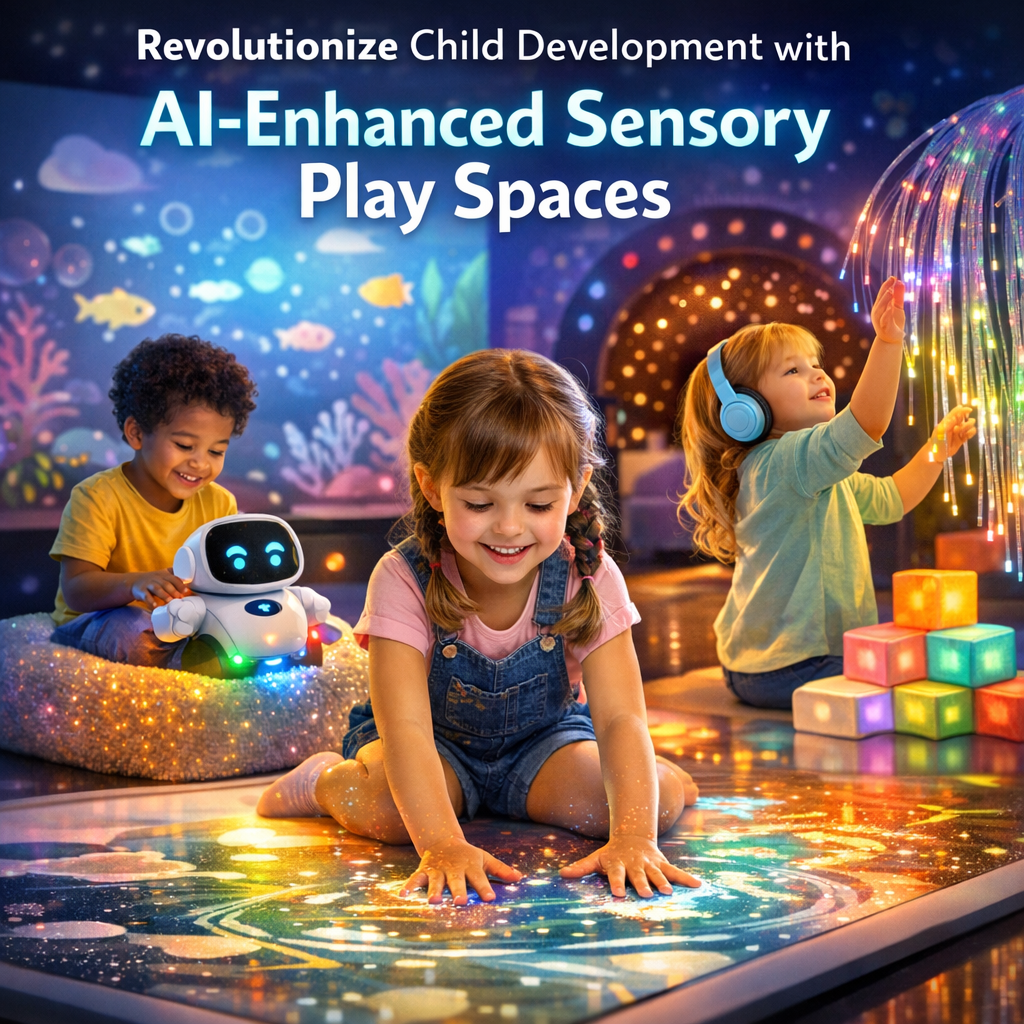
Revolutionize Child Development with AI-Enhanced Sensory Play Spaces
In a world that’s rapidly evolving, the intersection of technology and child development is creating groundbreaking opportunities for nurturing young minds. Parents today are acutely aware of the profound influence that early childhood experiences can have on lifelong learning and wellbeing. One innovative approach gaining traction in affluent circles is the integration of Artificial Intelligence (AI) into sensory play spaces. This novel approach paves the way for a revolutionary method of child development, combining the timeless benefits of sensory play with the cutting-edge advancements in AI technology.
Sensory play, widely recognized for its role in fostering cognitive development in children, involves activities that stimulate the senses—touch, sight, hearing, taste, and smell. This form of play encourages exploration and naturally improves a child’s motor skills, problem-solving abilities, and creativity. However, when infused with AI, sensory play spaces transcend traditional boundaries, offering bespoke developmental experiences tailored to a child’s unique learning needs.
Imagine a playroom that evolves with your child as they grow, analyzing which activities captivate their interest and which sensory inputs maximize their learning potential. AI can collect and interpret data on a child’s interactions in real time, adjusting the environment to ensure it provides optimal developmental stimuli. For instance, smart algorithms can modify lighting, sounds, and textures based on a child’s age, preferences, and developmental stage.
Such intelligently-designed play spaces can personalize educational content and tasks to match not just a child’s current developmental stage, but also their emotional state. If the AI detects signs of frustration or fatigue, it can seamlessly modify the play activities to restore engagement or introduce calming stimuli. As such, these AI-enhanced environments do more than just entertain—they become dynamic partners in ensuring holistic development, blending sensory excitement with meaningful learning experiences.
Features
The coupling of AI with sensory play spaces is supported by burgeoning research in developmental psychology and educational technology. Numerous studies underline the inherently positive effects of sensory play on brain development. According to a study published in the [*Journal of Occupational Therapy*](https://research.aota.org/), sensory experiences can enhance neural pathway development, which is crucial for a child’s cognitive, emotional, and social growth.
AI’s potential to customize and optimize learning was highlighted in a [*Harvard University*](https://www.harvard.edu/personalized-education) study focused on personalized education. The study found that AI could effectively tailor educational interactions by analyzing data on individual student performance and engagement, suggesting that similar methodologies could apply remarkably to early childhood sensory spaces.
Incorporating AI in play environments aligns with the principles of adaptive learning. The [*American Academy of Pediatrics*](https://publications.aap.org/) emphasizes the value of adaptive learning technologies in early education, noting their capability to adjust based on the child’s ongoing interaction with educational materials. By capturing subtle cues regarding a child’s learning process, AI applications in sensory play experiences can not only engage children more deeply but also address different learning styles and needs.
Healthcare professionals also appreciate the potential of AI-enhanced play from a therapeutic standpoint. AI’s data-driven insights can be invaluable for children with developmental challenges, tailoring sensory inputs precisely to enhance therapeutic outcomes. For instance, children on the autism spectrum might benefit from AI-driven adjustments to sensory stimuli to foster environments where they can comfortably acquire new skills.
Conclusion
AI-enhanced sensory play spaces are not merely an evolution of traditional play—they represent a paradigm shift in child development. By marrying cutting-edge AI technology with the fundamental principles of sensory play, these innovative environments offer bespoke, immersive learning experiences that cater to each child’s unique developmental journey. In affording children the chance to explore and learn in a way that’s as dynamic and personalized as they are, AI-enhanced play spaces promise to be a game-changer for future generations.

Dominic E. is a passionate filmmaker navigating the exciting intersection of art and science. By day, he delves into the complexities of the human body as a full-time medical writer, meticulously translating intricate medical concepts into accessible and engaging narratives. By night, he explores the boundless realm of cinematic storytelling, crafting narratives that evoke emotion and challenge perspectives. Film Student and Full-time Medical Writer for ContentVendor.com