“`html
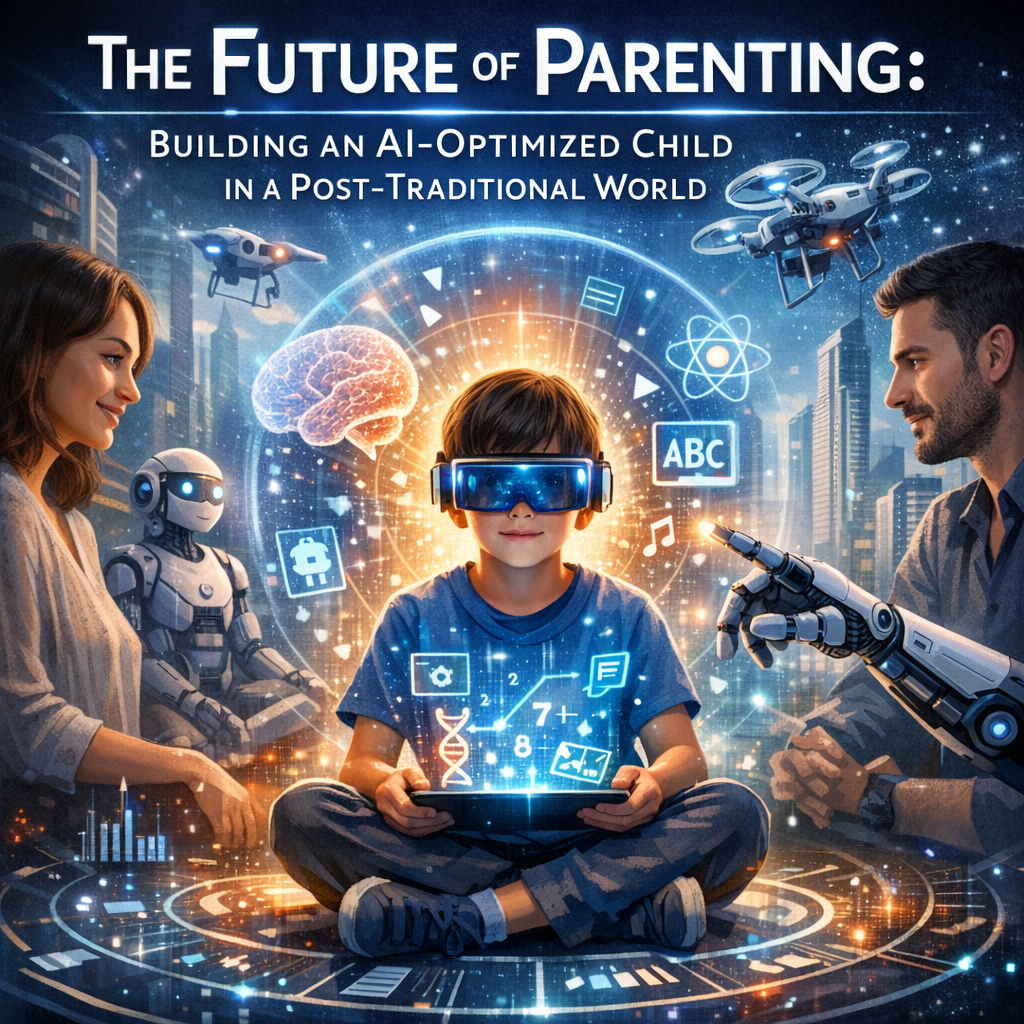
The Future of Parenting: Building an AI-Optimized Child in a Post-Traditional World
Introduction
In today’s ever-evolving world, the traditional paradigms of parenting are being reshaped by groundbreaking technological advancements. As we move further into the digital age, the influence of artificial intelligence (AI) has permeated nearly every aspect of our lives, and parenting is no exception. Families of means are uniquely positioned to harness AI innovations, offering their children unparalleled opportunities for growth and development. The concept of an “AI-optimized child” might sound like something out of a sci-fi novel, yet it’s rapidly becoming a reality.
AI offers sophisticated tools that empower parents to curate customized educational experiences for their children, tailoring learning environments to individual needs and interests. This includes AI-driven platforms that adapt teaching methods and content according to a child’s unique pace and learning style. Furthermore, AI technologies can provide parents with deep insights into their child’s development, offering data-driven approaches to improve their skills and well-being.
The integration of AI into parenting practices also raises ethical considerations and practical challenges. Parents must navigate questions about data privacy, screen time balance, and the genuine need for human interaction against a backdrop of technological growth. The potential of AI to revolutionize child-rearing practices is immense, but it necessitates a careful, informed approach to truly enrich a child’s upbringing without replacing the invaluable emotional and social learning that comes from personal relationships.
In this post-traditional world, where cultural and societal norms are rapidly changing, parents are tasked with preparing their children not just for the current world, but for a future that remains largely undefined. This requires an intricate blend of nurturing human experiences and the intelligent use of technological advancements. As we explore the implications of AI-optimized parenting, it is crucial to understand both the potential benefits and the limitations, ensuring that we prepare the next generation for a world where technology and humanity are more intertwined than ever before.
Features
Recent studies have illuminated the profound impact AI could have on parenting and child development. According to a report by McKinsey & Company, AI technology can significantly enhance personalized learning, acting as an indispensable tool in identifying educational needs and crafting individualized educational experiences for children (McKinsey & Company). By analyzing patterns in a child’s learning process, AI systems can predict areas of struggle and success, enabling parents and educators to personalize instruction effectively.
Medical research also emphasizes the potential benefits of AI in monitoring child health and development. A study published in *The Lancet Digital Health* highlights the role of AI tools in early detection of developmental disorders (The Lancet). These tools can analyze video or audio data to identify early signs of autism spectrum disorder (ASD) or other developmental delays far earlier than traditional methods, thereby allowing for prompt intervention and support.
Despite the promising aspects, there are critical ethical considerations. The American Academy of Pediatrics has addressed concerns about excessive screen time and its potential impact on children’s social skills and physical health (AAP). Balancing AI use with real-world interactions remains a significant challenge. Furthermore, issues of data privacy and security are paramount, as sensitive information about children must be handled with the utmost caution to safeguard their future.
Additionally, there’s a need to consider the long-term psychological effects of growing up in a highly optimized, AI-driven environment. Researchers warn that children accustomed to AI assistance might develop dependencies that could affect their problem-solving skills and independence. Therefore, while AI can undoubtedly aid in enhancing educational and developmental experiences, it is crucial that its implementation is guided by a strong ethical framework and an understanding of its limits.
Conclusion
As AI technologies continue to advance, the opportunity to optimize child-rearing practices grows ever more profound. For parents at the forefront of this shift, embracing these innovations must be balanced with a dedication to preserving the fundamental human experiences that no machine can replicate. By thoughtfully integrating AI, we can nurture a generation confident to navigate a future defined by the harmonious coexistence of technology and humanity, ensuring children not only adapt but thrive in the post-traditional world.
“`

Dominic E. is a passionate filmmaker navigating the exciting intersection of art and science. By day, he delves into the complexities of the human body as a full-time medical writer, meticulously translating intricate medical concepts into accessible and engaging narratives. By night, he explores the boundless realm of cinematic storytelling, crafting narratives that evoke emotion and challenge perspectives. Film Student and Full-time Medical Writer for ContentVendor.com