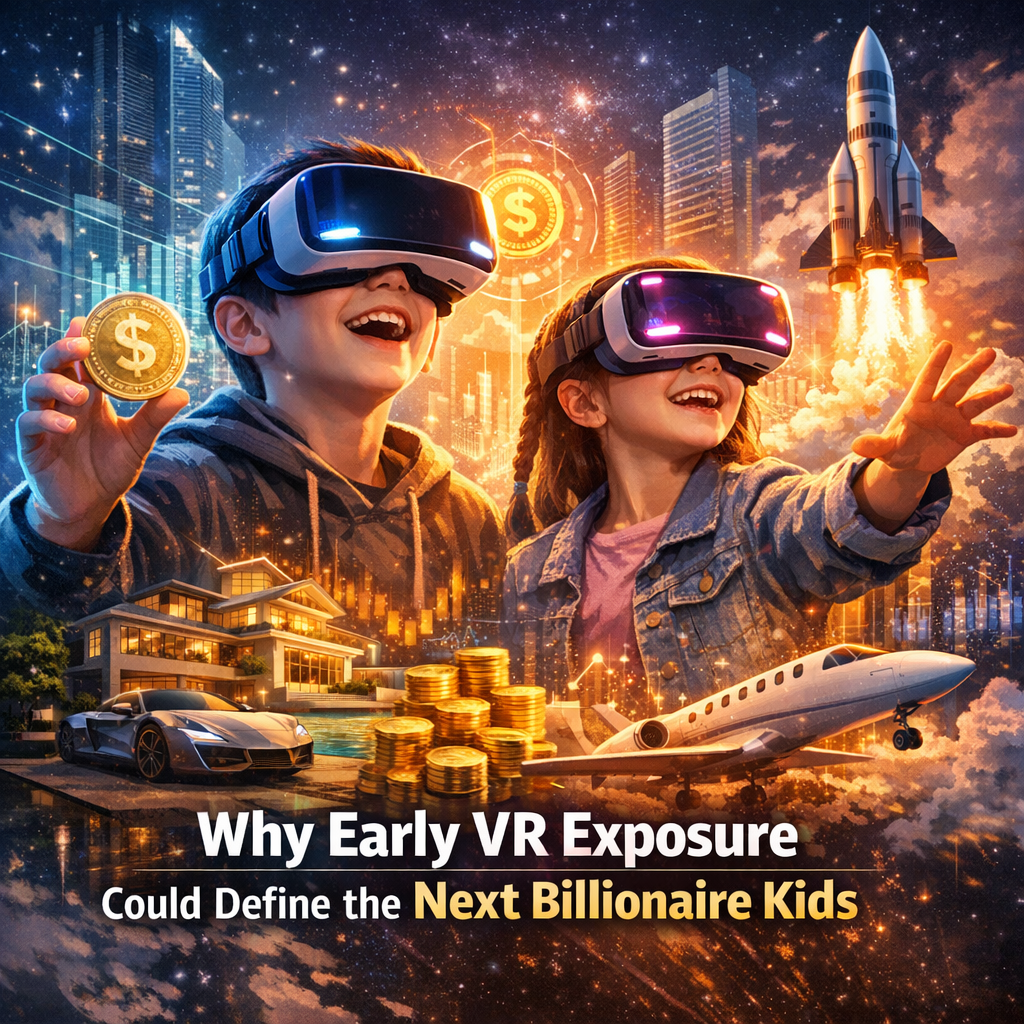
Why Early VR Exposure Could Define the Next Billionaire Kids
In the ever-evolving landscape of technology and innovation, Virtual Reality (VR) has emerged as one of the most transformative forces in recent years. With its ability to create immersive and highly interactive experiences, VR is reshaping industries as diverse as gaming, healthcare, education, and real estate. But beyond these sectors, there’s a growing dialogue on how early exposure to VR could play a crucial role in shaping the leaders of tomorrow. Particularly for children from affluent backgrounds, who often have access to the latest technologies, VR could be a defining element in cultivating the skills and mindsets necessary to become the next generation of innovators and perhaps even billionaires.
Imagine a world where children not only play video games or attend online classes but experience lessons that feel real, interact with historical figures, or travel to distant planets—all from the comfort of their homes. This is the revolutionary potential of VR in education. For parents of means, providing early access to VR technology is not merely about ensuring their children stay ahead in terms of gadgetry. It is about nurturing traits like empathy, creativity, problem-solving, and an innate understanding of complex systems—skills that are increasingly vital in the modern economy.
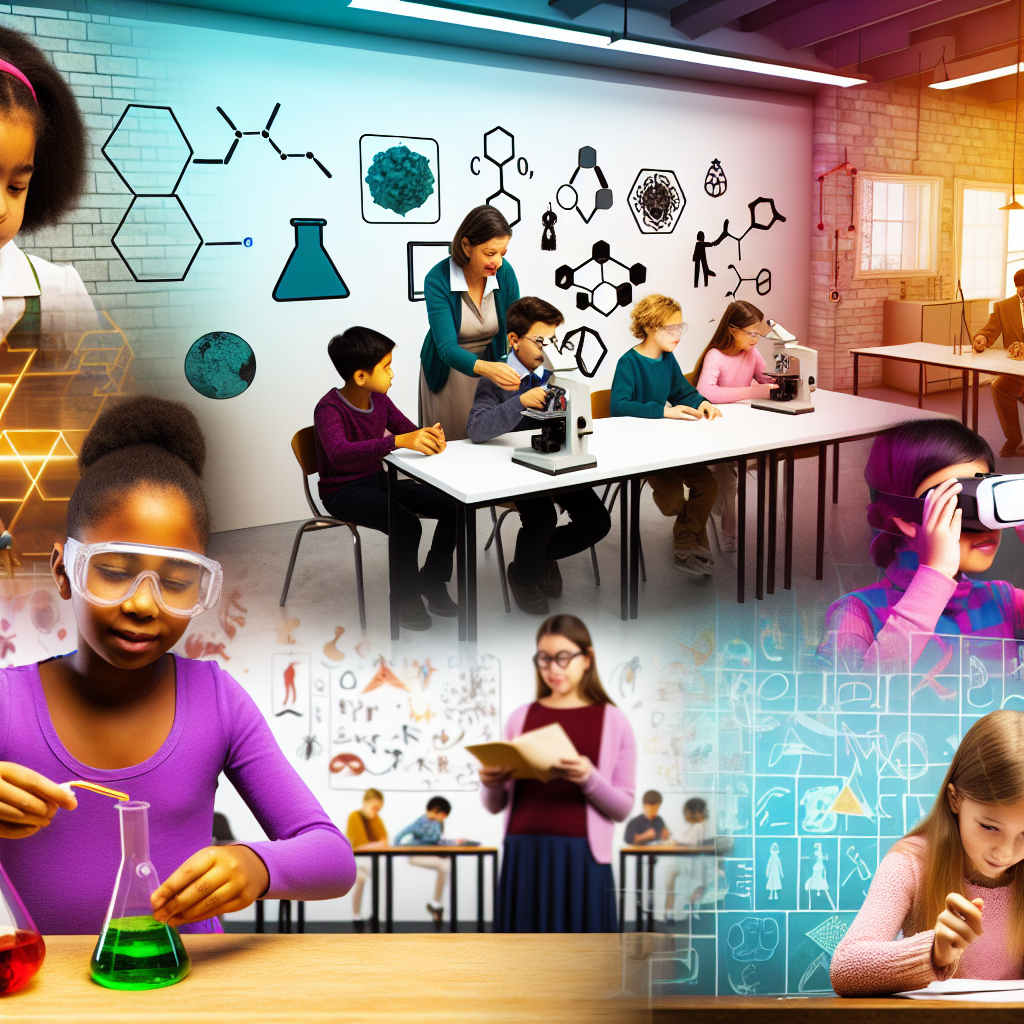
Many pioneering companies and educational institutions are developing tailored VR content for young minds, paving the way for children to experience learning in ways that are engaging and deeply impactful. For example, Labster’s VR simulations give students the chance to conduct experiments in a virtual laboratory setting, challenging them to think critically and solve problems without the constraints of physical resources.
As VR technology continues to advance, it offers more than just novel educational experiences; it can also be a critical tool in developing socio-emotional intelligence. Studies have shown VR’s potential in teaching emotional regulation and empathy in children, by placing them in scenarios that promote understanding and compassion. For example, a virtual reality experience might allow a child to walk in the shoes of a refugee or understand the life of someone with a disability, fostering a deeper understanding of diversity and the human experience.
In this sense, technology—and VR in particular—becomes not just a tool but a platform to nurture the billion-dollar ideas and companies of the future. As parents, envisioning our children’s potential through the lens of VR means acknowledging and investing in the intersection of technology and education as a vehicle for unleashing unparalleled creativity and innovation.
Features: Understanding the Impact of Virtual Reality on Young Minds
Recent research underscores the transformative effects of VR on cognitive development and learning. A study published by Stanford University’s Virtual Human Interaction Lab revealed that VR experiences could significantly enhance children’s learning abilities. By placing them in immersive environments, VR can help make abstract concepts more tangible and easier to understand. This type of learning engages multiple senses and provides a depth of experience that traditional methods may lack.
Moreover, a study from the University of Maryland revealed that immersive VR environments improve memory retention more effectively than traditional learning tools. This is particularly relevant for children, whose developing brains are highly plastic and responsive to novel stimuli. In a VR setting, students are not passive recipients but active participants in their own learning journey, fostering critical thinking and problem-solving skills that are essential for future leaders and entrepreneurs.
In terms of socio-emotional learning, VR offers unique capabilities that traditional media cannot match. Research from the University of Barcelona indicates that VR can foster empathy by allowing users to experience situations from the perspective of others. In one study, participants who “became” an avatar of a different race in VR were more likely to exhibit empathetic behavior towards individuals of that race in real life. This capacity for immersive empathy development may help young people grow into more compassionate leaders who prioritize social responsibility alongside business acumen.
However, with the promise of VR comes a need for careful moderation and thoughtful integration into children’s daily routines. Experts warn that excessive exposure to VR could lead to physical health concerns such as eye strain or motion sickness, and psychological effects like desensitization or addiction. It is crucial, therefore, for parents to guide and monitor their children’s use of VR, ensuring it complements other forms of learning and play.
Conclusion: The Path Forward for Visionary Parents
As we stand on the cusp of a new era in technology and education, the potential for VR to shape the next generation of innovators and leaders is undeniable. By strategically integrating VR experiences into the lives of children, especially those from affluent backgrounds with access to state-of-the-art technology, parents can nurture a range of skills that may pave the way for entrepreneurial success. However, this must be balanced with mindful use and ethical considerations to ensure that children benefit fully from the rich potentials of VR. The journey to becoming the next billionaire kid may indeed begin with a VR headset.
References
– [Stanford University’s Virtual Human Interaction Lab](https://vhil.stanford.edu/)
– [University of Maryland Study on VR and Memory Retention](https://www.cs.umd.edu/news/2018/01/vr-and-memory-study)
– [University of Barcelona’s Empathy Study](https://www.ub.edu/web/ub/en/)
– [Labster Virtual Chemistry Lab](https://www.labster.com/)

Dominic E. is a passionate filmmaker navigating the exciting intersection of art and science. By day, he delves into the complexities of the human body as a full-time medical writer, meticulously translating intricate medical concepts into accessible and engaging narratives. By night, he explores the boundless realm of cinematic storytelling, crafting narratives that evoke emotion and challenge perspectives. Film Student and Full-time Medical Writer for ContentVendor.com