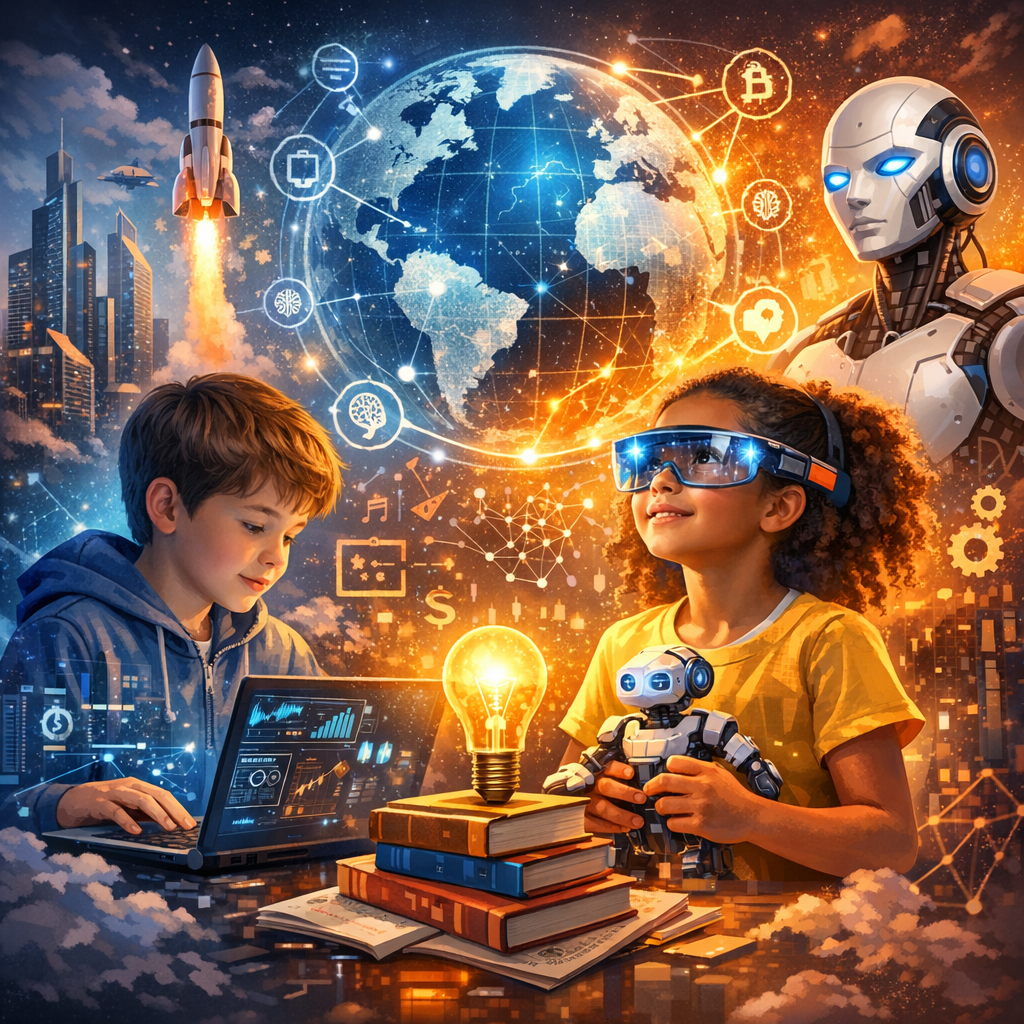
Raising Billionaire Thinkers: Shaping Kids’ Mindsets for AI-Dominated Futures
In an era of unprecedented technological transformation, preparing our children to navigate an AI-dominated world has become one of the most significant challenges and opportunities for parents. As Artificial Intelligence reshapes industries, economies, and the very fabric of society, the next generation needs to be more than just resilient; they need to be pioneering thinkers. Wealthy parents, often at the forefront of innovation and leadership, understandably wish to equip their children with the tools required to thrive as future leaders. But how does one nurture such potential? It’s not merely about access to the best education or technology. Instead, it’s about shaping the mindsets of children to think like innovators, adaptable to any situation and capable of harnessing AI’s potential.
The core of raising billionaire thinkers is a focus on three essential traits: creativity, critical thinking, and ethical reasoning. Creativity will drive the reimagining of current paradigms; critical thinking will help in making informed decisions amidst a flood of information, and ethical reasoning will ensure that the power of AI is harnessed responsibly. Parents are increasingly turning towards fostering environments that encourage problem-solving, open-ended exploration, and multidisciplinary learning. These are not just academic exercises but vital skill sets that allow children to perceive and develop unique solutions to complex challenges.
Furthermore, this preparation is supported by a mindfulness of the balance between digital fluency and humanity. While it’s crucial for children to master emerging technologies, developing emotional intelligence and empathy remains paramount. This human touch will delineate future leaders from mere managers, as personable relationship-building remains a key to holistic success.
In recent years, the emphasis on brain plasticity significantly highlights this developmental journey. Children’s brains are malleable, and their interactions with the environment can lead to lasting cognitive and emotional changes. As the saying goes, the mind is not a vessel to be filled, but a fire to be kindled. In this context, it becomes imperative for parents to be strategic about the stimuli and experiences they offer to their children during these formative years.
Features: Nurturing Future-Ready Minds
Several studies underscore the importance of cultivating an environment rich in emotional, cognitive, and social experiences to prepare children for futures dominated by AI and technology. A notable study by Stanford University emphasizes the role of a ”growth mindset” in educational success. This research, led by psychologist Carol Dweck, sheds light on how children who believe their abilities can be developed through dedication and hard work are more likely to be adventurous in their learning pursuits and overcome challenges more effectively. This mindset nurtures not only intellectual resilience but also sparks the curiosity essential for innovation.
Moreover, a study published in the journal Nature showcases the impact of digital and human interaction on cognitive development. The research suggests that while digital interactions promote technical skills, human interaction is crucial for developing social intelligence—a key attribute that will allow future leaders to empathize and connect in meaningful ways (Kühn, S., & Gallinat, J.).
Medical research also supports this holistic educational approach. The role of emotional intelligence in leadership success is well-documented. A study published in the Leadership & Organization Development Journal found a significant correlation between high emotional intelligence and successful leadership outcomes. This supports the idea that investing in EQ development is as critical as fostering IQ in children (Goleman, D.).
Together, these studies suggest a comprehensive strategy for gearing up children to become not just participants but innovators in an AI-driven world. By focusing on flexible learning, emotional intelligence, and a resilient mindset, children are better prepared to seize opportunities and overcome the challenges presented by rapidly evolving technological landscapes.
Conclusion
In a world where AI continuously reshapes our daily lives, raising children who think beyond conventional boundaries becomes imperative. For parents of means, the goal should not only be to provide resources but to cultivate an environment that emphasizes growth, creativity, emotional intelligence, and ethical reasoning. By doing so, they are not just raising children who will inherit a complex world but are empowering them to lead, transform, and innovate within it. Through this commitment, we lay the foundation not just for future wealth but for a generation of compassionate, forward-thinking leaders.

Dominic E. is a passionate filmmaker navigating the exciting intersection of art and science. By day, he delves into the complexities of the human body as a full-time medical writer, meticulously translating intricate medical concepts into accessible and engaging narratives. By night, he explores the boundless realm of cinematic storytelling, crafting narratives that evoke emotion and challenge perspectives. Film Student and Full-time Medical Writer for ContentVendor.com