“`html
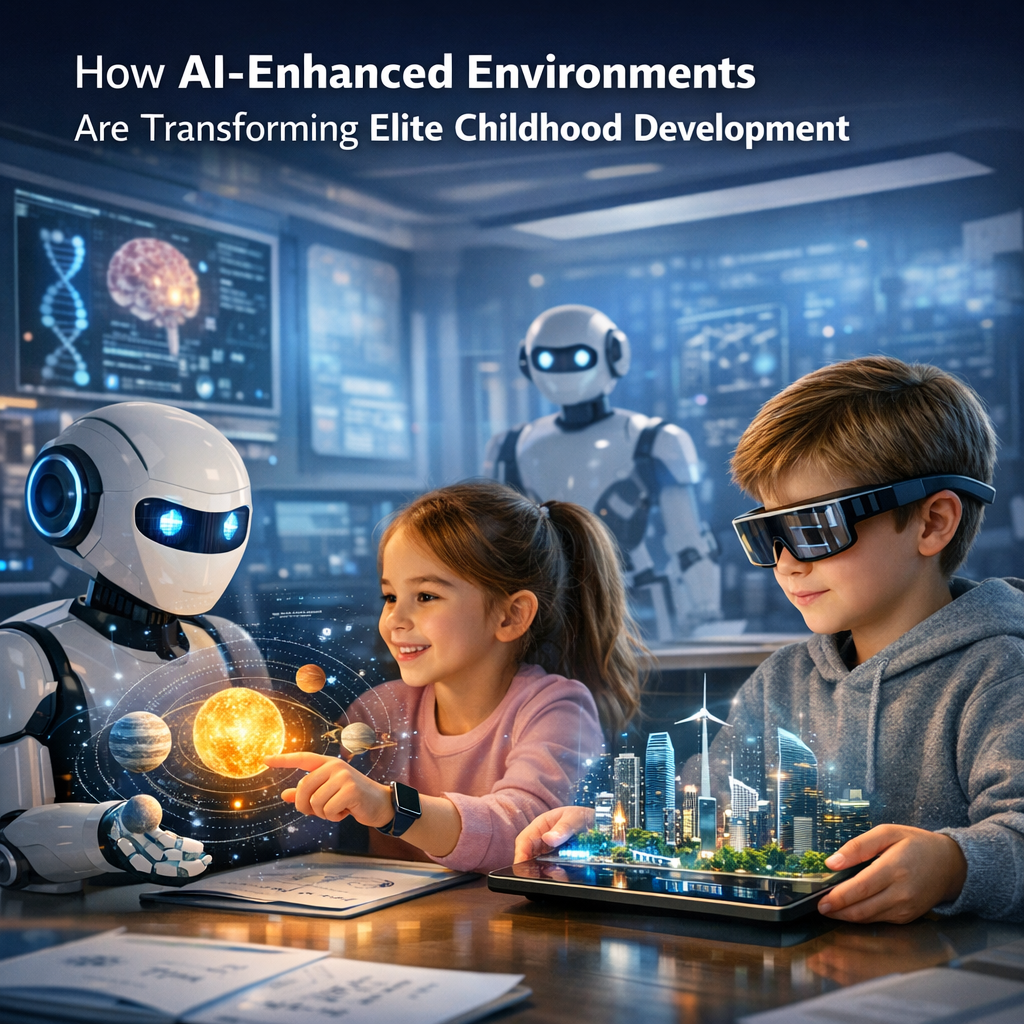
How AI-Enhanced Environments Are Transforming Elite Childhood Development
Introduction
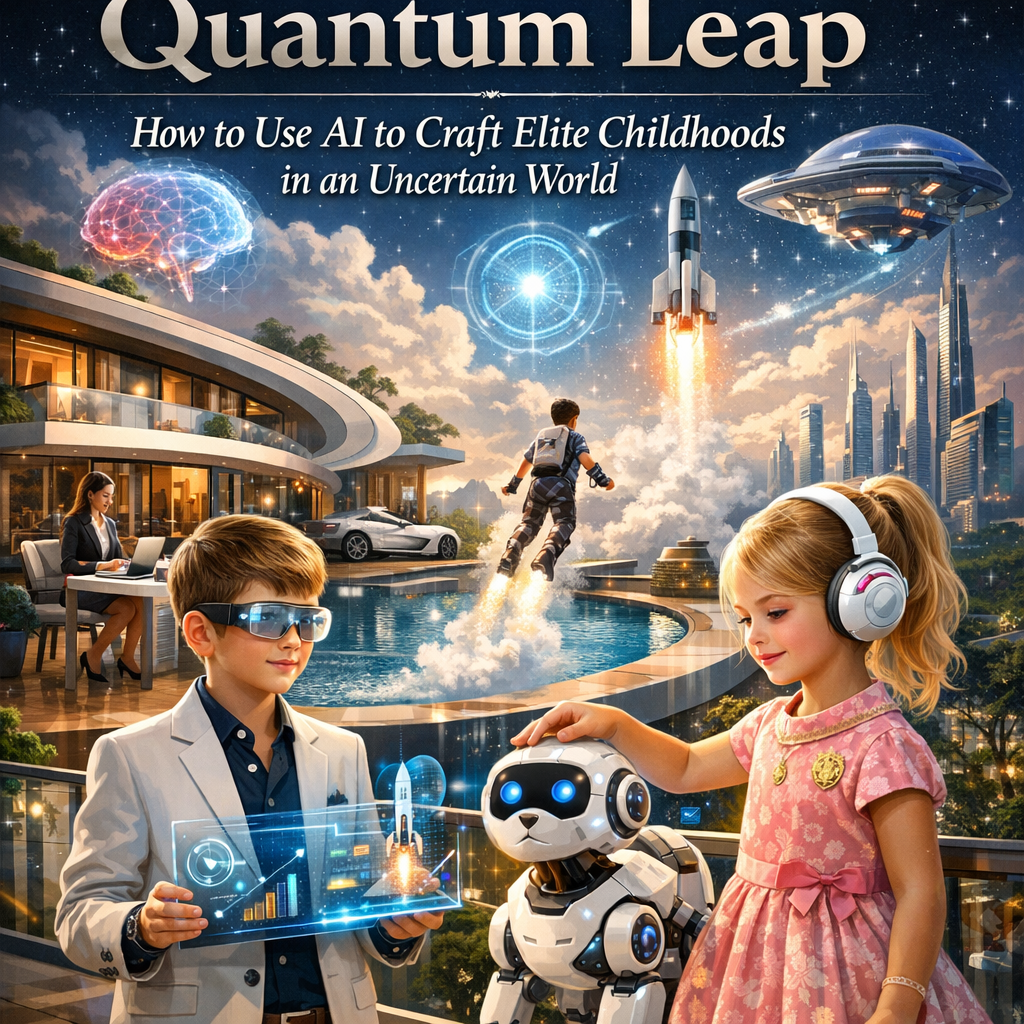
In an increasingly digital world, artificial intelligence (AI) is revolutionizing various aspects of daily life—educational frameworks being no exception. For parents intent on providing the most sophisticated and enriched upbringing for their children, AI-enhanced environments offer unprecedented opportunities. These high-tech settings can fundamentally alter how children interact with their surroundings, learn new skills, and develop emotional intelligence, all within a controlled ecosystem. The intersection of AI and childhood education is pioneering new methodologies that remain at the forefront of child luxury—a niche aimed at fostering well-rounded, intellectually superior, and adaptive future leaders.
For parents of means, the incorporation of AI into childhood development can be seen as an investment with manifold returns. Unlike traditional educational settings where a one-size-fits-all approach often suffices, AI-driven environments allow for the hyper-personalization of educational content. Advanced algorithms can analyze a child’s unique cognitive abilities, emotional strengths, and learning styles to offer a tailored educational experience. The result is a nurturing upbringing emphasizing not just academic excellence but also emotional intelligence and social skills.
AI-enhanced tools and applications enable educators and parents to monitor progress in real-time, adjusting methodologies and environments to suit the child’s evolving needs. From advanced language processing applications that teach multilingual proficiency to emotion recognition software that aids in understanding and nurturing a child’s emotional spectrum, these cutting-edge technologies are reshaping the landscape of elite childhood development.
Moreover, AI-enhanced interactive environments prove to be pivotal in unlocking creativity. Intelligent systems equipped with data analytics and machine learning offer children limitless opportunities to explore various domains—from robotics and coding to art and music—providing the basis for innovative thinking and creative problem-solving. For affluent parents committed to cultivating a bright future for their offspring, utilizing AI as a pillar in a multi-dimensional developmental strategy is becoming increasingly attractive and viable.
Features
The transformative potential of AI-enhanced environments in education is backed by emerging research and case studies emphasizing their effectiveness. Recent studies indicate that AI-assisted educational tools improve retention rates and comprehension among young learners. According to a [study conducted by the Massachusetts Institute of Technology](https://www.csail.mit.edu/research/ai-based-tutoring), AI-based tutoring systems demonstrated a 34% improvement in the test scores of students when compared to conventional teaching methods. This research underscores the capacity of AI to identify and address a student’s unique learning needs through adaptive learning pathways.
Furthermore, the impact of AI on social and emotional learning has been thoroughly examined. A [study published by the American Psychological Association](https://www.apa.org/news/press/releases/2020/07/artificial-intelligence-emotional) found that AI tools that offer real-time feedback can be instrumental in cultivating emotional intelligence in children. For instance, AI applications that analyze facial expressions and vocal tones help children recognize and articulate their emotions more proficiently, a vital skill set in this digital age of communication. This tailored emotional feedback aids in refining a child’s understanding of their own emotions and their interactions with others, cultivating superior interpersonal skills.
In addition to academic prowess and emotional intelligence, AI-enhanced environments are proving beneficial in nurturing creativity. An exploratory [study by Stanford University](https://hci.stanford.edu/publications/ai-creativity-children.html) examined children engaging with AI-driven creative writing applications and found a marked improvement in innovative thinking. The study followed students who used a story-generating AI platform and recorded a 27% increase in their original narrative output, compared to a control group. Such results underscore the capacity of AI to stimulate children’s imaginations, enabling them to think divergently and approach challenges in unique ways.
Finally, leveraging big data analytics, AI systems capture and analyze vast sets of data about a student’s progress, allowing educators and parents to proactively modify learning strategies. An evidence-based approach supported by AI minimizes trial and error, ensuring children are always on a pathway conducive to their personal development. This forward-thinking approach aligns perfectly with the aspirations of parents ideating a future for their children undeserving of anything less than the best opportunities life has to offer.
Conclusion
AI-enhanced environments are redefining the paradigms of elite childhood development by integrating data-driven educational strategies, personalized learning experiences, and enriched emotional intelligence. As parents of means seek to furnish their offspring with tools for success, AI stands as a cornerstone in creating a nurturing and dynamic developmental landscape. Through AI, children gain not only academic competence but also emotional resilience and a propensity for creative thought—essentials in today’s cosmopolitan world. By embracing AI, families can indeed drive the next generation toward unprecedented heights of achievement and well-being.
“`
This refined content integrates AI into the broader framework of elite childhood development, emphasizing benefits like personal education, real-time progress monitoring, and creativity stimulation.

Dominic E. is a passionate filmmaker navigating the exciting intersection of art and science. By day, he delves into the complexities of the human body as a full-time medical writer, meticulously translating intricate medical concepts into accessible and engaging narratives. By night, he explores the boundless realm of cinematic storytelling, crafting narratives that evoke emotion and challenge perspectives. Film Student and Full-time Medical Writer for ContentVendor.com