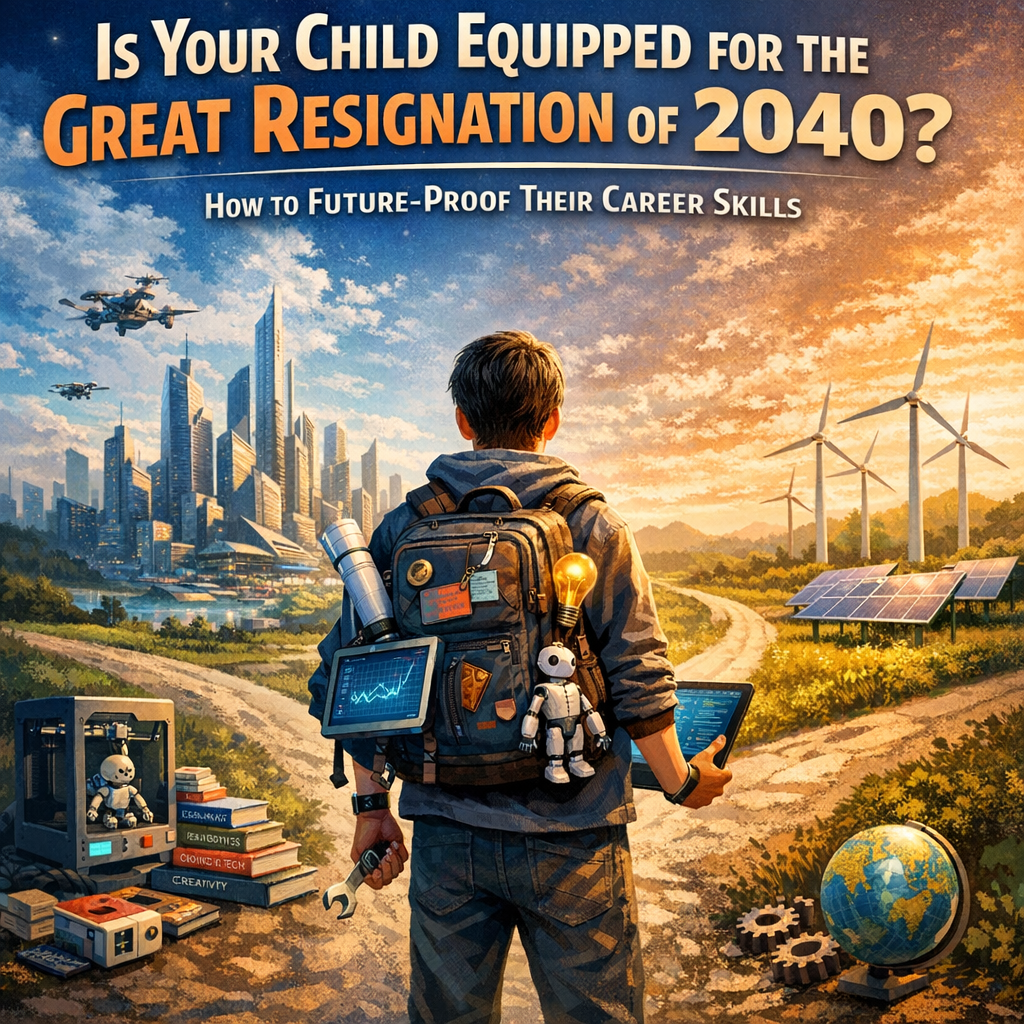
Is Your Child Equipped for the Great Resignation of 2040? How to Future-Proof Their Career Skills
Introduction:
As the global landscape continues to evolve at an unprecedented pace, the job market is becoming increasingly unpredictable. The phenomenon dubbed “The Great Resignation of 2040” is anticipated by futurists and labor experts as a massive shift in how people view work, echoing the changes catalyzed by the technological and socio-economic shifts of the early 21st century. By 2040, today’s children will be entering a workforce that may demand a drastically different set of skills and mindset.
For parents of means, preparing children for this future involves more than just providing top-tier education and material resources; it is about equipping them with adaptive skills that will steer them through a world where technology, innovation, and human-centric skills converge. The pandemic of 2020 already showcased how digital transformation can disrupt traditional workspaces and economic structures, accelerating remote work and the gig economy. By 2040, these changes could lead to a scenario where career skills need continual reinvention.
So, what does future-proofing your child’s career skills entail? First, understanding the anticipated trends is crucial. AI and automation are expected to take over more repetitive tasks, while creative, emotional intelligence, and leadership roles will become more valuable. Moreover, in a future where job-hopping might be more the norm than the exception, fostering entrepreneurial spirit and resilience in your child will be key. Encouraging curiosity, creativity, and emotional intelligence could set them apart in a world where these human capabilities are prized.
Furthermore, life-long learning will be non-negotiable. Consider equipping your child with the ability to adapt by making them familiar with diverse cultures, philosophies, and technological tools from early on, while also instilling a sense of flexibility and mental agility to reinvent their career path as new opportunities arise. This isn’t simply about academic prowess; it’s about cultivating a holistic skillset that’s adaptable over time.
Features:
Recent studies underscore the importance of adapting educational frameworks to better prepare children for future economic landscapes. The World Economic Forum’s (WEF Future of Jobs Report) emphasizes the growing divide between high-growth, high-wage industries and low-growth, low-wage jobs due to automation and digital transformation. It suggests a shift in education that encourages creativity, critical thinking, and problem-solving over rote memorization.
Research from the [Institute for the Future](https://www.iftf.org/futureworkskills2020) expands on this by identifying skills such as social intelligence, novel and adaptive thinking, and cross-cultural competency as vital for thriving in future workplaces. These skills, unlike technical ones, are inherently human and resilient against automation. More recent technological studies, such as those published in the journal *Nature Communications*, predict that AI and machine learning will complement rather than replace human tasks, creating hybrid roles that will necessitate a robust educational focus on both technology and human-centric skills.
Medical studies also highlight the importance of mental agility and emotional health in career adaptability. The American Journal of Public Health (AJPH) suggests that social-emotional learning (SEL) in early education leads to better mental health outcomes and workplace success. The study indicates that children trained in SEL display improved emotional regulation, empathy, and decision-making abilities, all of which are anticipated to be highly valuable as AI continues to permeate professional fields.
To facilitate this future-oriented education, some luxury educational institutions have begun integrating unconventional courses, combining traditional subjects with future-looking syllabi that include coding, AI ethics, and even virtual reality economics. These institutions emphasize a personalized approach, allowing learners to pursue their interests while developing essential human-centric skills.
Conclusion:
Equipping your child for the Great Resignation of 2040 isn’t just about advanced degrees or prestigious internships; it’s about fostering versatile, creative, and resilient minds. Encouraging curiosity and lifelong learning, alongside nurturing emotional intelligence and an entrepreneurial mindset, will ensure that they not only survive but thrive in an uncertain future. Leadership, creativity, and adaptability are virtues that will prove indispensable when today’s children step into the professional world of tomorrow.

Dominic E. is a passionate filmmaker navigating the exciting intersection of art and science. By day, he delves into the complexities of the human body as a full-time medical writer, meticulously translating intricate medical concepts into accessible and engaging narratives. By night, he explores the boundless realm of cinematic storytelling, crafting narratives that evoke emotion and challenge perspectives. Film Student and Full-time Medical Writer for ContentVendor.com